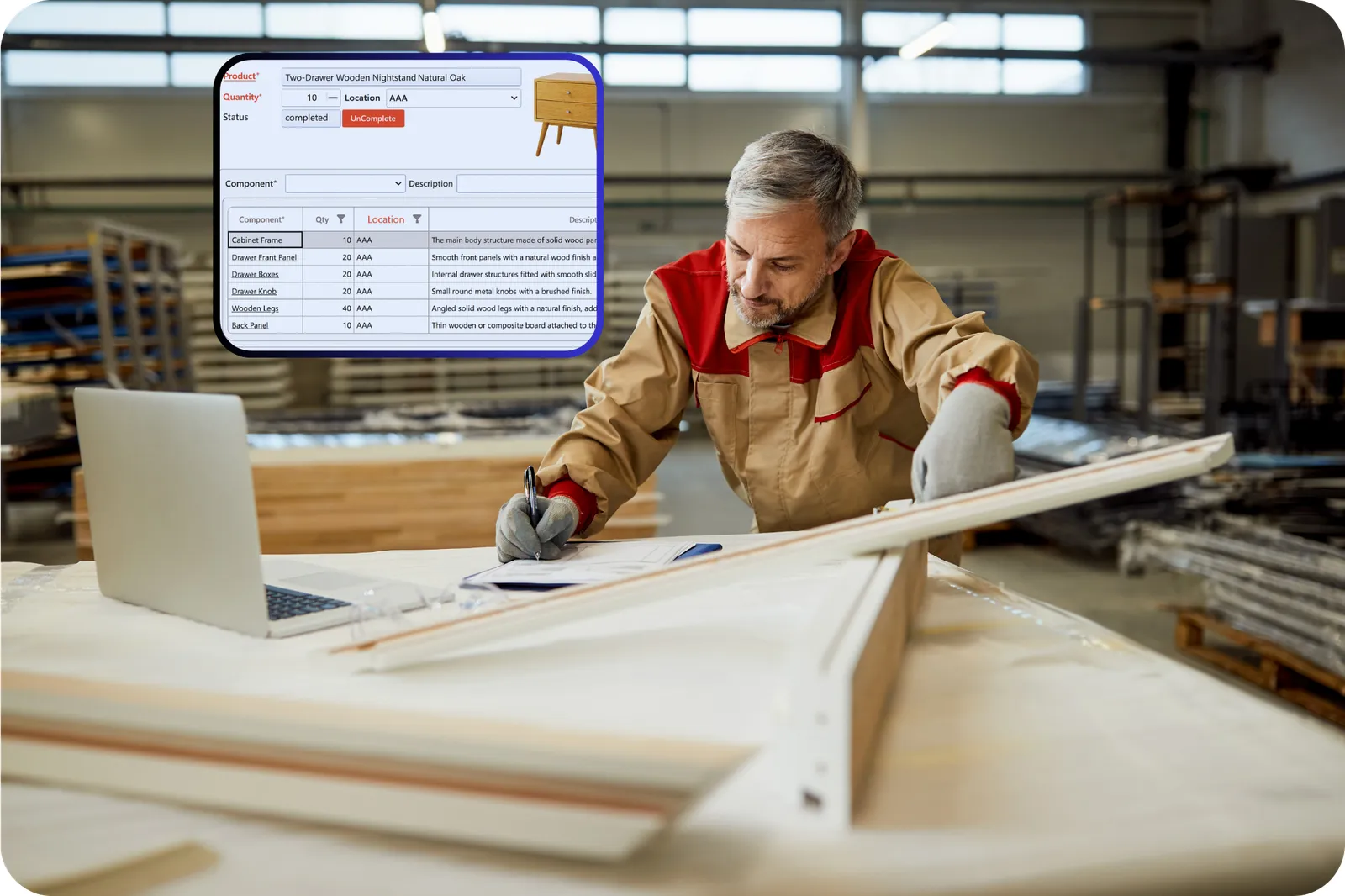

Manual data entry is one of the most common sources of inventory errors, and it's also one of the easiest to eliminate. Every time a staff member hand-types a quantity, a SKU number, or a location code, there's a chance for a mistake that ripples through the rest of the system — wrong stock counts, mismatched orders, or inaccurate reorder alerts. This is the core problem barcode inventory scanning solves, replacing manual entry with fast, accurate scans across receiving, picking, transfers, and stocktaking.
For businesses managing any real volume of stock, barcode scanning isn't a nice-to-have anymore — it's the difference between a warehouse team that moves quickly and confidently and one that spends hours each week reconciling discrepancies that never should have happened in the first place. And with scanning now available on standard mobile devices, adopting it no longer requires expensive dedicated hardware.
Why Manual Stock Entry Causes Problems
Businesses that rely on manual counting and data entry tend to run into the same recurring issues:
- Miskeyed quantities during receiving that throw off stock accuracy
- Time-consuming physical stocktakes that take days instead of hours
- Difficulty locating specific items quickly during picking
- Errors compounding as they move from receiving through to sales records
- No reliable audit trail showing when and where stock actually moved
Each of these problems tends to get worse as order volume grows, which is exactly when accuracy matters most.
Core Benefits of Barcode-Driven Inventory
Faster, More Accurate Receiving
Scanning items as they arrive matches physical counts directly to purchase orders, catching discrepancies immediately rather than days later when a customer order can't be fulfilled as expected.
Efficient Picking and Packing
Barcode scanning during picking confirms the right item and quantity are being pulled before an order ships, reducing costly fulfillment errors that damage customer trust.
Mobile Flexibility
Modern scanning works through Android devices and web browsers, meaning warehouse tasks like picking, receiving, and transferring stock can be performed from wherever staff are standing, without needing to return to a fixed terminal.
Faster Stocktaking
A full physical inventory count that used to take days with pen and paper can be completed in hours when driven by barcode scans, with far fewer counting errors along the way.
Real-Time Location Tracking
Scanning items as they move between bins, shelves, or locations keeps the system updated continuously, so staff always know where a specific item sits without needing to search manually.
Easy Label Generation
Configuring and printing barcode labels directly from the system ensures new stock is properly tagged from the moment it enters the warehouse, avoiding the backlog that builds when labeling is treated as a separate task.
Connecting Barcode Scanning to the Rest of Inventory Operations
Barcode scanning delivers the most value when it's tied directly into the broader system, rather than functioning as a standalone tool. When scans update stock counts in real time, that data flows directly into reporting and dashboards, giving management an accurate, current view of stock levels, reorder needs, and fulfillment performance without waiting on manual reconciliation.
This connection matters just as much for purchasing and sales. Accurate scan data means purchase orders are generated based on real stock levels, and sales orders can be fulfilled without the risk of promising inventory that isn't actually available.
What to Look for in a Barcode System
Before adopting barcode scanning as part of a broader inventory system, a few questions help clarify fit:
- Does it work on standard mobile devices, or does it require specialized, expensive hardware?
- Can labels be generated and printed directly from the system, without a separate labeling tool?
- Does scanning update inventory in real time, or is there a delay before counts reflect a scan?
- Is it usable across receiving, picking, transfers, and stocktaking, or limited to just one function?
- Does scan data feed directly into reporting and reorder alerts, closing the loop automatically?
A system that covers all five turns barcode scanning into a genuine operational upgrade rather than just a faster way to do the same manual process.
The Real Impact of Fewer Manual Errors
The value of barcode scanning compounds over time. A single miskeyed quantity might seem minor, but multiplied across hundreds of weekly transactions, manual errors add up to real costs — wrong reorder points, mismatched fulfillment, and hours spent tracking down discrepancies that scanning would have prevented entirely. Businesses that adopt barcode-driven workflows typically see a noticeable drop in stock discrepancies within the first few stocktaking cycles.
Industries Where Barcode Scanning Matters Most
While barcode scanning benefits nearly any business managing physical stock, a few industries see the fastest return:
- Ecommerce and retail businesses needing accurate, real-time stock across channels
- 3PL providers managing inventory for multiple clients with strict accuracy requirements
- Wholesale distributors processing high volumes of receiving and shipping daily
- Manufacturers tracking raw materials and components through production
- Multi-location retailers transferring stock between stores and warehouses regularly
Common Mistakes When Rolling Out Barcode Scanning
Even after adopting barcode scanning, a few habits can limit how much value a business actually gets from it:
- Scanning during receiving but reverting to manual counts during stocktakes
- Using scanning for some warehouse tasks but not extending it to transfers and adjustments
- Failing to train all staff consistently, leading to mixed manual and scanned records
- Printing labels inconsistently, so some items remain unscannable on the shelf
- Not reviewing scan data regularly to catch recurring discrepancies at specific locations
A rollout that applies scanning consistently across every stage of inventory movement delivers far more accuracy than a partial implementation.
Final Thoughts
Barcode inventory scanning isn't just about speed — it's about removing the human error that manual data entry inevitably introduces. When scanning is built into every stage of the inventory process, from receiving through stocktaking, businesses get a level of accuracy that spreadsheets and manual counts simply can't match. Paired with mobile flexibility, it turns warehouse work from a slow, error-prone process into something fast and reliable.
The businesses that benefit most aren't necessarily the largest ones — they're the ones that decide accuracy is worth the small effort of scanning instead of typing.
























Sign in to leave a comment.