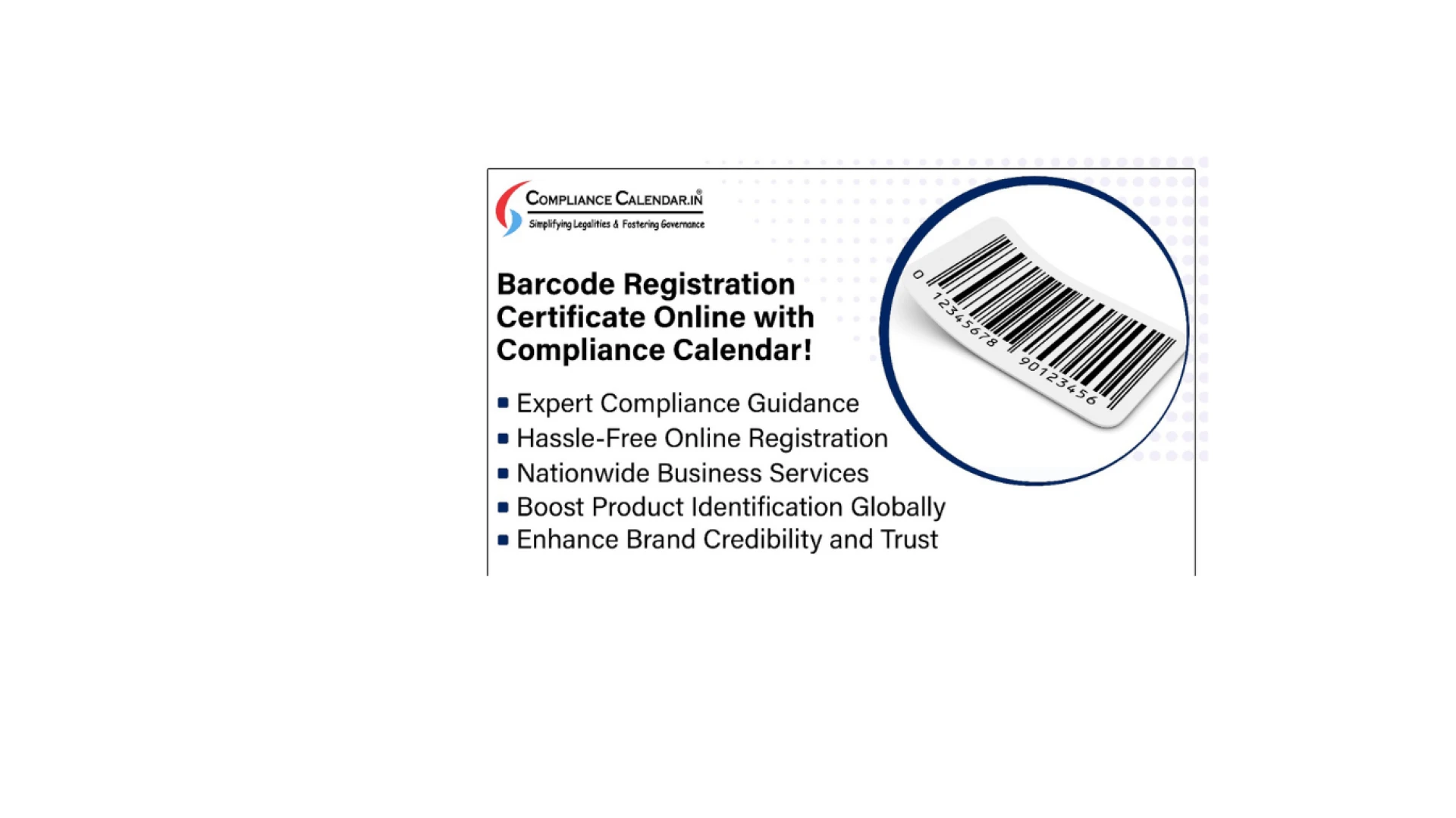

In the context of today’s global economy, effective product traceability has become a necessity rather than a luxury. Barcode Registration is fundamental for companies aiming for global recognition, from guaranteeing adherence to international regulations to improving operational efficiency. This guide will examine into the essential function of barcode registration in achieving seamless traceability, its importance for companies, and the detailed procedure to begin the process.
Understanding Barcode Registration
The process of obtaining, designating, and registering unique barcodes for products is known as Barcode Registration. These barcodes, mostly consisting of numerical or alphanumeric codes depicted by machine-readable symbols, function as a unique identifier for each item. The barcode system offers companies a uniform approach for storing, tracking, and retrieving product information across different platforms.
Why Barcode Registration Matters
Barcodes are more than just a series of black and white lines; they are the backbone of modern commerce. Their significance can be summarized as follows:
- Global Recognition: Registered barcodes, especially those obtained from reputable organizations like GS1, are accepted across international markets, making product traceability easier for businesses expanding globally.
- Streamlined Operations: From inventory management to sales tracking, barcodes improve efficiency by minimizing manual errors and automating processes.
- Enhanced Consumer Trust: With a registered barcode, businesses convey professionalism and reliability, fostering trust among customers.
- Compliance with Regulations: Many industries mandate barcode usage for product tracking, especially in sectors like pharmaceuticals, food, and electronics.
- Easier Distribution: Retailers and distributors often require products to have standardized barcodes for inventory systems.
How Barcode Registration Facilitates Traceability
Product traceability is the capability to monitor a product’s movement through the supply chain, starting from production and ending with the final consumer. Barcodes are essential for this by:
- Providing Real-Time Data: Scanning barcodes allows businesses to retrieve real-time information about a product’s location, status, and history.
- Confirming Accountability: With unique identification, barcodes help pinpoint issues like recalls or defects, confirming accountability at each stage.
- Improving Transparency: Customers and stakeholders can access detailed information about a product’s origin, fostering transparency and trust.
Types of Barcodes Used for Registration
Several barcode formats are used across industries, each suited to specific needs. Common types include:
- UPC (Universal Product Code): Widely used in retail, UPC codes are ideal for products sold in physical stores.
- EAN (European Article Number): Similar to UPC, EAN codes are preferred for international retail products.
- QR Codes (Quick Response): QR codes store more data than traditional barcodes and are commonly used for promotional and digital purposes.
- Code 39 and Code 128: These are popular in logistics and supply chain management due to their capacity for encoding both letters and numbers.
The Barcode Registration Process
Registering a barcode involves several steps to confirm compliance and global acceptance:
1. Obtain a Company Prefix
The initial step involves obtaining a company prefix from a licensed organization that issues barcodes, like GS1. This prefix is the basis of your barcode and globally identifies your business.
2. Assign Unique Product Numbers
For each product, assign a unique number within the prefix range. This confirms that every product has a distinct identifier.
3. Generate the Barcode
Using specialized software, convert the unique product number into a barcode image. confirms the barcode complies with industry standards for format and readability.
4. Register the Barcode
Submit your barcode information to the issuing organization’s database. Registration confirms your Barcode is recognized globally and prevents duplication.
5. Implement Barcodes on Products
Following registration, print the barcodes onto product packaging or labels. Test their scannability to guarantee seamless integration into inventory systems.
Benefits of Registered Barcodes
Registered barcodes provide numerous advantages to businesses, including:
- Accuracy in Inventory Management: Reduce manual errors and improve stock control with automated tracking.
- Improved Supply Chain Efficiency: Streamline processes by enabling fast and accurate data capture at every stage.
- Increased Market Access: Gain entry to retail chains and marketplaces that require standardized barcodes.
- Faster Checkout Processes: Enhance the customer experience with quick scanning at point-of-sale terminals.
- Data Analytics Opportunities: Leverage barcode data to gain insights into sales trends and consumer behavior.
Common Challenges in Barcode Registration
Despite its benefits, businesses may encounter hurdles in the barcode registration process, such as:
- Choosing the Right Barcode Format: Selecting a barcode that aligns with industry requirements can be daunting.
- Make sure Global Compliance: Adhering to international standards may require extensive research and consultation.
- Costs Involved: The fees for obtaining prefixes and registering barcodes can be significant for small businesses.
- Barcode Readability Issues: Poor quality printing or incorrect placement may render barcodes unreadable.
Tips for Successful Barcode Registration
- Partner with Trusted Issuing Bodies: Work with reputable organizations like GS1 to confirm global recognition.
- Double-Check Product Information: Verify product details before registration to avoid errors in the database.
- Invest in Quality Printing: Use high-quality printers and materials to confirm barcode durability and readability.
- Train Staff on Barcode Usage: Educate employees about the importance and proper handling of barcodes.
Barcode Registration and Emerging Technologies
The future of Barcode Registration is being shaped by innovative technologies, including:
- Blockchain Integration: Combining blockchain with barcode systems improves traceability and prevents counterfeiting.
- IoT (Internet of Things): IoT-enabled devices can scan and analyze barcodes in real time, improving supply chain efficiency.
- Artificial Intelligence: AI-powered tools help businesses analyze barcode data for actionable insights.
Conclusion
By registering barcodes, businesses gain access to global product traceability, equipping them for success in a connected world. Companies can boost transparency, simplify operations, and foster consumer trust by implementing a standardized system. No matter if you’re a small business or a global corporation, putting money into barcode registration is a move toward greater efficiency and competitiveness in the future.
Bottom of Form





























Sign in to leave a comment.