
The moment Class 12 results appear on the screen, thousands of students experience something they never expected.
Silence.
Not because the house becomes quiet, but because the mind suddenly does.
For a few seconds, nothing feels real. Calls start coming in. Friends begin posting results online. Relatives start asking questions. Parents try to understand what happened. And somewhere in the middle of all that noise, students quietly begin thinking one terrifying thought:
“What now?”
Failing Class 12 can feel like life has suddenly stopped moving.
Many students spend months believing they are now “behind” everyone else. Some isolate themselves completely. Some stop talking confidently even to close friends. Others pretend they are okay while internally feeling ashamed, confused, or emotionally exhausted.
But something important is changing now.
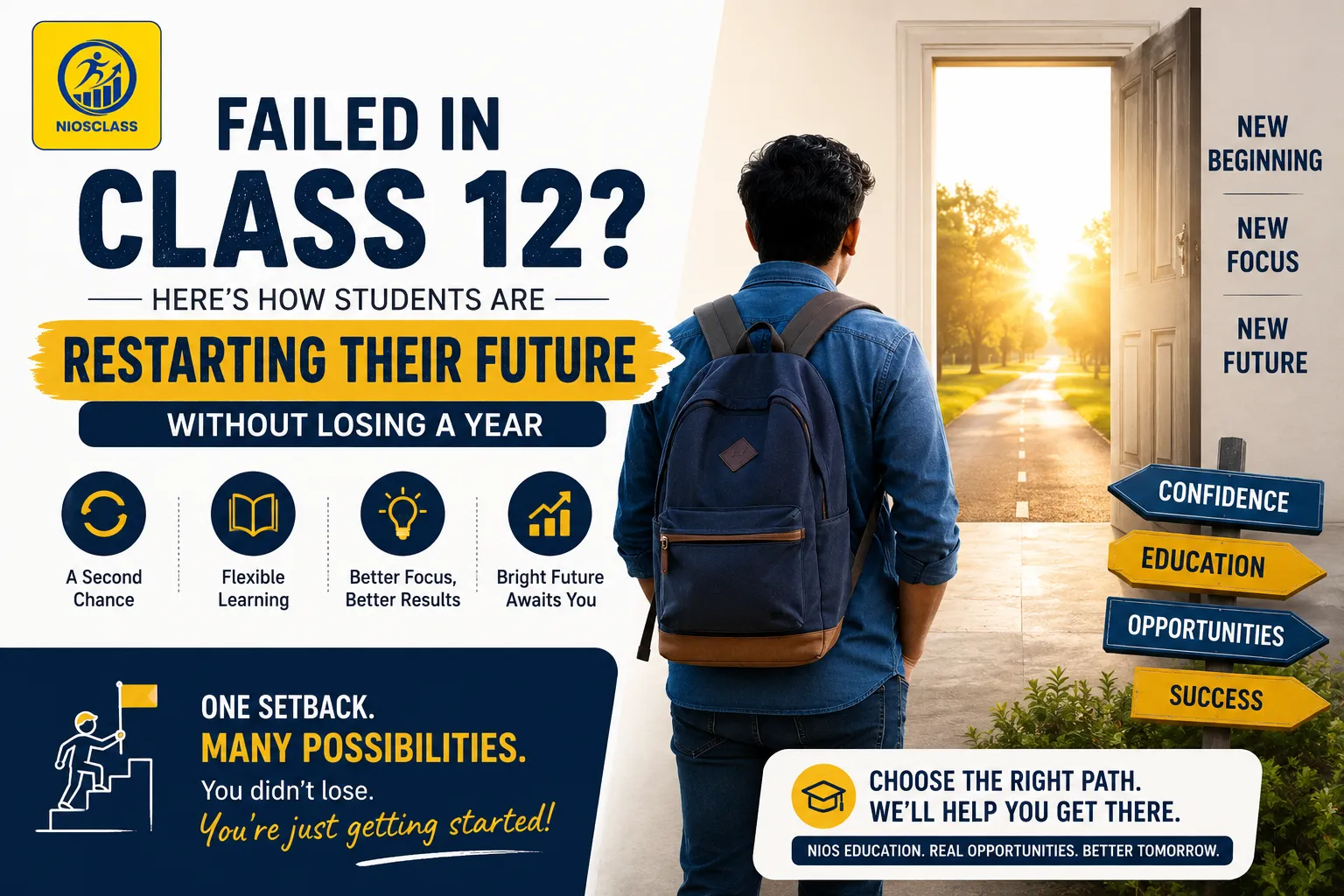
More students are beginning to understand that failing one board exam does not mean losing an entire future. And instead of wasting years trapped in guilt and social pressure, many are rebuilding their academic path through flexible systems like the nios secondary course, where education becomes possible without forcing students to repeat the same emotional damage all over again.
The conversation is slowly shifting from embarrassment to recovery.
And honestly, it needed to.
Failure Feels Bigger at 17 Than Most Adults Realize
Adults often say things like, “It’s just one exam.”
But for students, it rarely feels that simple.
At 17 or 18, education is deeply connected to identity. Marks begin shaping confidence, family expectations, social image, and future plans all at once. So when results go wrong, students don’t only feel academically weak.
They feel personally broken.
What makes it harder is the environment around them.
Everywhere they look, someone else appears to be moving ahead. College admissions start. Social media becomes filled with celebration posts. Coaching centres advertise toppers. Friends discuss career plans.
Meanwhile, the student who failed often feels emotionally frozen in one place.
This emotional isolation becomes dangerous because many students start believing failure is permanent.
It isn’t.
But when someone is already mentally overwhelmed, logic becomes difficult to hear.
Most Students Who Fail Are Not “Weak Students”
This is one of the biggest misconceptions in Indian education.
Many students who fail Class 12 are not careless or incapable. They are simply overwhelmed by situations people around them never fully notice.
Some students are dealing with anxiety during exams.
Some are managing family pressure silently.
Some are preparing for competitive exams while balancing school work.
Some struggle with concentration but never receive proper guidance.
Some lose confidence after repeated academic comparison.
And many students today are mentally exhausted long before exams even begin.
The problem is that traditional systems rarely pause to understand context.
They only measure performance.
That is why more students are now searching for alternatives that give them another opportunity without forcing them to lose confidence completely.
The Fear of “Losing a Year” Creates More Panic Than Failure Itself
One thing students repeatedly worry about after failing Class 12 is time.
Not marks.
Time.
They fear being left behind while everyone else moves ahead. They worry relatives will judge them. They fear explaining their situation repeatedly. Some students even rush into wrong decisions simply because they are terrified of “wasting one year.”
But in reality, students lose more time emotionally when they stay stuck in shame and confusion without a proper plan.
A clear restart matters more than forced speed.
This is one reason flexible education systems have become increasingly relevant. Students are realizing that they can continue their education strategically instead of treating one failed result like the end of everything.
And naturally, searches around nios tuition and academic recovery options have increased because students now want practical solutions, not emotional lectures.
Restarting Requires Emotional Recovery Too
One mistake families often make is focusing only on the next exam immediately.
But students recovering from failure usually need emotional rebuilding first.
Confidence does not magically return overnight.
A student who once feared opening result websites may now fear studying itself. Some students avoid books because they associate studying with disappointment. Others struggle to concentrate because their mind constantly replays past mistakes.
This is normal.
And honestly, students should hear that more often.
Recovery is not laziness.
It is part of rebuilding.
That is why the environment around students after failure matters so much. Supportive guidance can slowly help students regain rhythm without constant fear or humiliation.
And this emotional safety often becomes the reason many students start performing better academically later.
Why More Students Are Choosing Flexible Education Paths
The old idea that every student must follow one rigid academic route is slowly breaking.
Students today are understanding that learning styles, emotional conditions, career goals, and life situations differ from person to person.
A student preparing for competitive exams may need more independent study time.
A working student may need schedule flexibility.
A student recovering from burnout may need a calmer environment to study effectively again.
This flexibility is why systems like the nios senior secondary course are becoming meaningful for students who want to continue education without permanently losing momentum.
For many students, it creates something they desperately need:
Breathing space.
And breathing space changes how students study.
Competitive Exam Aspirants Are Also Choosing Different Routes
Interestingly, many students restarting after failure are not giving up on ambitious careers.
Some continue preparing for JEE.
Some focus on NEET.
Some pursue government exams or skill-based careers.
But they are becoming smarter about how they structure preparation.
Students are beginning to realize that exhausting schedules do not automatically create better results. In fact, constant pressure often destroys consistency.
That is why many aspirants now prefer flexible academic structures where they can balance board completion alongside entrance preparation more realistically.
The goal is not avoiding hard work.
The goal is avoiding unnecessary mental collapse.
And honestly, that distinction matters.
Education Looks Different in 2026
The definition of learning has changed dramatically in recent years.
Students no longer depend only on physical classrooms. Today’s learners use:
- Online lectures
- Recorded classes
- Digital test analysis
- Mentorship communities
- Self-paced learning platforms
- Personalized revision schedules
This shift naturally increased demand for nios coaching online support because students now value accessibility and flexibility more than rigid attendance systems.
Many students study more effectively from environments where they feel mentally comfortable instead of constantly pressured.
And technology has made independent learning far more practical than it once was.
Flexibility Still Requires Discipline
There is an important truth students must understand before restarting.
Flexible education is not an “easy option.”
It simply allows students to study differently.
Students still need consistency, planning, and accountability. In fact, flexible systems often require stronger self-discipline because students must manage their own routines without daily school pressure controlling them.
But many students become more mature through this process.
They learn:
- Time management
- Independent learning
- Self-responsibility
- Focused preparation
- Emotional resilience
And these qualities often help them beyond academics too.
This is why students searching for structured support frequently explore nios coaching classes that combine flexibility with academic direction.
Balance matters.
Too much pressure breaks students.
Too little structure distracts them.
The right environment sits somewhere in between.
The Emotional Difference Between Judgment and Guidance
Students who fail Class 12 often become extremely sensitive to language.
One careless comment can destroy motivation for weeks.
That is why the tone of parents, teachers, mentors, and relatives matters far more than people realize.
Students do not need daily reminders about failure.
They already remember it constantly.
What they actually need is clarity.
They need someone who can help them rebuild step by step without making them feel permanently damaged.
Supportive guidance changes everything because students begin seeing themselves as people who are recovering, not people who are finished.
And once confidence slowly returns, academic improvement usually follows.
One Failed Result Does Not Cancel Future Opportunities
This fear is extremely common among students after Class 12 failure.
They believe opportunities are now permanently closed.
But real life rarely works that way.
Students completing nios class 12 continue moving toward higher education, competitive exams, skill development, entrepreneurship, creative careers, and professional opportunities depending on their goals and consistency.
The path may look different from classmates initially.
But long-term success rarely follows identical timelines anyway.
Many students who struggled academically at 17 become highly successful later because they eventually learn how to study according to their own strengths instead of constant comparison.
And honestly, resilience built through recovery often becomes one of their biggest advantages later in life.
Also Read: Why Choosing NIOS Coaching Is Better Than Taking a Drop Year
The Real Benefits Go Beyond Academics
When people discuss NIOS board benefits, they often focus only on exam flexibility.
But the deeper benefits are emotional.
Students regain confidence.
They reconnect with routine.
They stop seeing themselves as permanent failures.
They learn how to restart after disappointment.
And perhaps most importantly, they realize that their life does not end because one system failed to fit them properly.
That realization changes people.
A Different Path Can Still Lead Somewhere Meaningful
The biggest mistake students make after failure is assuming they are out of options.
They are not.
Sometimes life simply forces people onto a different academic route than originally planned. That route may feel uncomfortable initially, especially when comparison and social pressure are involved.
But different is not always worse.
Sometimes different becomes healthier.
More sustainable.
More aligned with how a student actually learns and lives.
That is why platforms like NIOS CLASS are becoming relevant for students looking to rebuild their academic journey without losing confidence completely. Whether someone is restarting studies after burnout, balancing preparation with work responsibilities, or searching for practical nios courses, the focus is no longer just “passing exams.”
The focus is rebuilding direction.
And for students who need structured guidance alongside flexibility, choosing the right nios coaching institute and supportive nios coaching centre can often become the beginning of a much healthier comeback story.
One failed result may delay your timeline for a while.
But it does not have the authority to decide who you become in the future.


























Sign in to leave a comment.