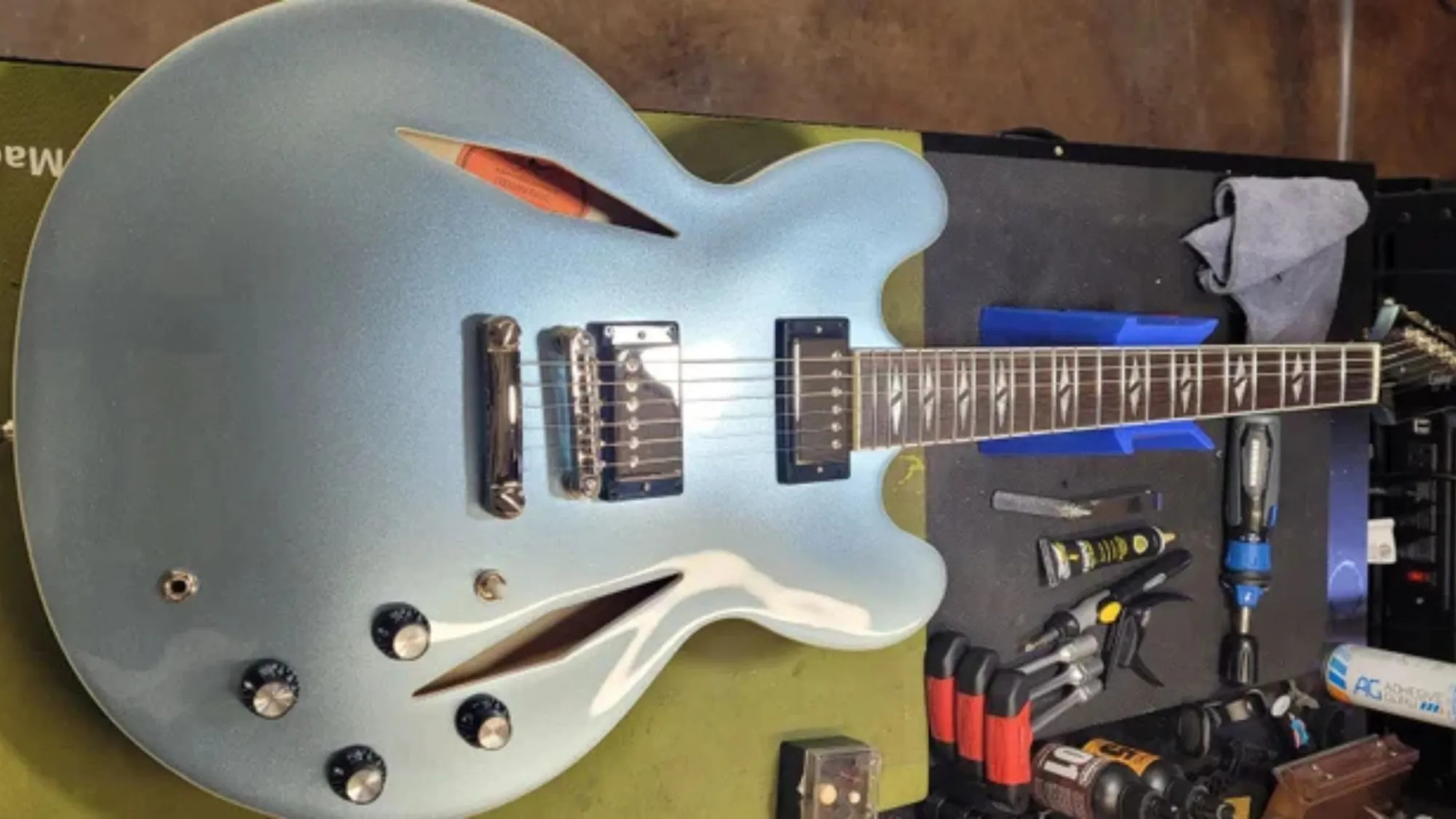

If your bass guitar has started buzzing, feels uncomfortable to play, or simply does not sound as good as it used to, you might wonder whether it needs a bass guitar setup or a repair.
Many players use these two terms as if they mean the same thing. They do not. Knowing the difference can save you time, money, and stress. More importantly, it helps you take better care of your instrument.
Think of it this way. A setup is regular maintenance that keeps your bass playing its best. A repair fixes something that is broken, damaged, or not working properly.
Continue reading to understand the differences clearly.
What Is a Bass Guitar Setup?
A bass guitar setup is the process of adjusting your instrument so it feels comfortable, plays smoothly, and sounds its best. Nothing has to be broken for your bass to need a setup.
Just like a car needs regular servicing, a bass guitar also needs regular adjustments. Changes in weather, string tension, and everyday playing can slowly change how your instrument feels and sounds.
A professional bass guitar setup usually includes:
- Adjusting the neck relief using the truss rod
- Setting the string action for comfortable playing
- Adjusting the intonation so every note sounds in tune
- Checking and adjusting pickup height
- Tightening loose hardware
- Cleaning the fretboard and instrument
- Installing and stretching new strings if needed
These adjustments help improve both playability and tone.
What Is a Bass Guitar Repair?
A repair is different because it fixes a problem that cannot be solved with normal adjustments.
Repairs are needed when a part is broken, damaged, or no longer works properly.
Common bass guitar repairs include:
- Replacing broken tuning machines
- Repairing cracked necks or bodies
- Fixing damaged electronics
- Replacing worn frets
- Repairing loose bridges
- Fixing broken nuts
- Repairing or replacing faulty pickups
- Repairing output jack problems
Unlike a setup, repairs often need replacement parts and more detailed repair work.
Bass Guitar Setup vs Repair: Quick Comparison
| Feature | Bass Guitar Setup | Bass Guitar Repair |
| Purpose | Improve playability and performance | Fix broken or damaged parts |
| Required Parts | Usually none | Often requires replacement parts |
| Frequency | Every 6 to 12 months or after string changes | Only when something is damaged |
| Cost | Usually lower | Depends on the type of damage |
| Playing Comfort | Greatly improves comfort | Brings the instrument back to normal working condition |
| Sound Quality | Improves tone and keeps notes in tune | Fixes sound problems caused by damaged parts |
| Preventive or Corrective | Preventive maintenance | Corrective service |
How Do You Know Your Bass Needs a Setup?
Sometimes your bass is not broken at all. It simply needs the right adjustments.
Watch for these signs:
- Strings feel too high or too low
- Notes sound out of tune higher up the neck
- Buzzing on several frets
- Playing feels harder than usual
- The bass has been stored for a long time
- You recently changed to a different string gauge
- Weather or humidity has changed a lot
If these problems sound familiar, a bass guitar setup is probably the right choice.
When Does Your Bass Need a Repair?
Some problems cannot be fixed with adjustments alone.
You may need a repair if you notice:
- No sound from the output jack
- Broken tuning pegs
- Loose or cracked bridge
- Electrical buzzing that does not go away
- Visible cracks in the wood
- Missing or damaged frets
- Broken knobs or switches
- A broken truss rod
In these situations, the damaged part needs to be repaired before the instrument is set up.
Can a Setup Fix Every Playing Problem?
The simple answer is no.
A setup can fix many common problems related to comfort and performance, but it cannot repair broken parts.
For example:
- Buzzing caused by an incorrect neck adjustment can often be fixed during a setup.
- Buzzing caused by loose frets usually needs a repair.
- Poor intonation can often be adjusted.
- A broken pickup needs repair or replacement.
That is why an experienced technician checks the instrument first before suggesting the right service.
What About an Electric Guitar Setup?
If you also own a six-string guitar, the process is very similar.
An electric guitar setup usually includes:
- Neck adjustment
- Action adjustment
- Intonation adjustment
- Pickup height adjustment
- Hardware inspection
- String replacement
The biggest difference is that bass guitars have thicker strings, longer necks, and different playing needs. Because of this, the settings used during an electric guitar setup are different from those used on a bass.
Even though the process is similar, each instrument should be adjusted according to its own needs.
Why Regular Setups Save Money
Many musicians only visit a technician when something goes wrong.
This can often lead to higher repair costs later.
Regular setups can help by:
- Reducing extra wear on the instrument
- Keeping the neck adjusted properly
- Preventing tuning problems
- Helping strings last longer
- Finding small problems before they become expensive repairs
A well-maintained bass is also more enjoyable to play, making practice and performances feel easier and more enjoyable.
Should You Do It Yourself or Visit a Professional?
Basic maintenance is something every player can learn.
You can safely do tasks like:
- Cleaning the instrument
- Changing strings
- Cleaning the fretboard
- Tightening loose strap buttons
However, more detailed adjustments need the right skills and experience.
Professional technicians know how small adjustments affect the neck, action, and intonation. They also use the right tools to make accurate adjustments without causing damage.
If you are unsure, it is always safer to let a professional handle the work.
Final Analysis:
Understanding the difference between a bass guitar setup and a repair helps you make better decisions for your instrument. A setup keeps your bass comfortable to play, in tune, and ready for every session. A repair fixes damaged parts and gets your instrument working properly again.
Regular maintenance can help prevent many major problems before they happen. Whether you play at home, record in a studio, or perform on stage, taking care of your bass helps it sound better, play better, and last for many years.


























Sign in to leave a comment.