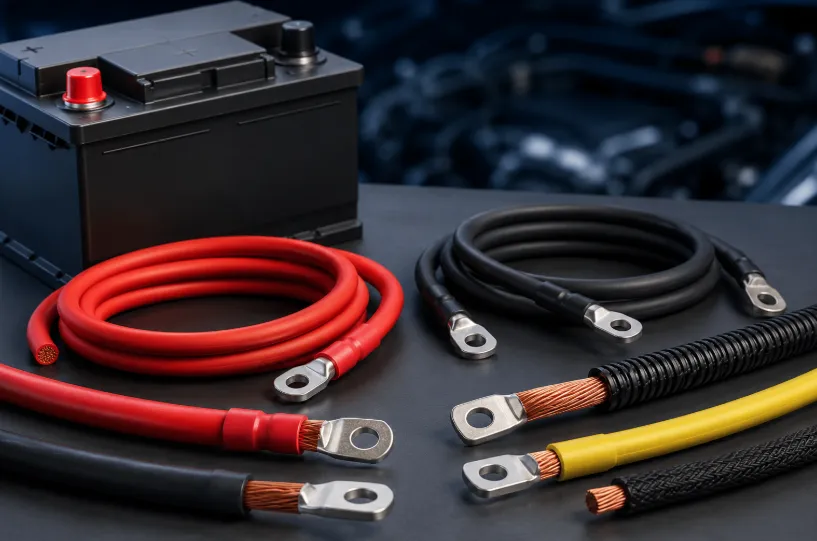

When the real culprit is your Cable and not the Battery
A fleet owner calls, inconvinced his truck’s battery has given up again. It is the third time this month. The mechanic checks the battery first and it is good to go. The real issue turns up somewhere nobody looked, and almost every time, getting ignored, a battery cable that has hardened and cracked near the engine bay, quietly starving the starter of the current it needs. The battery gets blamed and replaced, and the problem returns within weeks.
This happens more often than most vehicle owners realise. Batteries get all the attention when something goes wrong electrically, while the cable connecting that battery to the rest of the vehicle rarely gets a second look until it fails. Engine bays are also running hotter than before, thanks to turbocharging, tighter component packing, and vehicles working harder for longer, which puts that cable under more stress in 2026 than it faced even a few years ago.
So before troubleshooting the next electrical fault, this article will help you to understand what a battery cable is supposed to do, what separates one type from another, and why picking the right one matters more than it seems.
What Actually Counts as a Battery Cable
More Than Just a Thick Wire
A battery cable looks pretty simple and basic from the outside just a thick, flexible conductor with a connector on each end, simple, right? But its job is not that simple, though. It carries the high current bursts needed to crank a starter motor, ground the chassis properly, and keep the alternator circuit stable. A thin wire cannot do this reliably, which is why battery cables are built differently from the general wiring running through a vehicle’s dashboard or lighting circuits. A special cable is needed to handle such important tasks
The Standard Behind the Category
Most automotive battery cables used in India and globally are built to meet SAE J1127, a specification that governs low voltage battery cables rated at 60V DC or less. Within this standard, you will typically come across cable types like SGT cable and SGX cable, along with SGR, each differing mainly in the insulation material used and how well that insulation handles heat, chemicals, and physical wear.
Where This Shows Up on the Road
Think about any vehicle that needs a strong initial current to get its engine running, trucks, buses, tractors, forklifts and passenger cars alike. In every one of these, a battery cable connects the battery to the starter and the battery to ground. It is unglamorous work, and it is the kind of component nobody notices until it stops working. It is like salt to your food, it gets ignored when added, but something feels off without it.
Before comparing the two most common types, it helps to know what family they both come from.
SGT Cable, the Everyday Workhorse
What Makes SGT, SGT
SGT cable uses PVC insulation, also called thermoplastic insulation, wrapped around a bare stranded copper conductor. It is flexible, easy to route, and more affordable compared to heavier duty alternatives. This combination is exactly why it has remained the standard choice for years across everyday vehicle applications.
Where It Performs Best
SGT cable typically handles temperatures from around minus 40 degrees Celsius up to 105 degrees Celsius, with a voltage rating in line with the SAE J1127 standard. That range covers most standard operating conditions comfortably. PVC insulation does soften and degrade once it is regularly exposed to higher heat, though and that is where its limits start to show.
Application Snapshot
You will find SGT cable doing solid, dependable work in passenger cars, light commercial vehicles and general purpose starter or ground circuits where the routing does not run close to major heat sources. For most vehicles on Indian roads today, this is the cable quietly doing the job it was designed for.
SGT covers the bulk of everyday requirements well. But bulk is not everything, and that gap is exactly where SGX earns its place.
SGX Cable, Built for Heat and Abuse
The XLPE Difference
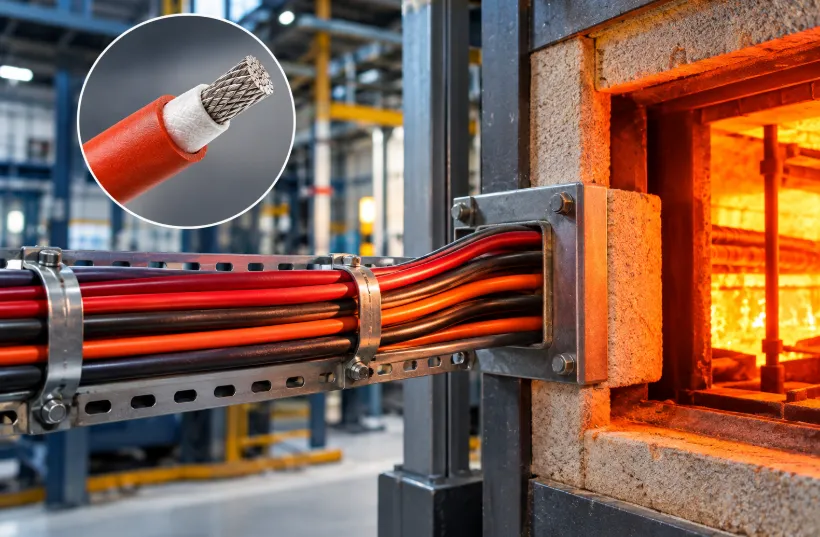
SGX cable swaps out PVC for XLPE insulation, or cross linked polyethylene. XLPE is a thermoset material, meaning once it cures, its structure is locked in permanently. Under extreme heat, it chars rather than melting or dripping the way PVC can, which makes a real difference in demanding environments where a cable failure could mean more than just an inconvenience.
Why Engine Bays Are Getting Tougher on Cables
Modern engine bays are packed tighter than before turbochargers sit closer to surrounding components and vehicles are expected to run longer duty cycles with less downtime. All of these conditions push ambient temperatures higher in exactly the spots where battery cables are routed, a quiet shift that is steadily increasing demand for cables built to take the heat and operate fine in heat.
Application Snapshot
SGX cable is the natural choice for heavy duty trucks, buses, off highway and construction equipment, high performance engines, and any battery grounding run positioned near a turbo or exhaust component. Wherever the environment is unforgiving, SGX is built to hold up.
SGX is not an upgrade chosen for the sake of it. It exists because vehicles are genuinely built and used differently today, and cables need to keep pace.
Choosing Between Them Is Not Just About Price
The Real Selection Factors
Picking the right cable comes down to a few practical questions. Such as,
What current load will it carry, and what gauge does that call for? How hot does the routing point actually get? Will it face regular exposure to oil, coolant, or other fluids? How much flexibility does the installation demand, and how long does the cable need to last without giving trouble?
These questions give your dealer a proper overview of your work and the cables that would perfectly suit your working conditions.
A Quick Way to Think About It
If a cable run sits near heat or stress points, the extra cost of XLPE insulation pays for itself in reliability. If it is a standard run with moderate exposure, PVC does the job well without overspending on a spec you do not need.
Application Snapshot
This is exactly how experienced fleet maintenance teams approach it. They standardise SGX for the high stress zones prone to failure while keeping SGT for the routine runs balancing cost and reliability instead of defaulting to one cable type everywhere.
Good selection is never about buying the most expensive cable across the board. It is about matching each cable to where it actually lives on the vehicle.
Why the Manufacturer Behind the Cable Matters Just as Much
Specification on Paper versus Consistency on the Line
Meeting SAE J1127 sets the baseline, but a spec sheet only tells half part of the story. Two cables can carry the same rating and still perform very differently in the field, depending on factors like copper purity, stranding quality and how consistently the insulation is applied batch after batch. This is where the manufacturer’s process starts to matter as much as the material itself.
Material alone is not enough to make a cable work, though it plays a big part.
What to Look for in a Battery Cable Manufacturer in India
A dependable Battery Cable Manufacturer in India should be able to show test data, not just claims on a data sheet. Look for consistent raw material sourcing, proper testing against SAE J1127 requirements, and the ability to supply both SGT and SGX ranges reliably at the volumes fleets and OEMs actually need, without long import delays eating into project timelines.
Application Snapshot
For fleet operators and OEMs working across India’s growing automotive base, sourcing from an established domestic manufacturer means shorter lead times, easier communication for custom requirements and cable quality that does not vary from one batch to the next. SIAM data shows India’s automobile industry produced roughly 3.1 crore vehicles across passenger, commercial, two and three wheeler categories in FY 2024- 25 alone a scale that makes consistent cable supply anything but a small requirement.
Choosing the right cable type solves half the reliability question. Choosing the right manufacturing partner solves the other half.
A Few Practical Takeaways
- Match the cable type to the actual heat exposure at that specific routing point, not the vehicle as a whole.
- Use SGT cable for standard ground and starter runs with moderate heat conditions.
- Choose SGX cable wherever routing sits close to turbos, exhausts or heavy duty cycles.
- Always confirm SAE J1127 compliance and ask for batch level test data, not just a printed spec sheet.
- Work with a manufacturer capable of supplying both SGT and SGX consistently at the volumes your fleet or production line needs
The Cable You Do Not Think About Until It Fails
Battery cables rarely get credit when everything works, and they rarely escape blame when something else goes wrong in the electrical system. Yet the right cable, matched properly to its environment, is one of the quieter reliability decisions a fleet owner, workshop, or OEM can get right.
As engine bays keep running hotter and duty cycles keep getting longer, the margin for error on cable selection keeps shrinking. Vehicles today are simply not built the way they were a decade ago. Is your current battery cable specification actually built for what your vehicles face now, or is it still catching up to yesterday’s conditions?
If you are reviewing your battery cable requirements or need the right SGT or SGX specification for your fleet or production line, our team is happy to walk through it with you. Reach out and let us help you get the specification right the first time.

























Sign in to leave a comment.