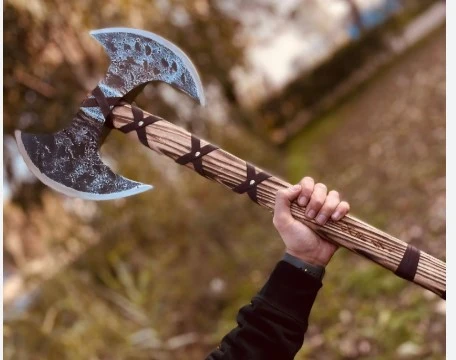
The Axe as the Warrior’s Weapon
While swords often symbolized wealth and status, the axe was the true weapon of Viking axe warrior. Affordable, versatile, and deadly, it was carried by farmers, raiders, and elite fighters alike. Its practicality in daily life meant that nearly every Norseman was already skilled in handling it long before stepping onto the battlefield.
Fighting in the Shield Wall
One of the most common Viking battle formations was the shield wall — a tight line of warriors standing shoulder to shoulder with overlapping shields. Within this formation, axes were especially effective. Warriors used them to chop at enemy shields, aiming to split wood, break defenses, or create openings in the opposing line.
The hooked lower edge of the Bearded Axe (Skeggøx) allowed fighters to pull shields aside or trap an opponent’s weapon. This technique could quickly destabilize the enemy and create space for a decisive strike.
Power and Reach
Some warriors wielded larger, two-handed axes such as the Dane Axe. With its long shaft and broad blade, it offered superior reach and tremendous cutting force. Skilled fighters used it to strike over or around shields, targeting exposed areas. A powerful swing could break bones, crush helmets, or disable an opponent in a single blow.
Although slower than a sword in tight quarters, the larger axe dominated open engagements and could control space effectively.
Versatility in Close Combat
In hand-to-hand fighting, Norse axe was more than a chopping weapon. Warriors could use the haft (shaft) to push or strike, and the blade to hook, pull, or disarm. The concentrated weight of the axe head allowed it to deliver devastating force, making it effective even against armored opponents.
Because it required strength and timing rather than elaborate technique, the axe was both practical and efficient in chaotic battle conditions.
Skill, Strength, and Fear
A well-trained Viking warrior understood how to balance aggression with control. Swinging an axe required stamina and precision, especially in prolonged fights. The sight of a warrior advancing with a long-handled axe could be intimidating, adding a psychological edge to its physical power.
On the battlefield, Viking axe for sale was more than just steel and wood — it was a symbol of readiness, resilience, and raw force. From the tight ranks of the shield wall to open-field clashes, it proved to be one of the most effective and feared weapons of the Viking Age.





Sign in to leave a comment.