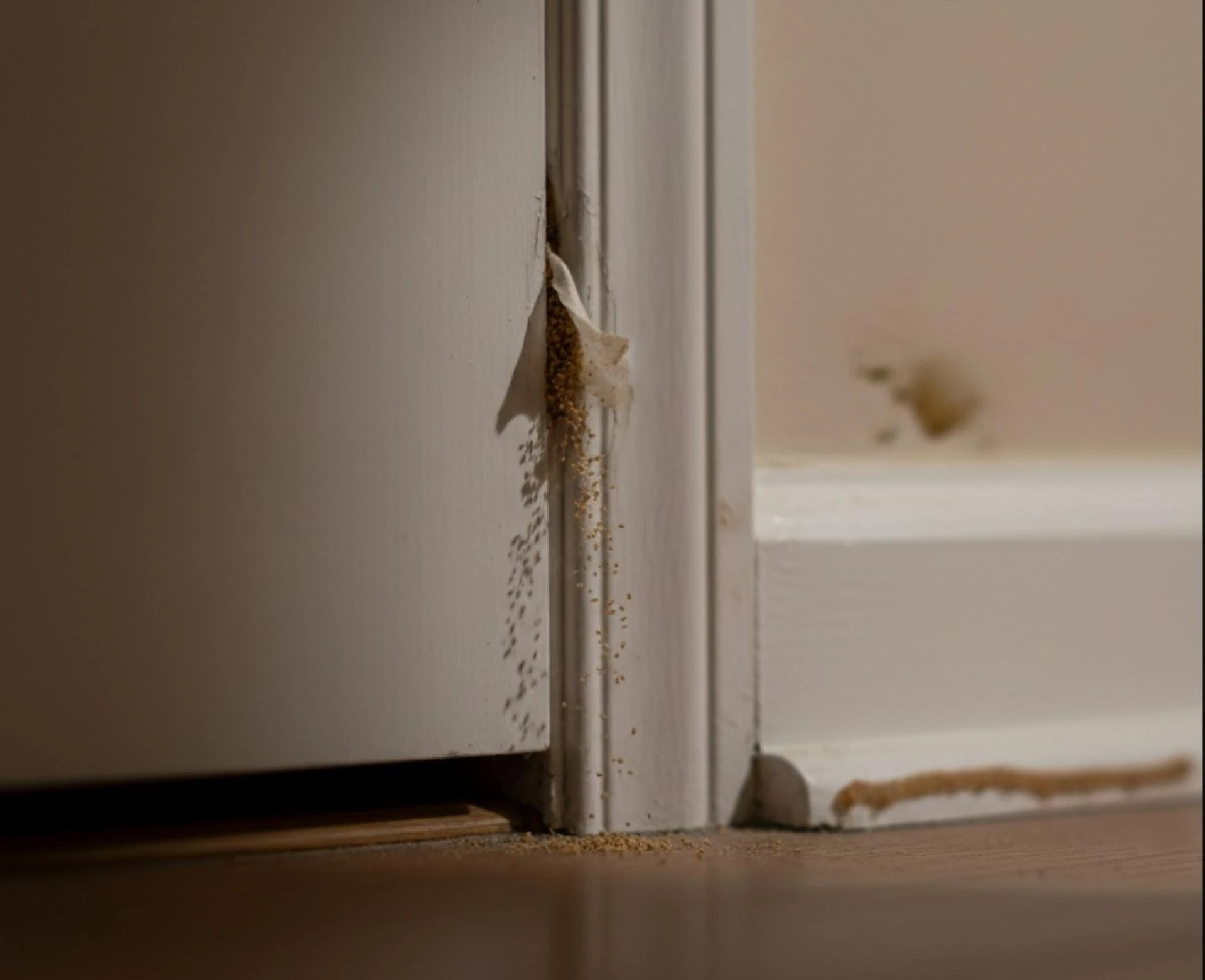

Termite infestations are silent destroyers. Many homeowners only notice the problem when structural damage is severe. License to Kill trained professionals identify subtle indicators that most people overlook. Early detection not only protects your home but also saves thousands in repair costs. Recognizing termite early warning signs ensures timely action before significant damage occurs.
Termites often remain hidden inside walls, under floors, and within wooden beams. Mud tubes or discarded wings are obvious indicators, but trained inspectors rely on hidden clues that homeowners rarely spot. Learning these signs can make all the difference.
Even minor changes in your home like swelling wood, small paint bubbles, or unexplained sticking doors can indicate termite activity. Professionals use these subtle cues during residential pest inspections to identify infestations early and prevent costly repairs.
Termite Detection Starts With Subtle Structural Changes
Structural anomalies are among the first signs of termite presence. Slight shifts, warping, or bulging wood might look normal but often indicate internal damage. Professionals detect these during comprehensive termite inspections using specialized tools and techniques.
Moisture is another critical factor. Termites thrive in damp conditions. Inspectors examine hidden water stains, soft or spongy wood, and humidity pockets near foundations or crawlspaces. Early identification allows for targeted pest control solutions that stop infestations before they escalate.
Doors or windows that suddenly stick without a foundation or humidity cause may signal termite activity. San Diego Professionals combine these observations with probing and sound testing during termite inspections.
How Termites Feed: Signs Professionals Detect?
Termites eat wood from the inside out, leaving a thin exterior intact. This internal feeding leaves subtle signs like hollow sounds when tapping wood. Most homeowners miss this, but trained inspectors use it as an early detection method.
Minor warping or misalignment around doors, windows, or trim can also indicate termite activity. Pest control inspectors confirm this using a termite inspection, which ensures accurate identification.
Small frass pellets are another subtle clue. Drywood termites produce sand-like waste that homeowners often mistake for sawdust. Detecting frass triggers termite treatments before severe damage occurs.
Hidden Clues: Paint, Pellets, and Noise
Bubbling or peeling paint without water leaks is often caused by termites tunneling inside wood. These hidden signs alert professionals to infestations before they become visible. Scheduling Termite Signs inspections ensures early detection.
Quiet tapping or clicking noises within walls are often produced by soldier termites. Professionals recognize these subtle sounds and can pinpoint hidden activity.
Why Early Detection Saves Money?
Waiting until visible signs appear often means that termites have been active for months. Hidden indicators like frass, moisture spots, hollow wood, and subtle warping allow professionals to intervene early. Prompt inspections and treatments prevent costly repairs..
3 Hidden Termite Signs Only Exterminators See
- Slight Moisture Variations
Moisture attracts termites. Professionals use specialized devices to detect hidden dampness behind walls, under floors, and inside crawlspaces. Recognizing these hidden moisture zones allows for targeted termite control interventions.
- Microscopic Debris and Pellets
Frass is often too small for homeowners to notice. Professionals examine vents, cracks, and hidden spaces to catch early signs of infestation. This allows for early pest control solutions that are more effective and less invasive.
- Minor Deformation Around Wood
Slight warping or misalignment in beams, framing, or trim can reveal Termite Signs activity. Professionals probe, tap, and inspect to confirm damage. Early identification ensures prompt termite treatments and prevents costly structural repairs.
Post-Detection Actions
After confirming hidden termite activity, professionals create tailored treatment plans. Subterranean, dry wood, and damp wood infestations require different strategies, including fumigation, localized chemical treatments, and preventive barriers.
Professional services provide not just extermination, but long-term prevention. Soil treatments, moisture management, and wood sealing protect your home from future infestations. With expert guidance, your home stays safe from termites year-round.
Conclusion
Detecting termites early isn’t about spotting mud tubes or wings. Professionals focus on hidden signs like hollow wood, frass, paint changes, moisture patterns, and subtle noises. Acting on these clues prevents structural damage and saves homeowners significant costs.
If you suspect termite activity, schedule a San Diego termite inspection today. Protect your home with termite treatments and preventive solutions from trusted experts.
Frequently Asked Questions
Q: What is the earliest sign of termite infestation?
Subtle moisture changes, hollow wood, and tiny frass pellets often appear before visible damage.
Q: Can termites be detected without mud tubes?
Yes. Professional inspections detect microscopic frass, paint bubbling, hollow-sounding wood, and quiet tapping.
Q: How often should I schedule a termite inspection?
Annual inspections are recommended, especially in high-risk areas. Additional checks are necessary if hidden signs appear.
Q: Does homeowners insurance cover termite damage?
Coverage varies, and many policies exclude termite damage. Early detection and treatment are crucial.
Q: Are DIY termite detection methods reliable?
DIY methods may spot obvious signs, but only professional termite inspections reliably detect hidden activity and recommend effective termite treatments.
Locations:
3755 Avocado Boulevard #300, La Mesa CA 91941


























Sign in to leave a comment.