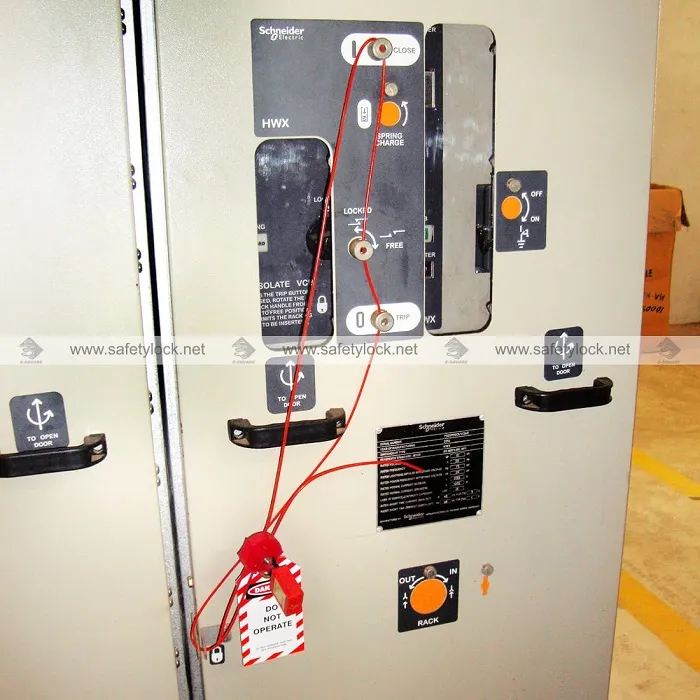

In a perfect world, every energy isolation point in a manufacturing facility would be standardized, easily accessible, and perfectly compatible with a basic padlock. However, anyone who has actually stepped foot on a factory floor knows that "perfect" is rarely the reality. Between legacy machinery from the 1980s, oddly shaped valve handles, and cramped electrical panels, maintenance teams often face "unlockable" challenges.
This is where the Cable Lockout Device steps in. Often referred to as the versatile workhorse of the safety world, cable lockouts are not just a "nice-to-have" accessory; they are a fundamental pillar of a truly comprehensive Lockout Tagout program. Here is why these flexible lifesavers are non-negotiable for modern industrial safety.
1. The Master of Irregular Shapes
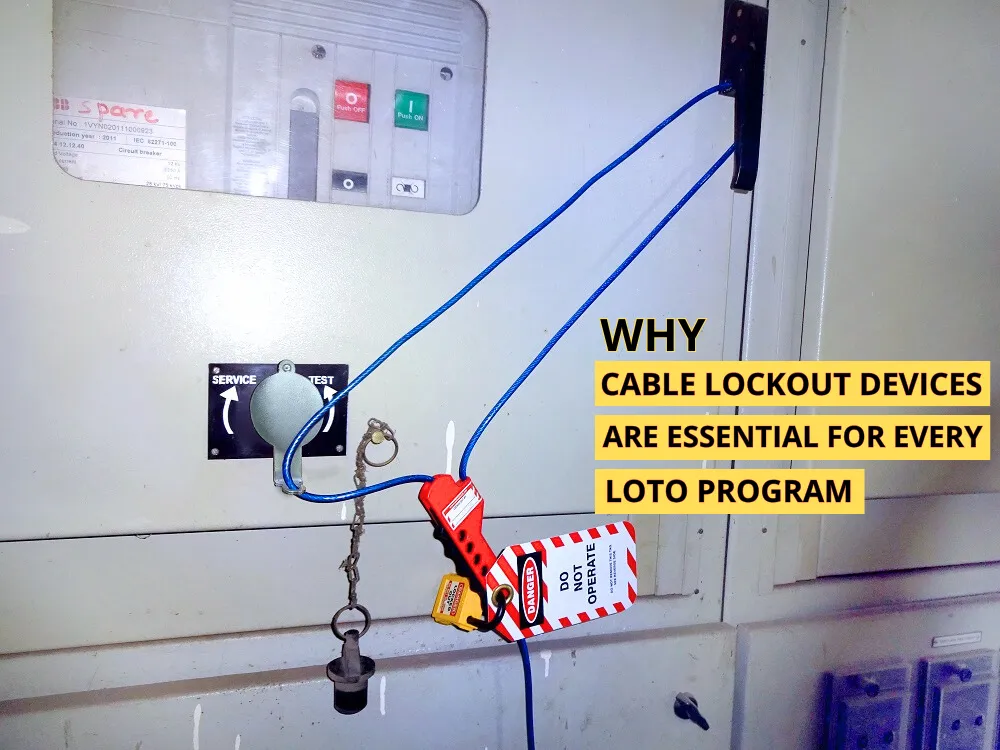
Standard LOTO devices are usually rigid. A ball valve lockout is shaped like a box; a gate valve cover is a hard plastic clamshell. While these are excellent for standard fittings, they fail the moment they encounter a bent handle or an unconventional lever. Cable lockouts solve this by providing:
- Adaptive Security: The flexible, multi-stranded steel cable threads through, around, and under almost any obstruction.
- Universal Fit: They can secure oversized wheels, butterfly valves, and nested handles where a rigid device simply won't fit.
- Ease of Use: A simple pull-tight cinching mechanism ensures a snug, secure fit regardless of the machine's age or design.
2. Efficient Multi-Point Isolation
In complex systems, a single maintenance task might require isolating four or five different energy points in close proximity. Using individual rigid covers for each one is not only expensive but also cumbersome for the technician. A cable lockout device allows for "daisy-chaining," which offers several key advantages:
- Reduced Gear Weight: One cable device can replace five or six separate rigid lockout tools.
- Centralized Locking: Technicians can thread a single cable through multiple valves and secure the entire line with one padlock.
- Visual Confirmation: It provides a clear, unmistakable visual path showing that every related energy source is physically blocked.
3. Bridging the Gap Between Eras
Most plants are a mix of brand-new technology and "old faithful" machines that have been running for decades. Many of these legacy machines feature energy isolation points that were designed long before modern safety standards existed. Cable lockouts are essential here because they:
- Eliminate Custom Fabrication: Instead of building expensive, one-off safety hardware for an old machine, a cable device provides an immediate, compliant solution.
- Handle Electrical Disconnects: They are perfect for large industrial breaker panels or heavy-duty disconnect switches that are too bulky for standard breaker locks.
- Provide Non-Conductive Options: Many cable devices use nylon or specialized coatings, making them safe for use in high-voltage electrical environments.
4. Durability in Harsh Industrial Environments
Manufacturing isn't clean. It’s hot, oily, and often chemically corrosive. For a safety program to remain compliant, the gear must be able to withstand the "trenches." High-quality cable devices are built to last by utilizing:
- PVC-Coated Steel: Galvanized or stainless steel cores provide the strength, while UV-stable PVC coatings prevent corrosion and chemical damage.
- Impact Resistance: The bodies are typically made of glass-filled nylon or rugged polymers that won't crack under heavy use.
- Temperature Stability: Most professional-grade cables are designed to function in extremes ranging from -40°C to 90°C.
Conclusion: Flexibility is the Foundation of Safety
A LOTO program is only as strong as its weakest link. If a technician encounters a valve they can’t physically lock out with the tools in their bag, they are forced to make a choice: stop production to find a solution or take a dangerous risk.
By making cable lockout devices a standard part of every safety kit, you remove that dilemma. You provide your team with the flexibility to handle the unpredictable, the irregular, and the difficult. In the end, a cable lockout isn't just a piece of hardware - it’s the insurance policy that ensures every energy source, no matter how awkward, can be successfully brought to a zero-energy state.

























Sign in to leave a comment.