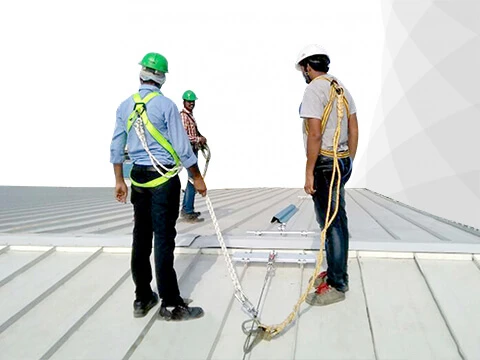

Working at heights can be very scary. Before you work on height, safety should come first. You should consider investing in fall protection equipment for you and your workers. With the need to use fall protection, understanding the different types and applicable codes is vital. Here is a beginner guide to making the process easier.
What is Personal Fall Protection Equipment?
Personal fall protection equipment is a system that includes all components to prevent a fall. It is used to provide protection from falls or to arrest in case of a fall. Examples of this equipment include personal fall arrest systems, positioning systems, and travel restraint systems. It is recommended by the Occupational Safety Health Administration (OSHA) that all workers working at various heights should have personal protection systems.
What is The Fall Arrest System?
It's a fall protection system that involves stopping you from falling safely. Fall arrest systems and their components are necessary for situations that involve working in high places and pose a risk of falling. Therefore, they are best used in heights of 6 feet and above.
Personal arrests are classified as retractable lifelines, full-body gear with shock-absorbing cords. The full-body harnesses spread forces on your body, while shock absorbers lanyard lessen total fall forces.
Fall Protection System Types and Specifics
OSHA recommends different varieties of fall protection gear depending on the situation.
Body belts: They are used to restrain workers to reduce fall risk. They are used for positioning, so they cannot replace fall arrest systems.
Chest harness: They can be used for retrieval in less dangerous environments. For example, retrieving people from tanks, narrow spaces, and bins.
Full-body harnesses: As the name suggests, they have the power to prevent the most dangerous falls, for they cover the whole body.
Suspension belts: They are primarily used to support workers who need to adjust their position vertically while working.
Rope lanyards: The ropes are elastic and flexible. They are mainly used as restraining means in case of any fall.
Web lanyards: Web lanyard is used in environments with fall hazards under 2 feet.
Cable lanyards: They work best in corrosive or hot environments. To be used, a shock-absorbing system is necessary.
Rope grabs: They are slowing motion devices traveling on lifelines. They allow safe, going downward, and upward or locks in the event of a fall.
Safety nets: They are used in areas where their descent distance is above 25 feet.
Steps to follow before picking a personal fall protection equipment
Evaluate or restrict fall- look for ways to eliminate fall hazards
If stopping is impossible, you will have to provide permanent installations for accessing the safe work area—for example, scaffolds, safety nets, and suspended work platforms.
After you have done this, you can provide personal fall equipment such as harnesses, protection mats, and anchor points. However, you can use fall arrest systems and restricted access systems. Note training and practice in how to wear and use are required.
Safety is critical in every site, and to avoid incidents, protective gears are vital. So, for you and your workers, ensure you have the correct gears before working.









Sign in to leave a comment.