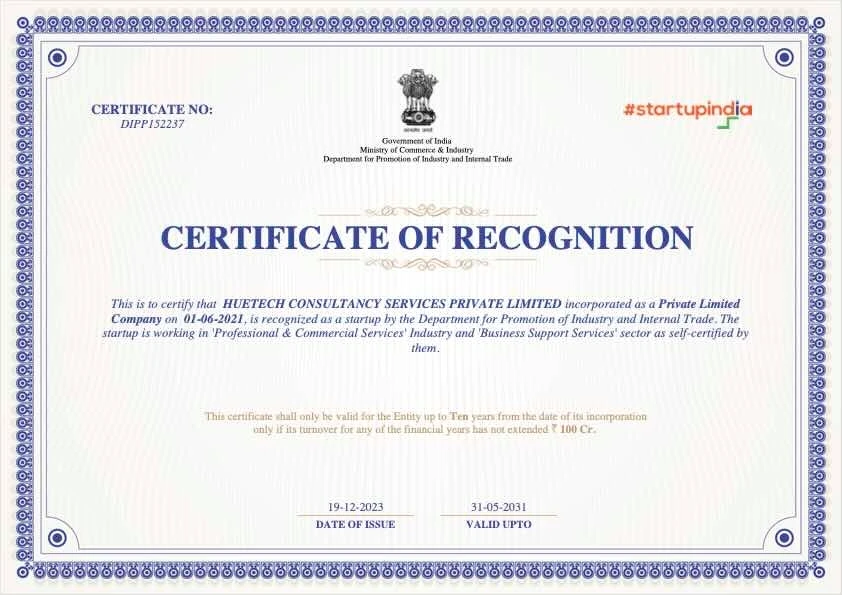

Registering under Startup India Registration not only provides financial and procedural benefits but also boosts the credibility of a business. It’s an excellent way for new entrepreneurs to scale their ventures with government support and establish themselves in a competitive market.

Tax Exemption
The entity registered under the Startup India Scheme can apply for an exemption of income tax under section 80 IAC of the Income Tax Act. Such an entity can avail of tax exemption for 3 consecutive financial years out of the first 10 years from the date of incorporation provided the following conditions are fulfilled:
(1) An entity shall be a Private Limited Company or
(2) Limited Liability Partnership.
(3) It shall be incorporated between 01st April 2016 to 01st April 2021.
Angel Tax Exemption
The Startup India recognized entity can avail of tax exemption benefits from the funds received as angel investment. The exemption is only granted if the total amount of paid-up share capital and share premium does not exceed Rs. 25 Crore after the proposed issue of shares. To avail of this exemption the entity needs to fulfill some conditions for investing in certain assets.
Rebate in Trademark and Patent Fees
All the startups registered under this scheme can claim a rebate on the government fees for filing a trademark application. And up to 80% rebate in Patent applications and can avail the benefit of fast-track patent application. Entire fees of Facilitators for any number of Patents, Trademarks, or Designs a Startup may file, shall be borne by the Government. Hence Startups will have to bear the cost of Statutory Fees only
Self Certification
Startups can self-certify compliance under 6 Labour Laws and 3 Environmental Laws for 5 years from the date of incorporation.
Government Tenders
Registering an entity under the DIPP recognition scheme enables Startups to apply for Government tenders. One of the requirements of having minimum prior experience/turnover for filing the government tender by the companies does not apply to the companies registered under the StartUp India scheme. Startups recognized under DIPP have been exempted from submitting Earnest Money Deposits (EMD) while filing government tenders.
Interaction platform for Startups
Networking is an essential key for any entrepreneur to get recognition in the market and among other industry peers. After registering under the DIPP scheme, the startups get a platform to meet other startups, well-known speakers, investors, etc. at various fests and summits organized by the Government on a huge scale. Startups recognized under DIPP can register on Government e-Marketplace as a seller and sell their products and services directly to Government Entities.
Fund of Funds for Startups
The startup can raise funds and capital through the fund of funds initiative by Startup India. DIPP has proposed to release Rs.10,000 crore for Startups through this scheme. Small Industries Development Bank of India shall provide funds to Startups approved by Implementing Agencies.
Faster Exit
The Startup entities registered under the Ministry of Corporate Affairs (MCA) i.e. A Private Limited Company and an LLP will be wound up on a fast-track basis. Under the Insolvency and Bankruptcy Code, of 2016, Startups with simple debt structures or those meeting certain income-specified criteria can be wound up within 90 days of applying for insolvency.




























Sign in to leave a comment.