Acne is one of the most common skin concerns worldwide. From teenagers to adults, millions struggle with breakouts, oily skin, clogged pores, and blemishes that impact both confidence and comfort. Among the many skincare solutions available today, two ingredients stand out as dermatologists’ favorites: Salicylic Acid and Benzoyl Peroxide. Whether it’s a benzoyl peroxide face wash or a benzoyl peroxide soap, these products have become essential in fighting acne. But the big question is: Which one is actually better for your skin?
In this detailed guide, we’ll explore the science behind each ingredient, how they work, their benefits and drawbacks, and when to choose which treatment. You’ll also learn how various benzoyl peroxide products like creams, cleansers, gels, and body washes fit into your acne care routine. By the end, you’ll be confident in selecting the right solution for your skin.
Understanding Acne: Why Breakouts Happen
Acne occurs when hair follicles become clogged with excess oil (sebum), dead skin cells, and sometimes bacteria. This leads to blackheads, whiteheads, pimples, and, in severe cases, cystic acne.
Key causes of acne include:
- Excess oil production
- Dead skin buildup
- Bacterial growth (especially Propionibacterium acnes)
- Hormonal changes
- Inflammation
To effectively treat acne, a product must either remove clogs, reduce oil, control bacteria, or calm inflammation. Salicylic Acid and Benzoyl Peroxide are powerful because they target different acne causes.
Salicylic Acid – The Gentle Exfoliator
What is Salicylic Acid?
Salicylic Acid is a beta-hydroxy acid (BHA) widely used in acne skincare. It is oil-soluble, allowing it to penetrate deeply into oily pores and dissolve impurities from inside.
Commonly found in face cleansers, exfoliating serums, spot treatments, and toners, salicylic acid is especially effective for:
- Blackheads
- Whiteheads
- Mild acne
How Does Salicylic Acid Work?
Salicylic acid exfoliates the inside of pores by breaking down the “glue” holding dead skin cells together, promoting natural shedding. This prevents pore blockage and future breakouts.
Benefits of Salicylic Acid
- Deep-cleans pores
- Reduces excess oil
- Targets blackheads and whiteheads
- Calms redness and inflammation
- Improves skin texture over time
Drawbacks
- May cause dryness or irritation if overused
- Less effective for severe, cystic, or widespread acne
Salicylic acid is best for prevention and pore cleansing rather than fighting back
Benzoyl Peroxide – The Bacteria Fighter
Whether in benzoyl peroxide face wash, soap, cleanser, or gel wash form, this ingredient is a gold-standard acne treatment recommended worldwide.
What is Benzoyl Peroxide?
Benzoyl Peroxide is a potent antibacterial agent that targets the bacteria responsible for inflamed acne.
Common forms include:
- Benzoyl peroxide cream
- Benzoyl peroxide gel (spot treatment)
- Benzoyl peroxide body wash (for back and body acne)
- Benzoyl peroxide serum
How Does Benzoyl Peroxide Work?
It releases oxygen into pores, killing acne-causing bacteria instantly since these bacteria cannot survive in oxygen-rich environments. It also helps remove dead skin and prevents clogged pores.
Benefits of Benzoyl Peroxide
- Very effective for moderate to severe acne
- Targets bacteria and reduces swelling
- Works on face and body (chest, shoulders, back)
- Available in various strengths and product forms
Drawbacks
- Can cause dryness, peeling, and redness
- May bleach clothes, towels, or pillow covers
- Not ideal for extremely sensitive skin
Though more intense, benzoyl peroxide often works faster and more effectively than other treatments.
Salicylic Acid vs Benzoyl Peroxide: Key Differences
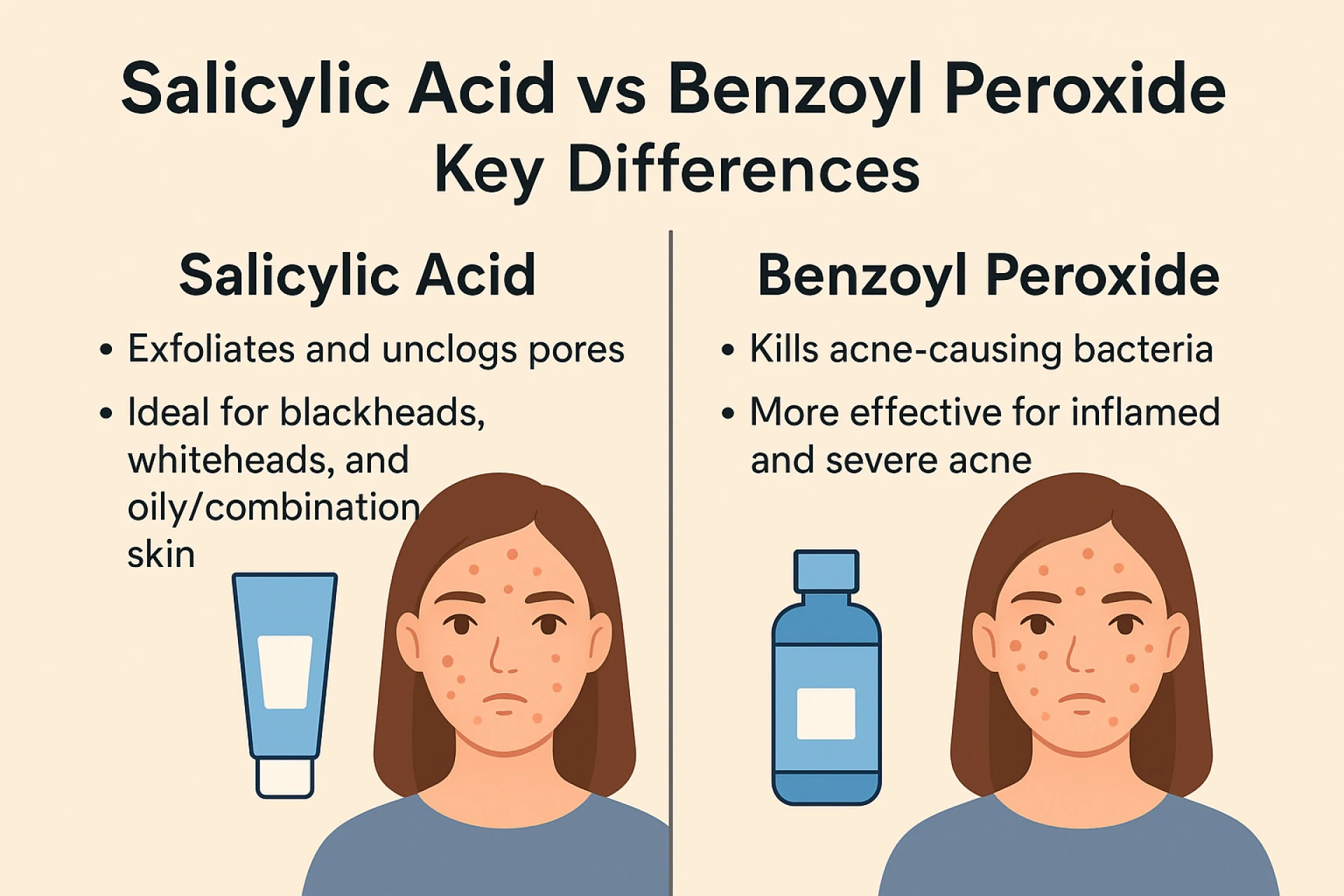
- Salicylic Acid exfoliates and unclogs pores, ideal for blackheads, whiteheads, and oily/combination skin. It works gradually and is less irritating.
- Benzoyl Peroxide kills acne-causing bacteria, making it more effective for inflamed and severe acne such as red pimples and cysts. It delivers faster results but may cause dryness and irritation.
Which One Should You Use?
1 Mild Acne → Choose Salicylic Acid
If you have blackheads, whiteheads, small pimples, or slightly oily skin, salicylic acid is perfect for gentle daily maintenance and prevention.
2 Moderate or Severe Acne → Choose Benzoyl Peroxide
For painful pimples, large inflamed bumps, cystic acne, or body acne, benzoyl peroxide products will target bacteria and reduce active acne rapidly.
3 Mixed Acne → Combination Treatments
Dermatologists often recommend combining both carefully, for example:
- Morning: benzoyl peroxide cleanser
- Night: salicylic acid toner or serum
- Or alternating days
This approach targets acne from multiple angles without excessive irritation.
Popular Benzoyl Peroxide Product Forms & When to Use Them
- Benzoyl Peroxide Face Wash: Daily cleansing to control bacteria and prevent breakouts.
- Benzoyl Peroxide Soap: For acne-prone body areas like shoulders and back.
- Benzoyl Peroxide Cream: Spot treatment for active pimples.
- Benzoyl Peroxide Gel: Overnight targeted treatment for deeper penetration.
- Benzoyl Peroxide Body Wash: Covers large body areas for “bacne” and widespread acne.
- Benzoyl Peroxide Serum: Lightweight option for frequent breakouts.
- Benzoyl Peroxide Gel Wash: Combines cleansing and treatment for combination skin.
- Benzoyl Peroxide Cleanser: Recommended for morning use on oily, acne-prone skin.
- Adapalene and Benzoyl Peroxide Gel: Dual-action prescribed treatment for stubborn acne.
How to Use Salicylic Acid and Benzoyl Peroxide Safely
- Start with low concentration (2% SA or 2.5% BP)
- Apply a non-comedogenic moisturizer after treatment
- Use sunscreen daily as skin may become more sensitive
- Introduce products slowly; avoid using both at full strength from day one
What to Avoid
- Using both high concentrations together initially
- Scrubbing or over-exfoliating
- Layering too many active ingredients
Patch testing is essential, especially for sensitive skin.
When to See a Dermatologist
Consult a professional if:
- Over-the-counter products don’t work
- Acne causes deep scars
- You experience painful cystic acne
- Skin becomes overly dry or damaged
A dermatologist can recommend prescription treatments, peels, or lifestyle changes for long-term control.
Conclusion: Which One Wins the Battle?
- Salicylic Acid: Best for mild acne, blackheads, whiteheads, and oily skin by keeping pores clean and preventing buildup.
- Benzoyl Peroxide: Best for severe, inflamed acne, offering faster relief with products like face wash or soap.
- Combination use: Careful use of both can provide stronger, consistent results.
- Be Patient: Clear skin takes time—consistency is key.
FAQs – Frequently Asked Questions
· Q. Can I use Salicylic Acid and Benzoyl Peroxide together?
Yes, but introduce gradually or use at different times of day to avoid over-drying.
· Q. How long before I see results?
Most see improvement in 4–8 weeks with consistent use.
· Q. Do these treatments have side effects?
Both may cause dryness, redness, or peeling initially. Use a gentle moisturizer.
· Q. Are these ingredients safe for sensitive skin?
Yes, start with lower strengths and patch test.
· Q. Should I moisturize after acne treatments?
Absolutely. A non-comedogenic moisturizer helps maintain your skin barrier and prevents irritation.


















Sign in to leave a comment.