

If you have ever sat in a clubhouse committee meeting trying to figure out how to run this year's member tournament, you already know the struggle. Someone wants a serious stroke play event. Someone else wants something fun where the 20 handicapper actually has a shot at winning. And the guy who always shows up late wants a shotgun start so nobody's waiting around.
I have organized enough club events over the years to know there is no single "perfect" format. What works beautifully for a 12 person weekday league falls flat at a 100 person member guest. The trick is matching the format to your crowd, your course, and what you're actually trying to accomplish, whether that's raising money for charity, welcoming new members, or just giving your low handicappers a legitimate title to chase.
This guide walks through the formats that actually work in real club settings, not just the ones that sound good on paper. We'll cover when to use each one, how they play out on the course, and a few stories from tournaments that either worked great or taught everyone a hard lesson.
Why Tournament Format Actually Matters?
Picking the wrong format is one of the fastest ways to kill enthusiasm for club golf. A stroke play event with a wide handicap range leaves high handicappers demoralized by hole six. A format that's too complicated confuses first timers and slows down pace of play for everyone behind them.
The right format does the opposite. It keeps every group in the hunt, moves at a reasonable pace, and gives people a reason to come back next month. Think of format as the engine under the hood of your event; nobody notices it when it's running well, but everyone feels it when it isn't.
Matching Format to Your Membership
A club full of low single digit handicaps can handle stroke play without much complaint. A club with a broad mix of beginners and veterans usually needs something more forgiving, like a scramble or Stableford, where one bad hole doesn't wreck the whole round.
Matching Format to the Occasion
A casual Friday mixer calls for something social, like a scramble or shotgun start. A club championship calls for something that truly separates skill levels, like stroke play or match play. Know the purpose before you pick the format.
Scramble Format: The Club Favorite
Ask any club pro which format gets the most sign ups, and nine times out of ten they'll say scramble. It's forgiving, it's social, and it keeps foursomes moving because everyone plays from the best shot on every hole. This is why charity events almost always default to scramble.
I once played in a scramble where our group's 24 handicapper hit the shot of the day on a par three, a shot that carried the whole team for three holes afterward. That's the magic of a scramble. Everybody contributes, and nobody feels like the weak link for long.
How a Standard Scramble Works?
All four players tee off, the team picks the best shot, and everyone plays their next shot from that spot. This repeats until the ball is in the hole. It's simple to explain to beginners and fast enough to keep a large field moving.
Best Uses for Scramble Events
Scrambles shine at charity fundraisers, member guest weekends, and corporate outings where mixed skill levels are guaranteed. They're also a great icebreaker format for new members who might feel intimidated playing stroke play with strangers on day one.
Best Ball Format: Team Golf With Individual Accountability
Best ball, sometimes called four ball, splits the difference between scramble and stroke play. Each player plays their own ball for the entire hole, and the team records the lowest score among partners. It rewards individual skill while still giving weaker players a safety net.
This format tends to bring out more serious competitive energy than a scramble. I've watched a two person best ball team come back from four holes down purely because one partner caught fire on the back nine while the other steadied the ship. That kind of momentum swing rarely happens in a scramble.
Two Player vs Four Player Best Ball
Two player best ball is common in club match play brackets and pairs well with net scoring for handicap fairness. Four player best ball works well for larger outings where you want team camaraderie without the full merge of a scramble format.
When Best Ball Outperforms a Scramble?
Choose best ball when your field skews toward intermediate to advanced players who want their individual shots to matter. It also works well for member guest events where guests want to showcase their own game, not just ride a teammate's hot streak.
Stroke Play: The Traditional Club Championship Format
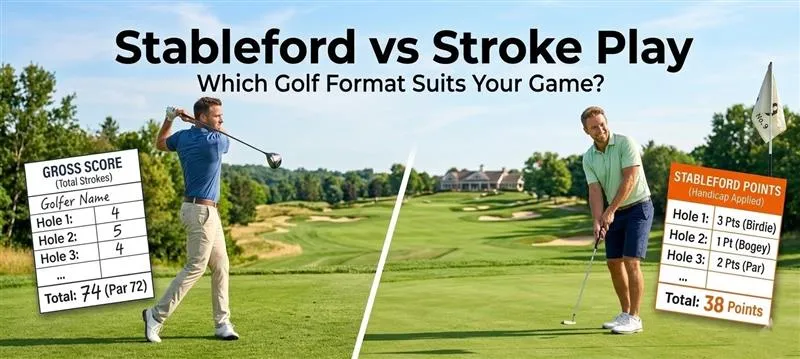
Stroke play is golf in its purest form. Every shot counts, the lowest total score wins, and there's nowhere to hide a bad hole. This is why most clubs still reserve stroke play for their marquee event, the club championship, where bragging rights are on the line.
The downside is pace and pressure. A high handicapper having an off day can rack up a big number on a single hole and lose motivation fast. That's why smart clubs pair stroke play with a net division, so mid and high handicappers are competing against their own potential, not scratch golfers.
Gross vs Net Stroke Play Divisions
Gross divisions reward the lowest actual score, ideal for your club's best players. Net divisions subtract handicap strokes, leveling the field so a 15 handicapper can genuinely compete against a 5 handicapper. Most club championships run both simultaneously.
Managing Pace of Play in Stroke Play Events
Stroke play tends to be slower than team formats since every player holes out on every hole. Consider a "pick up at double bogey plus two" rule for casual events, or reserve strict stroke play rules for your top flight only.
Stableford Scoring: A Forgiving Alternative
Stableford flips the scoring system on its head. Instead of counting every stroke, players earn points based on their score relative to par on each hole, and a truly disastrous hole simply earns zero points instead of blowing up the card. This keeps rounds moving and spirits high.
I've seen players who normally give up mentally after a triple bogey stay fully engaged in a Stableford round because that hole is already behind them, points wise. There's always another hole to earn points on, which keeps the whole field invested until the final green.
How Stableford Points Are Calculated?
A typical system awards zero points for a double bogey or worse, one point for bogey, two for par, three for birdie, and four for eagle. Handicap strokes are applied per hole before scoring, so every skill level has a fair shot at points.
Why Clubs Use Stableford for Mixed Skill Fields?
Stableford is ideal when your field includes beginners and veterans playing together. It removes the pressure of "protecting a number" and lets everyone play aggressively, since one blown hole never fully derails the round.
Match Play: Head to Head Drama
There's a reason match play anchors so many club championship finals and the Ryder Cup itself. It's hole by hole combat, win the hole or lose it, and a big number on one hole doesn't matter once the next tee shot is struck. That format alone creates some of the most memorable club golf moments.
I remember a club match that came down to the eighteenth hole, both players had already picked up on a couple of holes they'd clearly lost, yet neither felt out of it because match play resets every single hole. That's a feeling stroke play just can't replicate.
Singles Match Play Brackets
Singles match play works well for club championship knockout rounds. Seed players by handicap or prior performance, then run single elimination brackets over several weeks. It builds anticipation and gives your club a storyline to follow all season.
Four Ball and Foursomes Match Play
Team match play formats, like four ball or alternate shot foursomes, are staples of Ryder Cup style club events. They're perfect for member versus member team challenges or intra club rivalries between different flights or divisions.
Shotgun Start Events: Getting Everyone Playing at Once
A shotgun start places groups on different holes simultaneously, so the whole field tees off together and finishes together. This is less about scoring format and more about logistics, but it dramatically changes the feel of a large tournament day.
Clubs love shotgun starts for member guest weekends because everyone arrives, warms up, and plays together instead of staggering out over three hours. It also means the awards dinner can start right after the last group finishes, instead of everyone waiting around for stragglers.
Best Situations for a Shotgun Start
Use a shotgun start for large field events, charity tournaments, or any day where you want a shared post round gathering. It works with almost any scoring format underneath it, scramble, best ball, or Stableford all pair well.
Logistics to Plan Before a Shotgun Start
You'll need enough volunteers or staff to place carts and score cards at every starting hole. Communicate starting hole assignments clearly the week before, and consider a horn or radio signal so all groups start together cleanly.
Skins Game: Small Stakes, Big Fun
A skins game golf awards a "skin" to whoever wins a hole outright. If two or more players tie, the skin carries over to the next hole, which means later holes can suddenly be worth a small fortune. It's a lighthearted side format that pairs well with any main event.
Plenty of clubs run a skins game alongside their regular tournament as an optional add on. It gives players who are out of contention for the overall prize something fun to still chase, and it tends to generate more laughter on the course than any other format on this list.
Running a Fair Skins Game
Use net scores if your field has mixed handicaps, otherwise your low handicappers will sweep every skin. Set a reasonable buy in, and decide ahead of time what happens to carryover skins if nobody wins one on the final hole.
Choosing the Right Format for Your Club Calendar
Most successful clubs don't pick one format and stick with it all year. They rotate. Scrambles for the casual mixers, Stableford for the mid season member events, and stroke play or match play for the championship. Variety keeps the calendar fresh and gives every type of golfer a format they genuinely enjoy.
Building a Balanced Tournament Calendar
Spread formats across the season so members experience variety instead of tournament fatigue. A rough rule of thumb: one third social formats like scrambles, one third team formats like best ball, and one third competitive formats like stroke or match play.
Getting Member Feedback on Formats
Survey your members after each event. A quick five question feedback form tells you which formats people actually enjoyed versus tolerated. This small habit prevents committees from repeating a format nobody liked simply out of tradition.
Conclusion
There's no universal best format, only the best format for what your club is trying to achieve that day. Scrambles build camaraderie and welcome newcomers. Best ball rewards individual play inside a team setting. Stroke play crowns your true champion. Stableford keeps mixed skill fields engaged. Match play delivers drama nothing else can match. And a shotgun start, paired with almost any of these, keeps a big field moving together.
The clubs that run the most successful tournament calendars aren't the ones chasing the fanciest format. They're the ones paying attention to their members, mixing things up throughout the season, and remembering that the whole point of club golf is getting people back out on the course, format and all.
Frequently Asked Questions
1. What is the easiest golf tournament format for beginners?
A scramble is generally the easiest format for beginners since players only play the team's best shot on every hole. This removes pressure, keeps pace of play quick, and lets newer golfers contribute without feeling responsible for every shot.
2. How many players are needed for a scramble tournament?
Most scrambles use teams of four, though two or three player teams work fine for smaller fields. The key is balancing team skill levels so no single group has a significant handicap advantage over the others.
3. What's the difference between best ball and scramble?
In a scramble, everyone plays from the same best shot each time. In best ball, every player plays their own ball for the whole hole, and only the lowest individual score counts toward the team total.
4. Is Stableford scoring better than stroke play for club events?
Stableford tends to work better for mixed skill fields since one bad hole doesn't ruin the whole round. Stroke play is better suited for serious competitive events like club championships, where every stroke should genuinely matter.
5. How do you handle handicaps fairly in a club tournament?
Apply handicap strokes per hole based on each player's course handicap, and use net scoring for mixed skill divisions. Most clubs also separate gross and net winners so both scratch players and higher handicappers have a fair shot at recognition.
6. What format works best for a large club event with 100 or more players?
A shotgun start paired with a scramble or Stableford scoring system works well for large fields. It gets every group playing simultaneously, keeps pace of play manageable, and allows the whole event to wrap up together for an awards presentation.



























Sign in to leave a comment.