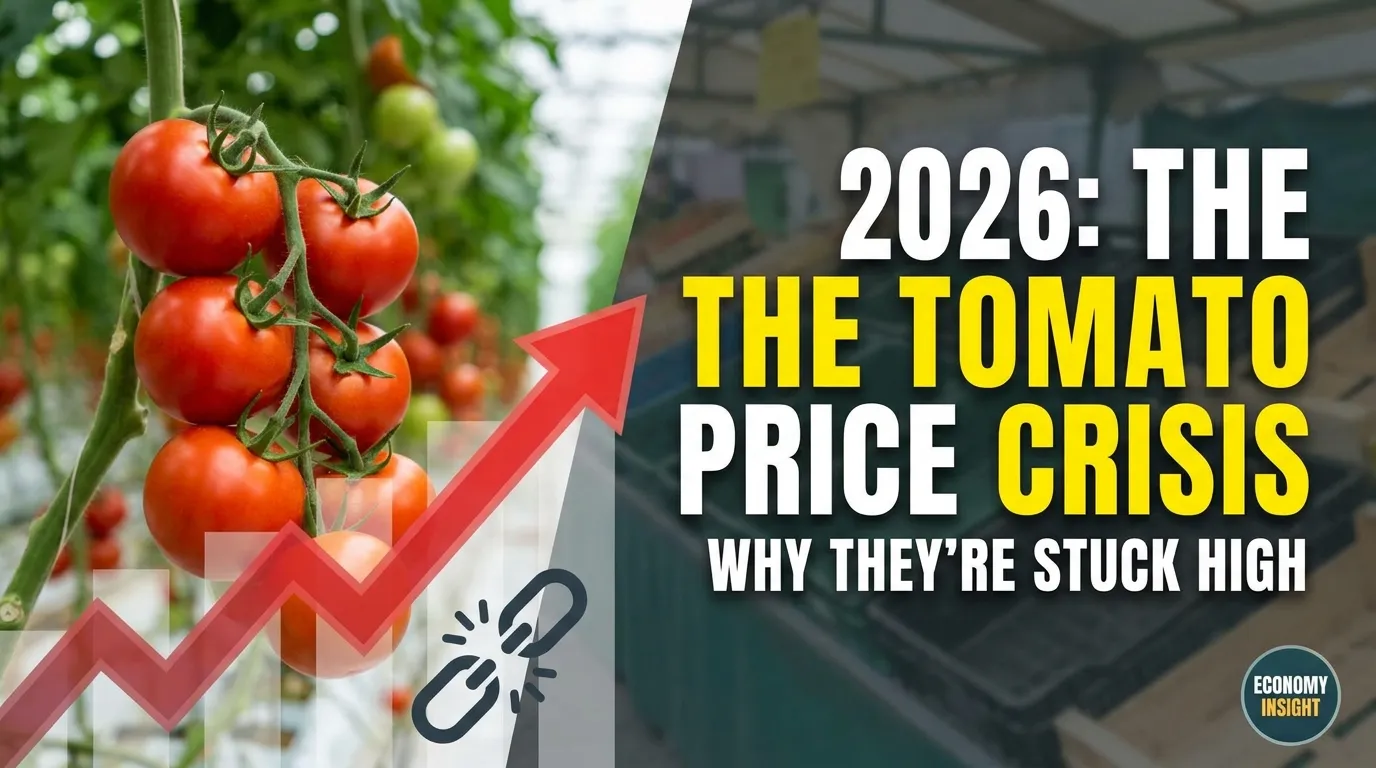

Stop waiting for tomato prices to drop.
They're not going to. Not this year, and probably not next year either.
Grocery shoppers keep treating this like a spike. A blip. Something that corrects itself once the weather calms down. It won't. The tomato aisle is being reshaped by a trade decision made in July 2025 - and that decision is still working its way through the supply chain.
1. The Tariff Everyone Forgot About
In July 2025, the US ended a 7-year-old trade agreement with Mexico and slapped a 17.09% antidumping tariff on most fresh Mexican tomato imports.
Sounds like ancient history. It isn't.
Roughly 70% of the tomatoes Americans eat come from Mexico. When you tax 70% of a category, the price doesn't nudge - it resets. That's exactly what happened.
Old way to think about it: tariffs are a short-term headline, prices adjust in a few months. New way: tariffs on a category this concentrated become the new price floor. Nobody's going back to the old floor.
2. Mexico Isn't Sending More Tomatoes - It's Sending Fewer
Here's the part most people miss. It's not just that Mexican tomatoes cost more at the border. Mexico is growing less of them.
USDA forecasts put 2026 Mexican tomato production down 9%, planted area down 11%, and exports to the US down to 1.8 million metric tons. Sinaloa, Mexico's biggest tomato-growing state, saw planted area drop 16%, with winter harvest losses as high as 25% once you factor in disease and water shortages on top of the tariff.
Growers pulled back because the math stopped working. Tighter margins, a peso that gained 14% in 2025, and a tariff eating into every shipment - less profitable to grow tomatoes for US export than it was two years ago. So they grew something else.
Less supply. Same demand. That's not a weather story. That's a structural one.
3. Domestic Growers Didn't Fill the Gap
The obvious question: why didn't US and Florida growers just pick up the slack?
They tried. Weather didn't cooperate. Florida - a major domestic supplier - got hit by drought in late 2025 and a freeze at the start of 2026, cutting into the exact volume that was supposed to cushion the tariff shock.
Backyard growers who ran into a comparable heat crisis mid-season know how fast a few degrees can wipe out a harvest - commercial growers aren't immune to the same math, just at a bigger scale.
Two supply shocks stacked on top of each other. Import tariff on one side, weather losses on the other. Nothing left to absorb the hit.
4. What This Actually Did to Prices
By April 2026, wholesale tomato prices hit their highest level in 25 years, according to Rabobank. On the ground, that meant:
Saladette tomatoes in Mexico - the country's most common variety - jumped more than 100% year-over-year in twenty states, and 68–97% everywhere else, per Mexico's national statistics agency.
In the US, that April price spike wasn't a one-off. USDA's broader 2026 food forecast still has fresh produce categories tied to imported goods running hot, even as some other grocery categories cool off.
That's the mechanism. Tariff shrinks supply. Weather shrinks it further. Price finds a new, higher floor - and floors don't fall on their own.
5. Where This Prediction Could Be Wrong
Being honest: this isn't a guaranteed forever-high scenario.
A few things could soften prices before year-end. Mexico shifting more production into greenhouses and shade structures (already happening) adds supply back gradually. A weaker peso would ease exporter margins and bring some growers back.
And if the US and Mexico renegotiate any part of the suspension agreement, the tariff itself could shrink or disappear.
None of that is close to done. Don't budget around a price drop that hasn't been announced yet.
Where This Leaves You
The grocery store isn't going back to $1.50-a-pound tomatoes anytime soon. The tariff is structural, the supply cuts are structural, and the weather losses just made a bad setup worse.
The one lever actually in your control: grow your own. No tariff touches a backyard vine.
That's it.
Frequently Asked Questions
Why are tomato prices so high right now?
Tomato prices have surged due to a combination of a 17.09% antidumping tariff on Mexican imports and reduced production from Mexico. With 70% of U.S. tomatoes coming from Mexico, this tariff has created a new price floor that is unlikely to return to previous levels.
How did the tariff on Mexican tomatoes affect supply?
The tariff has significantly impacted supply by making it less profitable for Mexican growers to export tomatoes to the U.S. As a result, Mexico's tomato production is forecasted to decline, causing a decrease in exports and contributing to higher prices.
What role did weather play in the current tomato prices?
Weather events have compounded the issue, particularly in Florida, where drought and frost have reduced domestic tomato production. This additional supply shock, along with the tariff, has left the market with insufficient tomatoes to meet demand.
Will tomato prices ever go back to normal?
It is unlikely that tomato prices will revert to previous lows anytime soon due to the structural changes from the tariff and reduced production. Although some factors could ease prices, such as greenhouse production in Mexico, these changes are not guaranteed.
Can U.S. growers make up for the loss of Mexican tomatoes?
U.S. growers have attempted to fill the gap left by reduced Mexican imports, but adverse weather conditions have hindered their efforts. The combination of the tariff and weather losses has created a challenging environment for domestic production.
What can consumers do about high tomato prices?
Consumers can consider growing their own tomatoes at home, as this is not affected by tariffs or supply chain issues. While buying from the store may be costly, home gardening offers a practical solution to bypass current market conditions.
Are there any signs that tomato prices might decrease soon?
While there are some potential factors that could lead to lower prices, such as a weaker peso or renegotiation of the tariff, these are not imminent. As of now, it is advised not to budget for a price drop that hasn't been confirmed.



























Sign in to leave a comment.