
Printing businesses face increasing expectations for attractive packaging, consistent colours, and dependable production quality. From consumer product packaging to laminated films and decorative materials, printed surfaces must meet visual and practical requirements. Choosing the right ink is therefore an important decision that can influence print quality, production efficiency, and the overall reliability of the printing process.
For businesses seeking dependable printing solutions, selecting a suitable gravure ink manufacturing company in India can make a difference. Spectra Inks provides printing ink solutions developed around the needs of modern printing applications. By understanding the relationship between ink formulation, substrate compatibility, and press performance, businesses can make better decisions and achieve more consistent printing results.
Why Is Gravure Printing Widely Used in the Packaging Industry?
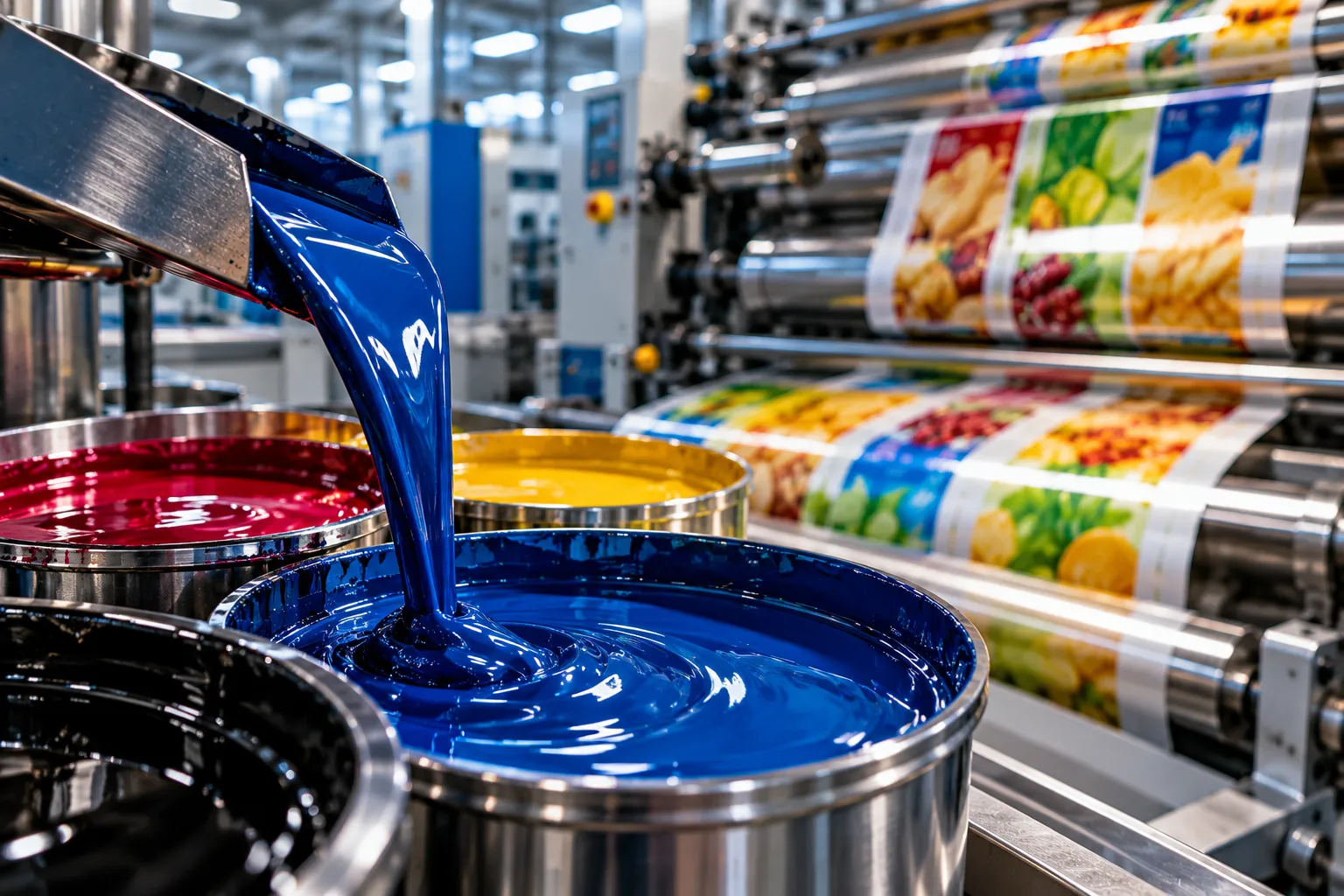
Gravure printing is commonly used for applications that require detailed images, smooth colour reproduction, and consistent results across large production volumes. The process uses engraved cylinders containing small cells that hold and transfer ink onto the selected substrate.
This printing method is suitable for various applications, including flexible packaging, laminates, labels, and decorative films. However, achieving reliable results depends on several factors, including cylinder condition, ink properties, substrate characteristics, and press settings.
The ink must flow correctly, fill the engraved cells evenly, transfer onto the material, and dry under the required conditions. Choosing a formulation suited to the application helps support consistent output and minimise printing defects.
What Factors Should Businesses Consider When Selecting Gravure Ink?
Selecting printing ink requires an understanding of the production process and the properties expected from the finished product.
Colour consistency: Ink should deliver the required shade and maintain colour uniformity across batches. Consistent colour reproduction is particularly important for branded packaging.
Viscosity and flow: Appropriate viscosity supports effective cell filling and ink transfer. Maintaining the correct viscosity during production helps reduce variations in print quality.
Drying performance: Ink drying characteristics should suit the press speed, substrate, and available drying system. Suitable drying helps maintain print clarity and supports production efficiency.
Substrate adhesion: Films, foils, paper, and laminated materials have different surface characteristics. The selected ink must be compatible with the intended printing surface.
End-use performance: Depending on the application, printed materials may require resistance to abrasion, smudging, or certain chemicals.
Evaluating these factors helps businesses identify inks that meet their operational requirements and desired print quality.
How Does Ink Formulation Influence Print Quality?
Ink formulation determines how an ink behaves during printing and how the finished material looks. Important elements include pigments, binders, solvents or water-based components, and other formulation ingredients.
Pigments contribute to colour strength and visual appearance. Binders influence film formation and adhesion, while the liquid components affect flow, viscosity, and drying behaviour.
When these properties are balanced appropriately, ink can transfer effectively and produce clear, consistent prints. Conversely, unsuitable formulation properties may contribute to uneven colour, poor adhesion, slow drying, or inconsistent ink transfer.
An experienced gravure ink manufacturing company in India understands the importance of developing formulations according to specific substrates and printing conditions. This application-focused approach helps businesses select products that support their production goals.
Can the Right Ink Help Improve Production Efficiency?
Printing efficiency depends on maintaining stable operating conditions and reducing avoidable interruptions. Ink performance is one of the factors that can influence these outcomes.
Consistent viscosity, reliable drying, and suitable ink transfer can help reduce the need for frequent adjustments. Appropriate formulations can also help minimise certain printing defects and material wastage.
Businesses should monitor ink properties during production and follow suitable operating procedures. Maintaining the recommended viscosity, checking substrate compatibility, and ensuring that drying conditions match the application can contribute to smoother production.
The objective is not simply to achieve an attractive print but also to maintain repeatable results throughout the production run.
Why Is Water-Based Gravure Ink Gaining Attention?
Sustainability is becoming an important consideration for printing and packaging manufacturers. Water-based gravure inks are attracting attention as an alternative to certain solvent-based systems in suitable applications.
Depending on the formulation, water-based inks can offer lower odour and reduced reliance on organic solvents. These characteristics may support efforts to reduce solvent emissions and improve workplace conditions.
However, water-based ink selection requires careful evaluation. Substrate compatibility, drying capacity, press configuration, and the required print performance all influence suitability.
Businesses should conduct appropriate testing before adopting a different ink system. This helps ensure that environmental considerations are balanced with production requirements and finished-product quality.
How Important Is Quality Control in Gravure Ink Manufacturing?
Quality control helps maintain consistency between ink batches and supports reliable printing performance. Even small variations in viscosity, pigment dispersion, or drying behaviour can affect the finished print.
A systematic quality process may include raw material selection, controlled pigment dispersion, viscosity checks, colour-strength testing, and drying assessments. Testing compatibility with the intended substrate and printing system can also help identify potential issues.
For printing businesses, consistent quality control reduces uncertainty and supports predictable production outcomes. It also helps ensure that the selected ink performs according to the requirements established for its intended application.
Why Choose Spectra Inks for Printing Ink Solutions?
Spectra Inks focuses on printing ink solutions for businesses working with packaging and other gravure printing applications. Its product offerings address the need for colour consistency, suitable ink transfer, substrate compatibility, and dependable printing performance.
When evaluating printing ink options, businesses should consider their material requirements, production volumes, press speeds, drying systems, and desired finish. Sharing these details with the supplier can help establish which formulation is appropriate for the application.
Reliable printing performance comes from selecting suitable ink and maintaining the right production conditions. By evaluating these factors carefully, businesses can improve consistency and support their long-term printing objectives.




















Sign in to leave a comment.