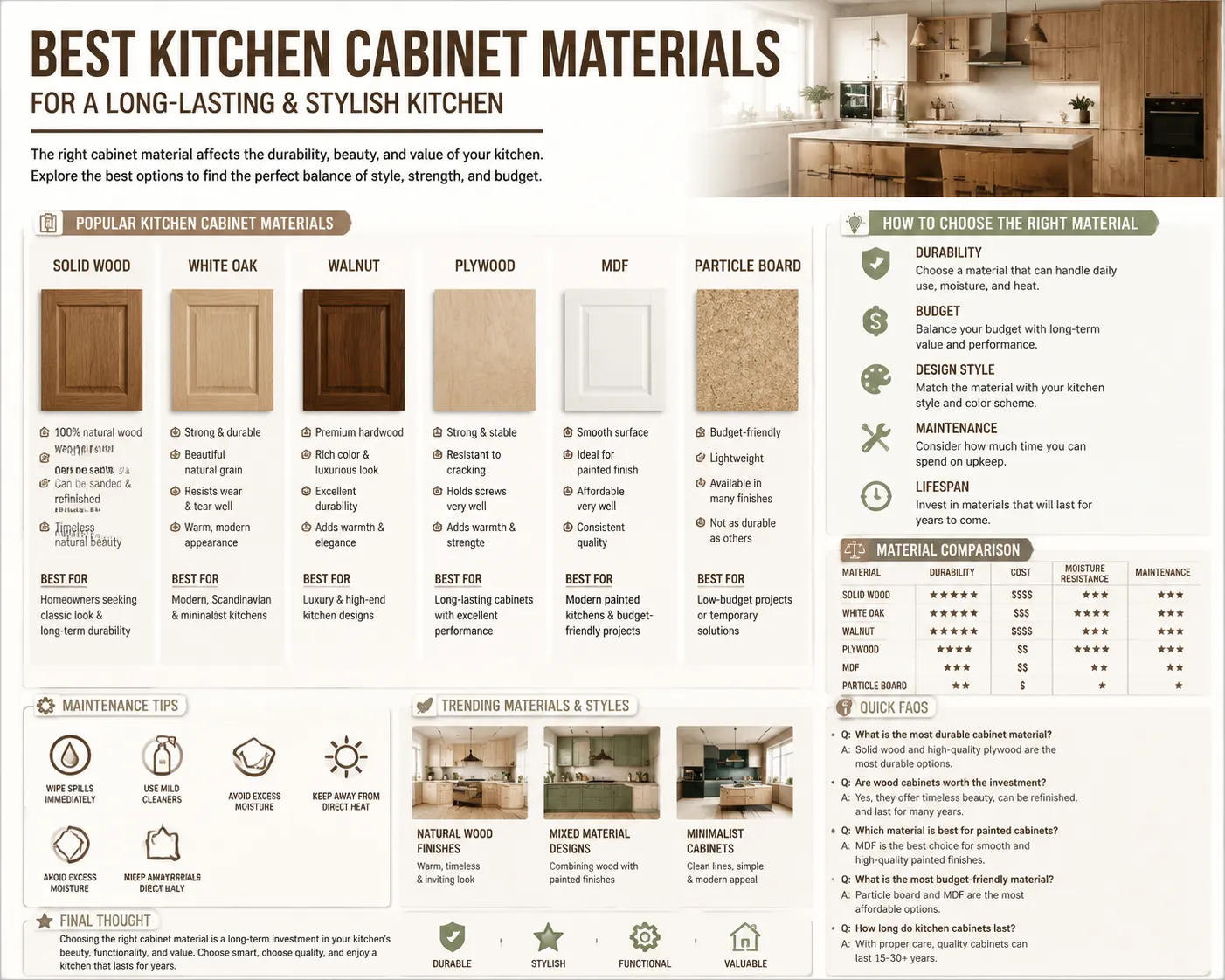

Choosing the right kitchen cabinet material is one of the most important decisions when designing a new kitchen or planning a renovation. Cabinets are not just storage units; they define the overall style, durability, functionality, and long-term value of your kitchen.
Many homeowners choose cabinets based only on color, design, or price, but the material inside the cabinet structure plays the biggest role in performance. A beautiful cabinet can quickly lose its appeal if it cannot handle daily use, moisture, heat, and constant opening and closing.
Modern kitchens offer a wide range of cabinet materials, from natural hardwoods to engineered options. Each material has its own advantages, maintenance requirements, appearance, and price range. Understanding these differences helps homeowners make a smarter decision before investing in a kitchen upgrade.
Whether you prefer a warm traditional kitchen, a modern minimalist design, or a luxury contemporary style, choosing the right cabinet material can help create a kitchen that remains beautiful and functional for years.
Why Kitchen Cabinet Material Matters
Kitchen cabinets are among the most frequently used features in any home. Unlike decorative furniture, cabinets must handle everyday activities such as cooking, cleaning, storing heavy cookware, and managing constant movement.
The right cabinet material affects more than appearance. It influences how well your kitchen performs over time.
High-quality materials can provide:
- Better durability and strength
- Improved resistance against moisture and heat
- Easier maintenance
- Longer lifespan
- Higher home value
- A more premium appearance
On the other hand, choosing a poor-quality material may lead to problems such as damaged surfaces, loose hardware, swelling, or expensive replacements.
Before selecting cabinet colors or styles, homeowners should first understand the strengths and limitations of different materials.
Factors to Consider Before Choosing Kitchen Cabinet Materials
Every kitchen has different requirements. A material that works perfectly in one home may not be the best choice for another.
Before making a decision, consider these important factors:
Durability
The kitchen is a high-traffic area. Cabinets should be strong enough to handle years of daily use without losing their appearance or functionality.
Hardwoods and high-quality plywood usually provide excellent durability, while some budget materials may require replacement sooner.
Moisture Resistance
Kitchens naturally experience humidity, steam, and occasional water exposure. Materials with better moisture resistance are more suitable for areas near sinks and cooking zones.
Proper sealing and finishing can also improve the lifespan of cabinet materials.
Design Style
The cabinet material should match your preferred kitchen style.
For example:
- Natural wood works well in farmhouse and transitional kitchens.
- White oak creates a modern organic appearance.
- Walnut adds a luxury and sophisticated feel.
- Painted MDF works well for clean contemporary designs.
Maintenance Requirements
Some materials require more care than others. Homeowners should consider how much time they want to spend maintaining their cabinets.
Low-maintenance materials may be better for busy households.
Budget
Cabinet materials come in a wide price range. A higher upfront investment can often provide better durability and long-term value.
The goal is to find a balance between quality, appearance, and affordability.
Solid Wood Kitchen Cabinets: A Timeless Choice
Solid wood remains one of the most popular choices for homeowners who want natural beauty and long-lasting performance.
Each piece of wood has unique grain patterns, colors, and textures, creating a one-of-a-kind appearance. Unlike many manufactured materials, solid wood cabinets can often be refinished or updated instead of completely replaced.
Popular solid wood options include:
- Oak
- Maple
- Cherry
- Walnut
- Hickory
- Pine
For homeowners comparing different options, understanding various kitchen cabinet materials can help identify the best choice based on durability, style, and maintenance needs.
Advantages of Solid Wood Cabinets
Solid wood cabinets offer several benefits:
- Natural and premium appearance
- Strong construction
- Long lifespan
- Can be refinished multiple times
- Adds warmth and character to kitchens
These cabinets work well for homeowners who want a traditional look but also value long-term durability.
Things to Consider With Solid Wood
Although solid wood offers many benefits, there are some considerations:
- Usually costs more than engineered materials
- Requires proper finishing
- Can expand or contract with humidity changes
- Needs regular maintenance
With proper care, solid wood cabinets can remain attractive and functional for decades.
White Oak Kitchen Cabinets: Modern Natural Beauty
White oak has become one of the most requested cabinet materials in modern kitchen design. Its combination of durability, natural grain, and warm appearance makes it popular among homeowners and designers.
The soft wood tones create a calm and inviting atmosphere, making white oak suitable for minimalist, Scandinavian, farmhouse, and contemporary kitchens.
Homeowners looking for inspiration can explore different white oak kitchen cabinets styles to see how this material works in different designs.
Why White Oak Is Popular
White oak cabinets offer:
- Beautiful natural grain patterns
- Strong hardwood construction
- A timeless appearance
- Compatibility with neutral colors
- A warm organic feeling
Unlike some darker woods, white oak helps kitchens feel brighter and more spacious.
Best Design Pairings for White Oak Cabinets
White oak works especially well with:
- Quartz countertops
- Matte black hardware
- Natural stone backsplashes
- Light flooring
- Minimalist lighting
This combination creates a balanced kitchen that feels both modern and comfortable.
Walnut Kitchen Cabinets: Luxury and Character
Walnut is a premium hardwood known for its rich color, elegant grain, and luxurious appearance.
Many homeowners choose walnut because it creates a strong visual statement. The deep tones add sophistication and make cabinets a major design feature rather than just a storage solution.
You can explore different design ideas through these walnut kitchen cabinets examples.
Benefits of Walnut Cabinets
Walnut offers:
- Premium luxury appearance
- Strong hardwood durability
- Unique grain patterns
- Warm natural tones
- Excellent design flexibility
Potential Challenges of Walnut
Before choosing walnut, consider:
- Higher cost compared with many other materials
- Darker colors may require good lighting
- Regular maintenance helps preserve appearance
When combined with lighter countertops and flooring, walnut creates a beautiful contrast that works well in modern luxury kitchens.
Plywood Kitchen Cabinets: Strength and Practical Performance
Plywood is one of the most commonly recommended cabinet construction materials because it provides excellent strength and stability.
It is made by combining multiple layers of wood veneer, creating a strong panel that performs well under everyday kitchen conditions.
Benefits of Plywood Cabinets
- Strong structural support
- Resistant to cracking
- Handles hardware well
- Good long-term durability
- Suitable for heavy-use kitchens
Plywood is often considered a practical middle option between premium hardwood and lower-cost materials.
How to Choose the Right Kitchen Cabinet Material for Your Home
Choosing the perfect cabinet material requires more than selecting the most attractive option. The best material depends on how you use your kitchen, your budget, your preferred design style, and how long you expect your cabinets to last.
A busy family kitchen may require extremely durable materials that can handle heavy daily use, while a smaller kitchen renovation may focus more on affordability, easy maintenance, and visual appeal.
Understanding the strengths and limitations of each material helps homeowners make a confident decision instead of choosing cabinets based only on appearance.
MDF Kitchen Cabinets: A Great Option for Painted Designs
Medium-density fiberboard (MDF) is an engineered wood product created by compressing wood fibers under high pressure. It is widely used in modern kitchens because it provides a smooth and consistent surface.
MDF is especially popular for painted cabinet doors because it does not have visible wood grain, creating a clean and seamless finish.
Advantages of MDF Cabinets
MDF offers several benefits:
- Smooth surface for paint finishes
- Affordable compared with solid wood
- Resistant to cracking and splitting
- Available in many styles
- Creates a modern and clean appearance
For homeowners who want a kitchen with painted cabinets, MDF can provide excellent visual results without the higher cost of some hardwood options.
Limitations of MDF Cabinets
Although MDF has many advantages, it also has some limitations:
- Can be damaged by excessive moisture
- Cannot be refinished as easily as solid wood
- Lower durability compared with premium hardwood
Proper sealing and quality construction are important for improving MDF cabinet performance.
Particle Board Cabinets: A Budget-Friendly Choice
Particle board is one of the most affordable cabinet materials available. It is made from compressed wood particles combined with adhesive materials.
This material is commonly used in budget-friendly kitchen cabinets and ready-to-assemble options.
Benefits of Particle Board Cabinets
- Lower purchase cost
- Lightweight construction
- Available in many finishes
- Suitable for temporary or budget renovations
Drawbacks of Particle Board Cabinets
However, homeowners should understand its limitations:
- Lower resistance to moisture
- Less durable than plywood or hardwood
- May not handle heavy use as well
- Shorter lifespan compared with premium materials
For homeowners planning a long-term kitchen investment, stronger materials may provide better value over time.
Engineered Wood vs Natural Wood Cabinets
One of the biggest decisions homeowners face is choosing between natural wood and engineered materials.
Both options have advantages depending on your needs.
| Feature | Natural Wood | Engineered Wood |
|---|---|---|
| Appearance | Unique grain patterns | Consistent finish |
| Durability | Excellent | Good to Excellent |
| Maintenance | Requires care | Usually easier |
| Cost | Higher | More affordable |
| Design Options | Traditional and modern | Wide variety |
Natural wood provides unmatched character, while engineered materials offer affordability and design flexibility.
Best Kitchen Cabinet Materials Based on Lifestyle
Different homeowners need different solutions. The best cabinet material should match your daily routine.
For Busy Family Kitchens
Recommended materials:
- Plywood
- Solid wood
- Hardwood options
These materials can handle frequent opening, closing, and heavy storage.
For Modern Minimalist Kitchens
Recommended materials:
- White oak
- MDF
- Walnut
These options provide clean designs and stylish finishes.
For Budget Renovations
Recommended materials:
- MDF
- High-quality particle board
- Plywood options
These materials help control costs while maintaining a good appearance.
Kitchen Cabinet Material Comparison Guide
| Cabinet Material | Durability | Cost Level | Best Feature |
|---|---|---|---|
| Solid Wood | Excellent | High | Natural beauty |
| White Oak | Excellent | Medium-High | Modern organic style |
| Walnut | Excellent | High | Luxury appearance |
| Plywood | Very Good | Medium | Strength and stability |
| MDF | Good | Low-Medium | Smooth painted finish |
| Particle Board | Basic | Low | Affordable option |
Common Mistakes When Choosing Cabinet Materials
Many homeowners make cabinet decisions based only on short-term savings or appearance. Avoiding common mistakes can help create a better long-term kitchen.
Choosing Based Only on Price
The cheapest option may not always be the most affordable in the long run. Replacing damaged cabinets after a few years can cost much more than investing in better materials initially.
Ignoring Kitchen Conditions
A kitchen near high humidity areas or frequent cooking zones requires materials that can handle moisture and heat.
Forgetting Cabinet Construction Quality
Material quality is important, but construction also matters. Strong joints, quality hardware, and professional installation improve cabinet performance.
Following Trends Without Considering Longevity
Trendy designs can look attractive today, but timeless materials often provide better long-term value.
How to Maintain Different Cabinet Materials
Proper maintenance helps extend the life of kitchen cabinets regardless of the material.
General Care Tips
- Clean spills immediately
- Avoid excessive water exposure
- Use soft cleaning cloths
- Avoid harsh chemicals
- Keep kitchen humidity controlled
Wood Cabinet Maintenance
Wood cabinets may require occasional polishing, refinishing, or resealing depending on the finish.
MDF Cabinet Maintenance
MDF cabinets should be protected from standing water and excessive moisture.
Plywood Cabinet Maintenance
Plywood cabinets are durable but still benefit from regular cleaning and proper care.
Modern Kitchen Cabinet Material Trends
Kitchen design trends continue to change, but homeowners are increasingly choosing materials that combine beauty with practicality.
Natural Wood Finishes
Materials like white oak and walnut remain popular because they create warmth and a premium appearance.
Sustainable Choices
Many homeowners are becoming more interested in responsibly sourced wood and environmentally conscious materials.
Mixed Material Designs
Combining different materials, such as wood cabinets with painted islands, creates contrast and visual interest.
Minimalist Cabinet Styles
Simple cabinet profiles, clean lines, and natural finishes continue to dominate modern kitchen designs.
Frequently Asked Questions
What is the most durable kitchen cabinet material?
Solid wood and high-quality plywood are among the most durable options because they provide strong construction and long-term performance.
Are white oak cabinets a good investment?
Yes. White oak offers durability, timeless style, and a natural appearance that works with many kitchen designs.
Is MDF better than wood cabinets?
It depends on your needs. MDF is excellent for painted finishes, while natural wood provides unique character and can often be refinished.
What is the most affordable cabinet material?
Particle board and MDF are generally more affordable options, but homeowners should consider durability before making a final choice.
How long should kitchen cabinets last?
High-quality cabinets can last for many years when properly installed and maintained. Material quality, construction, and care all influence lifespan.
Final Thoughts
Choosing the best kitchen cabinet material is about finding the right balance between durability, appearance, maintenance, and budget.
Natural materials like white oak and walnut provide timeless beauty and premium character, while engineered options like MDF and plywood offer practical benefits for different homeowners.
Before investing in new cabinets, think about your daily kitchen habits, design preferences, and long-term goals. The right material should not only make your kitchen look beautiful but also help it remain functional and reliable for many years.
A carefully chosen cabinet material can transform your kitchen into a space that combines style, storage, and lasting performance.





















Sign in to leave a comment.