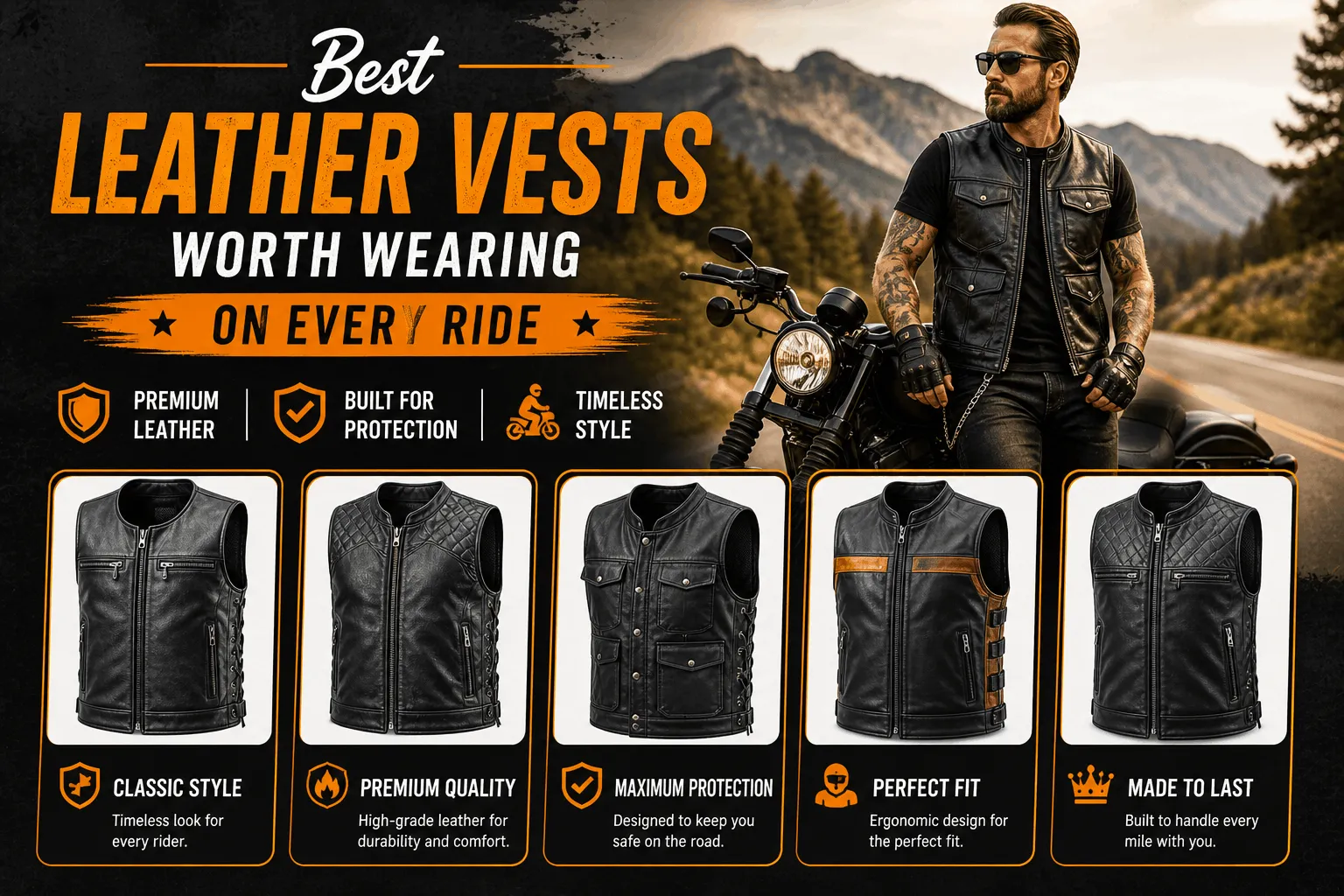

Motorcycle riding gear continues to evolve, but leather vests remain one of the most recognized and practical pieces in biker apparel. Riders across touring, cruiser, and urban motorcycle communities continue to rely on leather vests because they combine comfort, functionality, identity, and weather adaptability in a single garment. Unlike heavier riding jackets, a properly designed leather vest allows greater airflow while still providing storage, layering capability, and a durable outer shell suitable for long-distance riding conditions.
Modern riders often pair riding vests with protective jackets, armored layers, hoodies, or riding shirts depending on seasonal conditions and road environments. This flexibility has helped leather vests maintain their relevance even as technical motorcycle gear has become more advanced.
Premium Men’s Leather Vests are now manufactured using improved leather treatments, reinforced stitching methods, moisture-resistant finishes, and rider-focused storage systems. At the same time, high-quality Men's Leather Jackets continue to complement vest-based riding setups by offering additional protection for colder temperatures and extended highway travel.
This guide explains what makes a motorcycle leather vest worth wearing on every ride, how professionals evaluate quality, what construction standards matter most, and how riders can select gear designed for long-term performance and comfort.
Why Leather Vests Remain Essential Motorcycle Gear
Leather vests serve both functional and practical purposes in motorcycle culture. Their popularity extends beyond appearance because they solve several real riding challenges.
Airflow Without Sacrificing Durability
One major advantage of leather vests is ventilation. Full motorcycle jackets can become restrictive during hot-weather rides, especially in regions with high humidity or desert heat. Leather vests allow airflow through the arms and shoulders while maintaining durable torso coverage.
This balance makes them especially popular during:
- Summer touring
- Urban commuting
- Rally riding
- Warm-weather highway travel
- Layered cold-weather riding systems
Professional riders often use vests as adaptable outer layers over armored shirts or lightweight riding hoodies.
Layering Compatibility
Motorcycle layering systems are important for temperature regulation. Leather vests function effectively because they can be worn over:
- Thermal base layers
- Flannel riding shirts
- Protective hoodies
- Denim jackets
- Armored motorcycle jackets
This flexibility allows riders to adapt quickly to changing road temperatures without carrying multiple bulky garments.
Storage and Accessibility
Most motorcycle leather vests include practical storage features such as:
- Concealed carry pockets
- Interior media pockets
- Snap-flap chest pockets
- Wallet compartments
- Zipper-secured storage
- Quick-access riding pockets
Long-distance riders especially benefit from quick-access storage during fuel stops and roadside breaks.
Key Features Found in High-Quality Leather Motorcycle Vests
Not all leather vests are manufactured to the same standard. Experienced riders and gear professionals typically evaluate several technical factors before choosing a vest for regular riding.
Leather Type and Material Quality
The type of leather significantly impacts comfort, flexibility, longevity, and weather resistance.
Cowhide Leather
Cowhide remains one of the most widely used materials in motorcycle gear because it offers:
- Excellent abrasion resistance
- Long-term durability
- Strong wind resistance
- Reliable structural integrity
Heavier cowhide vests are commonly preferred for touring and highway riding.
Buffalo Leather
Buffalo leather typically provides a rugged texture and strong durability. Many riders prefer it for its thicker grain appearance and classic motorcycle aesthetic.
Lambskin Leather
Lambskin offers softer texture and lighter weight. Although it is less abrasion-resistant than cowhide, it provides enhanced flexibility and comfort for casual riding environments.
Stitching and Construction Standards
High-quality motorcycle vests use reinforced stitching to withstand vibration, wind pressure, and repeated movement.
Professional-grade construction often includes:
- Double-stitched seams
- Reinforced stress points
- Heavy-duty thread
- Bar-tack reinforcement
- Industrial snap hardware
- Durable YKK zippers
Poor stitching quality is one of the most common reasons lower-grade vests fail prematurely.
Vest Fit and Riding Ergonomics
Motorcycle vests are designed differently from casual fashion vests. Riding ergonomics play a critical role in comfort and mobility.
Proper Riding Fit Includes:
- Slightly extended back length
- Adjustable side laces or panels
- Shoulder mobility
- Secure chest closure
- Wind-resistant torso fit
An improperly fitted vest can flap excessively at highway speeds, creating rider fatigue during longer rides.
Popular Styles of Leather Motorcycle Vests
Motorcycle vests are available in multiple styles, each designed for specific rider preferences and use cases.
Club Style Vests
Club-style vests are among the most popular modern motorcycle vest designs.
Typical features include:
- Collarless design
- Hidden zipper closures
- Snap front systems
- Concealed carry pockets
- Minimalist appearance
- Patch-friendly back panels
These vests are frequently used by motorcycle clubs and independent riders because they provide clean customization space.
Traditional Snap Vests
Traditional motorcycle vests often feature:
- Fold-down collars
- Front snap closures
- Classic western styling
- Large front pockets
These designs remain popular among cruiser and heritage motorcycle communities.
Tactical Motorcycle Vests
Some riders prefer utility-oriented vests with enhanced functionality.
Features may include:
- MOLLE-compatible systems
- Expanded storage compartments
- Reinforced tactical panels
- Weather-resistant materials
These are commonly used for long-distance touring and utility-focused riding.
How Leather Vests Compare to Full Motorcycle Jackets
Leather vests and full jackets serve different but complementary purposes.
| Feature | Leather Vest | Leather Jacket |
|---|---|---|
| Ventilation | Higher airflow | Lower airflow |
| Arm Protection | Minimal | Full coverage |
| Layering Flexibility | Excellent | Moderate |
| Hot Weather Comfort | High | Lower |
| Cold Weather Protection | Moderate | High |
| Storage Options | Moderate to High | High |
| Weight | Lightweight | Heavier |
Many riders use both depending on climate and riding duration. During colder seasons, riders often combine vests with insulated or armored motorcycle jackets.
The Role of Leather Vests in Motorcycle Safety
Leather vests are not replacements for fully armored protective jackets. However, they still provide several protective advantages.
Abrasion Resistance
Leather naturally offers abrasion resistance compared to many lightweight fabrics. While a vest does not protect arms and shoulders, it can still reduce minor torso abrasion during low-speed incidents.
Visibility and Identification
Many riders attach reflective patches, club insignias, and visibility elements to their vests. This can improve rider recognition in group riding environments.
Wind Fatigue Reduction
A properly fitted leather vest reduces direct wind pressure against the torso, helping decrease fatigue during highway riding.
Best Practices for Choosing a Leather Vest
Experienced motorcycle gear specialists typically recommend evaluating several important factors before purchasing a vest.
Select the Correct Leather Weight
Heavy leather provides better durability but may feel restrictive in extreme heat. Lightweight leather improves comfort but may sacrifice longevity.
The best balance depends on:
- Riding climate
- Touring frequency
- Daily commuting needs
- Layering preferences
Prioritize Hardware Quality
Zippers, snaps, and closures endure constant stress during motorcycle use.
Professionals often recommend:
- Metal snap systems
- Heavy-duty zippers
- Rust-resistant hardware
- Reinforced closures
Inferior hardware frequently fails before the leather itself.
Evaluate Pocket Configuration
Pocket layout significantly impacts riding convenience.
Useful features include:
- Interior concealment pockets
- Media-routing compartments
- Secure zippered storage
- Waterproof internal sections
Long-distance riders typically prioritize organizational functionality.
Common Mistakes Riders Make When Buying Leather Vests
Choosing Fashion Over Riding Function
Many casual leather vests are designed primarily for appearance rather than motorcycle use. These often lack:
- Reinforced stitching
- Riding ergonomics
- Secure closures
- Wind resistance
Motorcycle-specific construction should always be prioritized.
Buying Incorrect Sizes
A vest should fit comfortably over riding layers without becoming oversized.
Overly loose vests may:
- Flap at highway speeds
- Create instability
- Cause discomfort during long rides
Excessively tight vests can restrict mobility and airflow.
Ignoring Seasonal Use
Some riders purchase thick leather vests for hot climates or lightweight vests for cold touring environments. Matching vest weight to climate conditions is essential for long-term comfort.
Leather Vest Maintenance and Longevity
Proper maintenance significantly extends the life of motorcycle leather gear.
Cleaning Recommendations
Professional leather care generally includes:
- Using leather-safe cleaners
- Avoiding harsh detergents
- Removing road debris regularly
- Conditioning leather periodically
Improper cleaning chemicals can dry and crack leather surfaces.
Storage Best Practices
Leather should be stored:
- In cool, dry environments
- Away from direct sunlight
- On wide hangers
- With adequate airflow
Poor storage conditions can lead to stiffness, mildew, or deformation.
Weather Protection
Although leather provides some natural weather resistance, extended water exposure can damage untreated surfaces.
Many riders apply:
- Leather conditioners
- Waterproofing treatments
- Protective wax coatings
These products help preserve flexibility and appearance.
Why Riders Continue Choosing Leather Over Synthetic Alternatives
Synthetic motorcycle materials continue improving, but leather remains highly respected because of its:
- Long-term durability
- Traditional motorcycle heritage
- Abrasion resistance
- Aging characteristics
- Wind protection
- Premium appearance
Well-maintained leather gear can last for many years of consistent riding use.
The Growing Popularity of Layered Riding Systems
Modern motorcycle gear strategies increasingly focus on modular layering systems rather than single heavy garments.
Leather vests work effectively within these systems because riders can combine them with:
- Mesh armored jackets
- Riding hoodies
- Waterproof shells
- Thermal liners
- Base compression layers
This adaptability has contributed to the continued demand for both leather vests and riding jackets.
Frequently Asked Questions
What makes a motorcycle leather vest different from a regular leather vest?
Motorcycle leather vests are specifically designed for riding conditions. They typically include reinforced stitching, durable hardware, wind-resistant fits, concealed pockets, and rider-focused ergonomics that standard fashion vests may not provide.
Are leather vests suitable for long-distance motorcycle touring?
Yes. Many touring riders prefer leather vests because they reduce wind fatigue while allowing greater airflow than full jackets. Their storage capacity and layering compatibility also make them useful during extended rides.
Which leather type is best for motorcycle vests?
Cowhide is widely considered one of the best materials because of its durability and abrasion resistance. Buffalo leather is also popular for rugged performance, while lambskin is preferred for lightweight comfort.
Should a motorcycle vest fit tightly?
A motorcycle vest should fit securely without restricting movement. Slightly snug fits are preferred because loose vests can flap excessively at highway speeds.
Can leather vests be worn in hot weather?
Yes. Leather vests are commonly used during warm-weather riding because they allow better airflow than full leather jackets while still providing durable torso coverage.
How long does a quality leather motorcycle vest last?
A high-quality leather vest can last many years when properly maintained. Longevity depends on leather quality, riding frequency, maintenance habits, and environmental exposure.
Are concealed carry pockets common in motorcycle vests?
Yes. Many modern motorcycle vests include concealed carry compartments or secure interior storage systems designed for practicality and accessibility.
Do leather vests provide crash protection?
Leather vests offer limited abrasion resistance for the torso but do not replace fully armored motorcycle jackets. Riders seeking maximum protection typically combine vests with armored riding gear.
What is a club-style motorcycle vest?
A club-style vest usually features a collarless design, hidden front zipper, snap closure, concealed pockets, and large back panels intended for patches or customization.
How should leather motorcycle vests be cleaned?
Leather-safe cleaners and conditioners should be used. Harsh detergents and excessive water exposure should be avoided because they can damage the leather surface.
Conclusion
Leather motorcycle vests remain one of the most functional and enduring pieces of rider apparel because they combine durability, airflow, layering flexibility, and long-term practicality. Riders across touring, cruiser, and urban motorcycle communities continue to rely on them for comfort and adaptability during changing road conditions.
Modern motorcycle gear systems increasingly emphasize versatility, making leather vests valuable for both warm-weather riding and layered cold-weather setups. When paired correctly with protective riding apparel, they provide a balance of comfort, utility, and classic motorcycle styling that continues to meet the needs of experienced riders.
High-quality leather construction, reinforced hardware, rider-focused ergonomics, and proper maintenance all contribute to the long-term value of a motorcycle vest. Riders who prioritize professional-grade craftsmanship and practical functionality consistently benefit from gear designed specifically for real-world riding environments.


























Sign in to leave a comment.