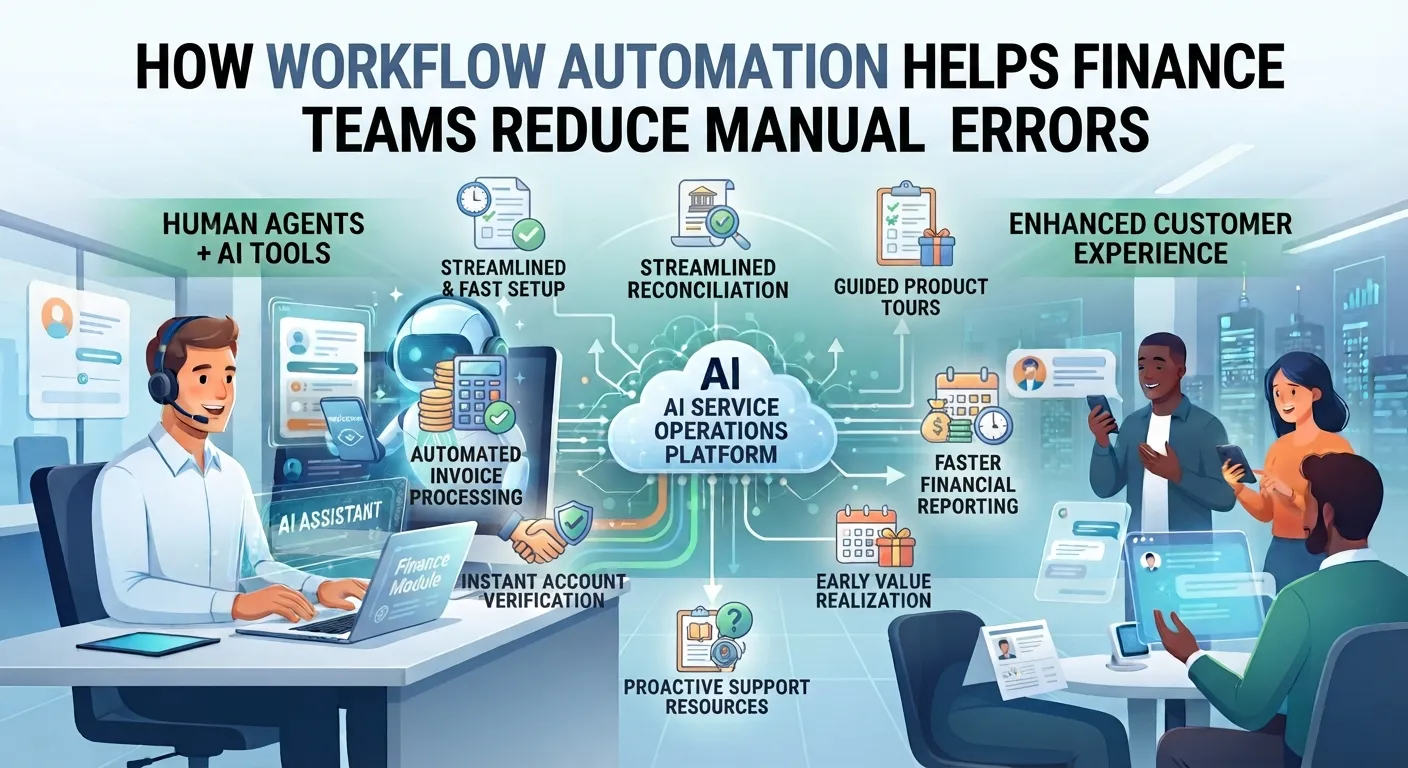

Finance departments deal with large amounts of structured information. Invoices, expenses, purchase requests, payments, approvals, and financial records all need to move through defined processes.
When employees manage these processes manually, small mistakes can create bigger problems later.
Workflow automation can help finance teams reduce repetitive work while keeping important decisions under human control.
Where Finance Processes Slow Down
A typical invoice may pass through several people before payment.
Someone receives it, enters the details, checks the supplier, sends it for approval, and eventually updates the accounting system.
When this happens through email and spreadsheets, it becomes difficult to track progress.
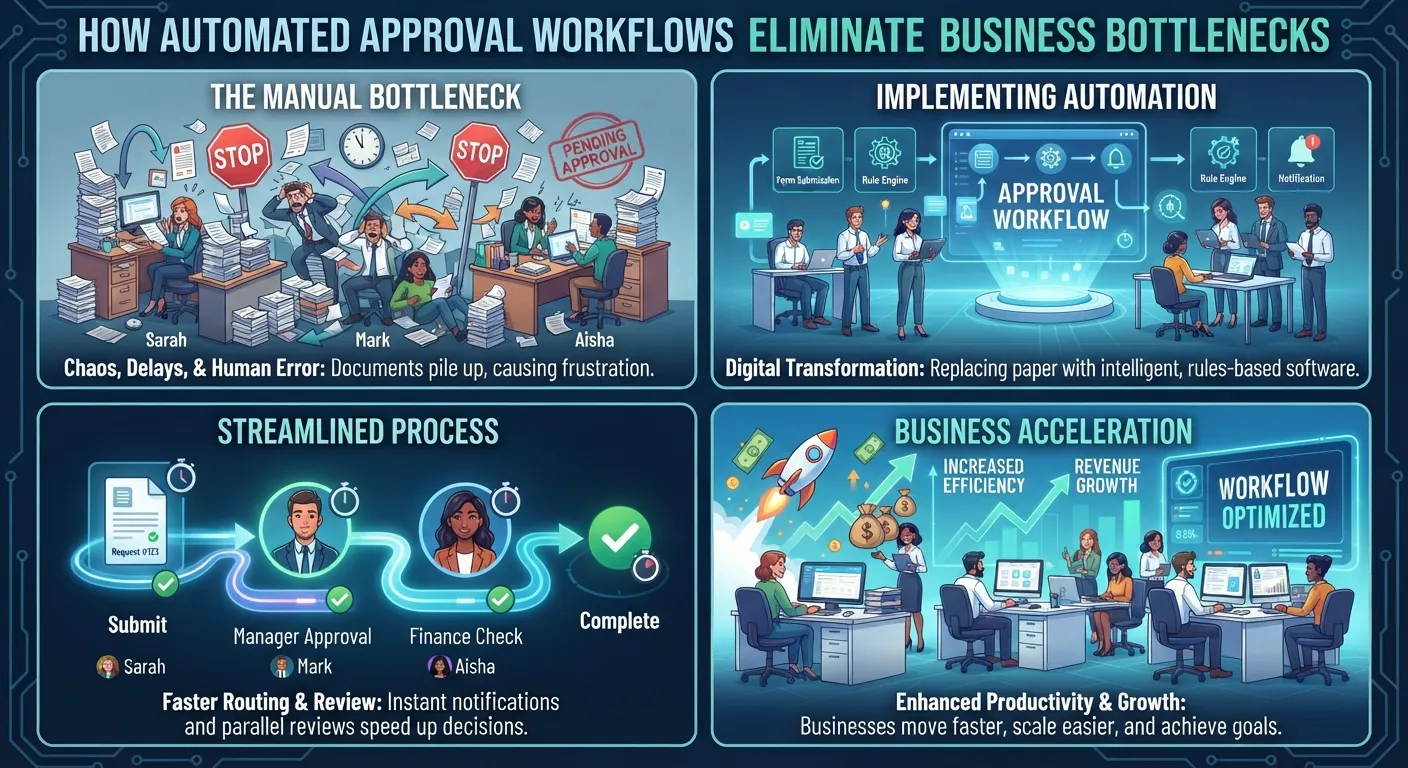
An automated finance workflow can route information according to predefined rules and keep a record of each stage.
Reducing Repetitive Data Entry
Repeatedly entering the same information creates unnecessary work and increases the chance of errors.
Automation can capture information from approved sources and move it between systems.
For example, an approved purchase request can automatically create the next task without requiring an employee to manually re-enter every detail.
This is particularly useful when the business processes a large number of transactions.
Connecting Finance Systems
Finance workflows often depend on information from other departments.
Procurement, sales, HR, and operations may all create data that eventually reaches finance.
Through enterprise system integration, businesses can connect these systems and reduce unnecessary manual transfers.
The result is a clearer flow of information across departments.
Adding Checks Before Errors Become Problems
Automation can also introduce validation steps.
A workflow might check whether required information is present, whether an approval is missing, or whether a transaction exceeds a predefined threshold.
Instead of automatically processing every request, the system can send exceptions to the appropriate employee.
This creates a balance between speed and control.
Using Data to Improve Finance Operations
Once workflows are automated, businesses can collect useful operational information.
How long do approvals take? Which suppliers generate the most exceptions? Where are delays happening?
A strong financial data analytics approach can help finance leaders answer these questions and identify areas for improvement.
Automation is not about removing financial oversight.
It is about making routine processes more consistent so finance professionals can spend more time reviewing important information, managing risk, and supporting business decisions.
When repetitive tasks are handled systematically, finance teams can reduce avoidable errors while creating a process that is easier to monitor and scale.


























Sign in to leave a comment.