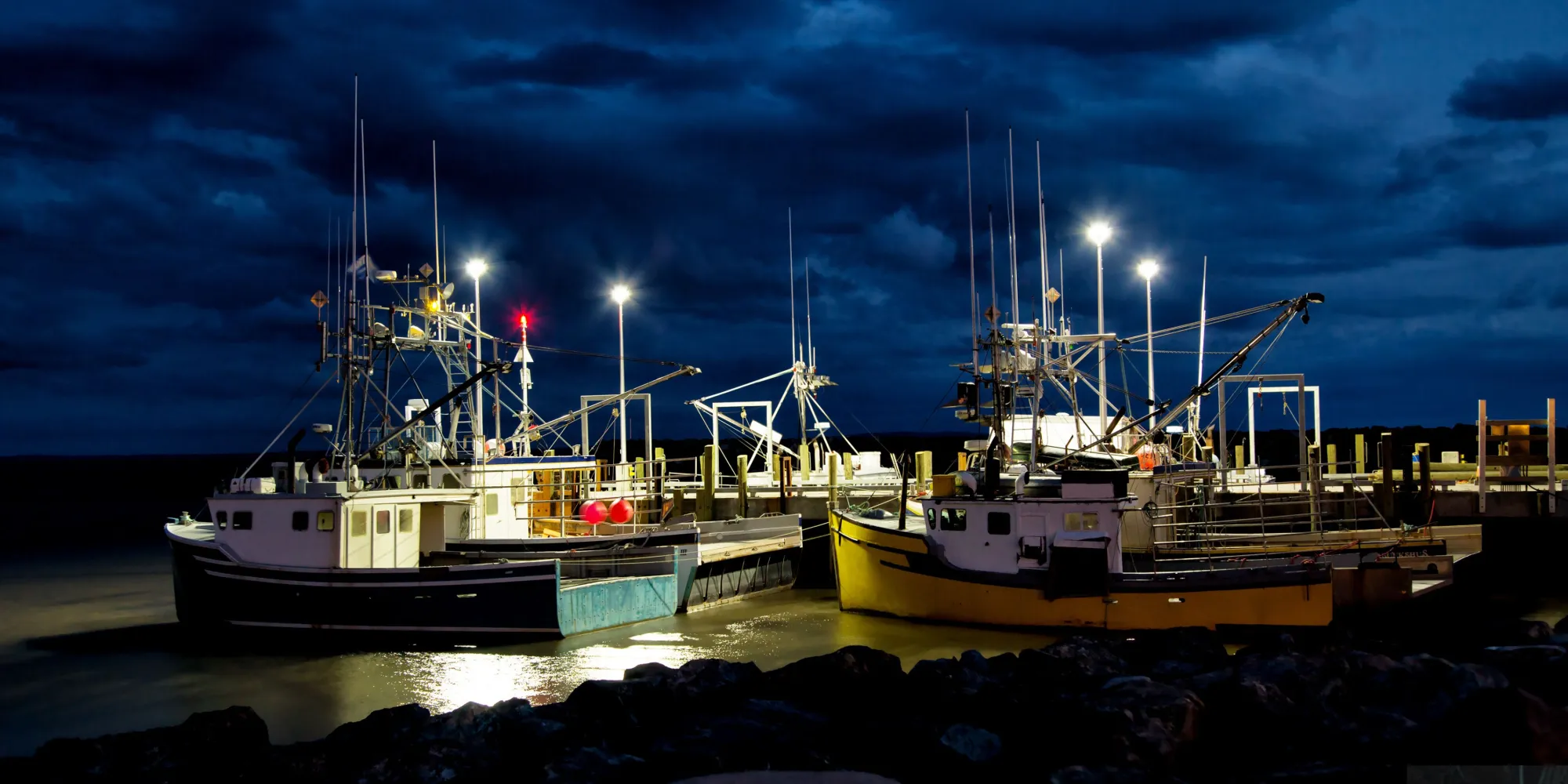

Imagine you are out on the water. It is past sunset. The waves are picking up, and another vessel is heading your way. You reach for your navigation lights, and nothing happens. No flicker or glow. Just darkness!
That single moment of failure can turn a good evening on the water into a dangerous emergency. And yet, boat owners chose their marine lights based on brightness alone. The brighter, the better. The more lumens, the more impressive. But something has changed.
Today, the boating community is asking a different question; not "how bright is it?" but “how long will it last when it matters most?”
Reliability has quietly become the real performance metric for the best marine lights. Here is why that shift makes complete sense and what it means for anyone buying marine lighting today.
What Made Marine Lights "Good" Before?
The Old Performance Benchmarks
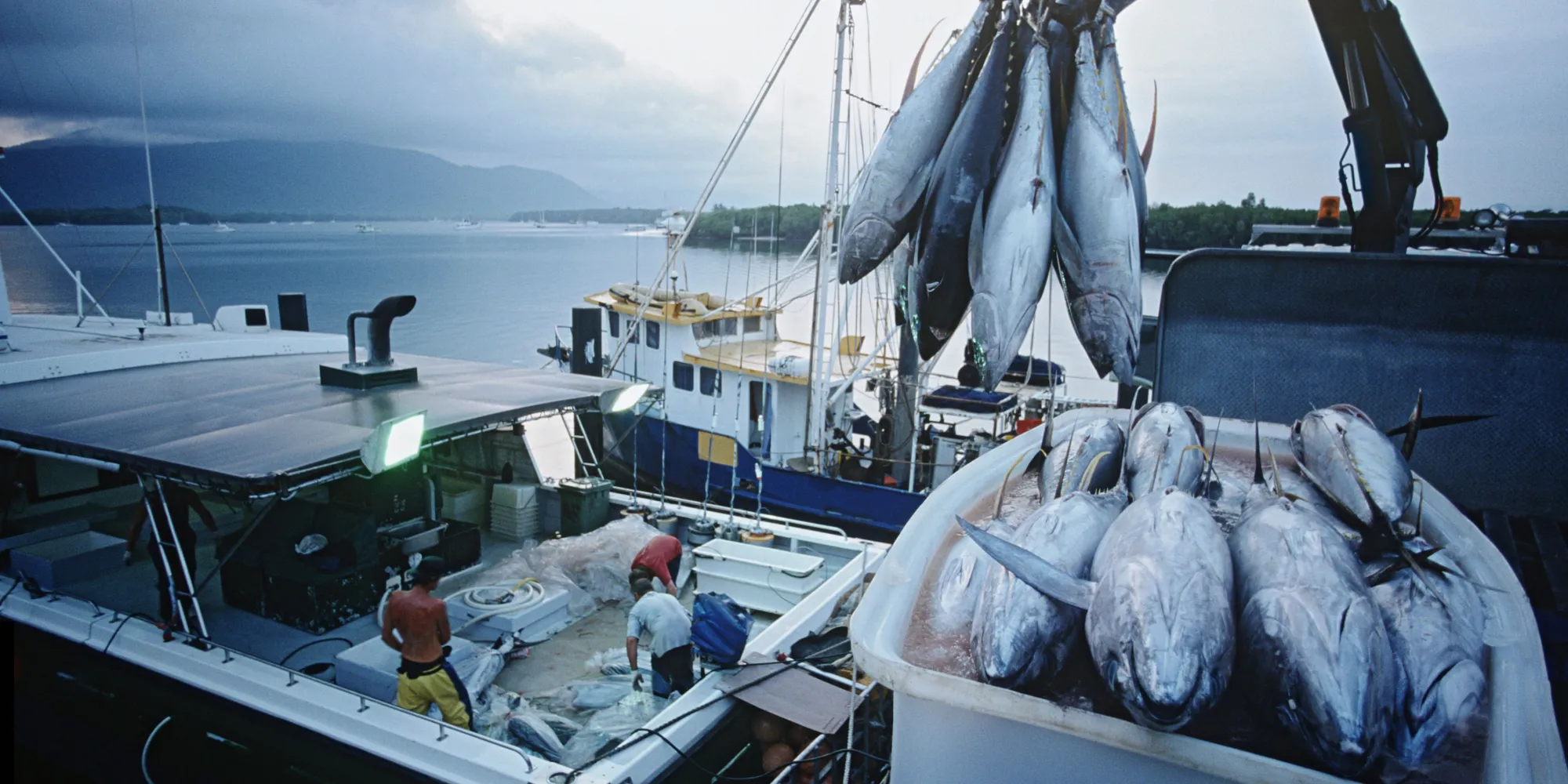
For a long time, marine lights were judged on three things: brightness, beam angle, and how good they looked on a boat. Halogen and incandescent bulbs dominated the market. They were cheap, familiar, and widely available at any marine supply store.
Brightness still matters, of course. But it was treated as the only metric. A light that burned twice as bright as a competitor won the sale, even if it burned out twice as fast. Boat owners replaced bulbs season after season and accepted it as a normal part of ownership. Nobody stopped to calculate the real cost of that cycle.
Why Reliability Now Outranks Raw Performance?
The Cost of Failure at Sea
The open water is not a forgiving environment. When a light fails on land, it is an inconvenience. When a light fails at sea, it is a safety risk. Navigation lights are legally required under COLREGS (International Regulations for Preventing Collisions at Sea). A vessel running without proper lighting is invisible to others on the water. That invisibility can have serious consequences.
Beyond safety, there is the financial side. Frequent replacements add up quickly. Factor in the labour cost of changing lights on a vessel, the downtime, and the risk of water ingress every time a housing is opened, and a cheap bulb starts looking very expensive.
How has the Industry Mindset Shifted?
Fleet operators, charter companies, and serious recreational boaters have all moved toward a reliability-first mindset. Insurance providers are taking note, too.
Vessels with certified, long-lasting lighting systems carry less risk on paper and that reflects in premiums. The market has responded, and the best marine LED lights now lead that conversation.
What Makes the Best Marine Lights Reliable?
Build Quality & IP Ratings
Ingress Protection ratings tell you how well a light is sealed against water and dust. For marine use, IP67 is the minimum worth considering. IP68 is better. It means the fixture can handle continuous submersion, not just splashes.
Material matters just as much. 316-grade stainless steel resists saltwater corrosion far better than standard steel or cheap aluminium alloys. UV-stabilised polycarbonate lenses will not yellow or crack after a summer of sun exposure.
Thermal Management
Heat is a quiet killer of marine lights. Poor thermal design traps heat inside the fixture, which degrades the components faster. Quality lights use aluminium heat sinks to draw heat away from the source. Fixtures with plastic housings might look similar on a shelf but behave very differently after a few hundred hours of use.
Vibration & Impact Resistance
A vessel in motion is constantly vibrating. Wave impact, engine vibration, and hull flex all put stress on every component aboard, including light fixtures.
Reliable marine lights are built to handle that stress. Loose connections and fragile internal components are the first things to fail when a boat hits rough water.
Best Marine LED Lights & the Reliability Edge
This is where LED technology earns its place at the top. The best marine LED lights are not just brighter; they are fundamentally more dependable than every technology that came before them.
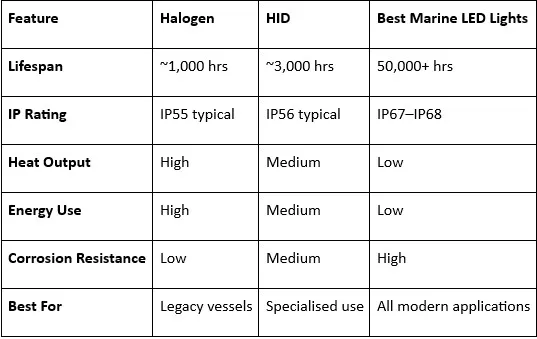
Consider the numbers. A standard halogen bulb lasts around 1,000 hours. A quality marine LED fixture is rated for 50,000 hours or more. That is not a small improvement; it is a generational leap. Over a typical boating lifespan, switching to LED can eliminate dozens of replacement cycles.
Key Features to Look for in Marine LED Lights
When shopping for the best marine LED lights, these are the features that separate reliable products from average ones:
- Certifications: Look for ABYC, USCG, and COLREGS compliance. These are not optional for vessels operating in regulated waters.
- Rated lifespan: Anything below 30,000 hours deserves a closer look at the specs.
- Sealed connectors: Waterproof wiring connections prevent the most common failure point in marine lighting
- Voltage tolerance: Good marine LEDs handle a range of input voltages without flickering or dimming; important on vessels where power draw fluctuates.
How to Evaluate Reliability Before You Buy?
Questions to Ask Before Purchasing
- What is the IP rating, and is it verified by a third party?
- Does the product carry recognised marine certifications?
- What does the warranty actually cover and for how long?
Red Flags to Avoid
- No IP rating listed anywhere in the product description.
- Pricing that seems too good for the specs being claimed.
- No mention of certifications or independent testing.
Marine Lights Reliability Comparison
Reliability is Not a Bonus; It Is the Baseline
The best marine lights were never supposed to be the brightest ones in the store. They were always supposed to be the ones who work in the worst possible conditions.
The shift toward reliability as the primary performance metric is not a trend. It is a correction. Boaters have always needed lights they could count on. The industry has finally caught up with that need, and the best marine LED lights are leading the way.
If you are still running halogen fixtures or choosing lights based on brightness alone, it is worth reconsidering your approach.
Ready to upgrade? Explore certified marine LED lighting options at DuraBrite and make reliability the first item on your checklist before the next time the sun goes down on the water.
FAQs
Q1. What are the best marine lights for saltwater use?
LED fixtures rated IP68 with 316 stainless steel housing perform best in saltwater environments. They resist corrosion and handle constant moisture exposure without degrading.
Q2. Are the best marine LED lights worth the higher upfront cost?
Yes. The lifespan alone justifies the price difference. Fewer replacements, lower energy draw, and reduced maintenance time make LED the smarter long-term investment.
Q3. What certifications should I look for?
ABYC, USCG approval, and COLREGS compliance are the three key certifications for anyone operating in regulated waters.
Q4. How frequently should marine lights be replaced?
Halogen bulbs typically need replacing every one to two seasons. A well-built marine LED light can last a decade or more with routine inspection.


























Sign in to leave a comment.