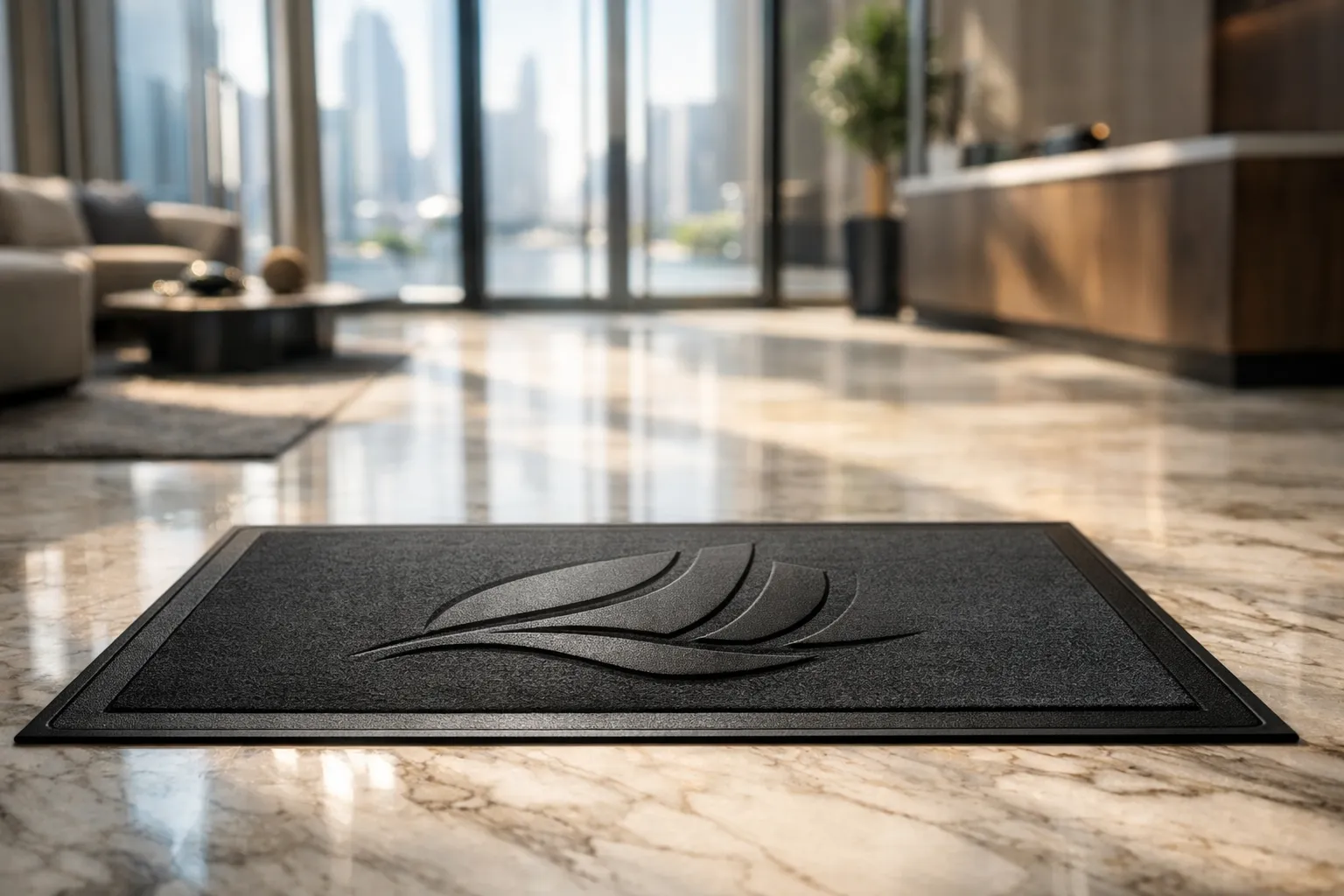

Mats don't get much credit for the work they actually do. They're the first thing people step on when they walk into a home, office, or store, and they quietly handle a job most people never think about trapping dirt, cutting down on slips, and setting the tone before anyone even notices the rest of the room. With so many materials and styles out there, picking the right one isn't always obvious. Here's a practical rundown of the best mat types and where each one genuinely makes sense.
Why the Right Mat Type Actually Matters
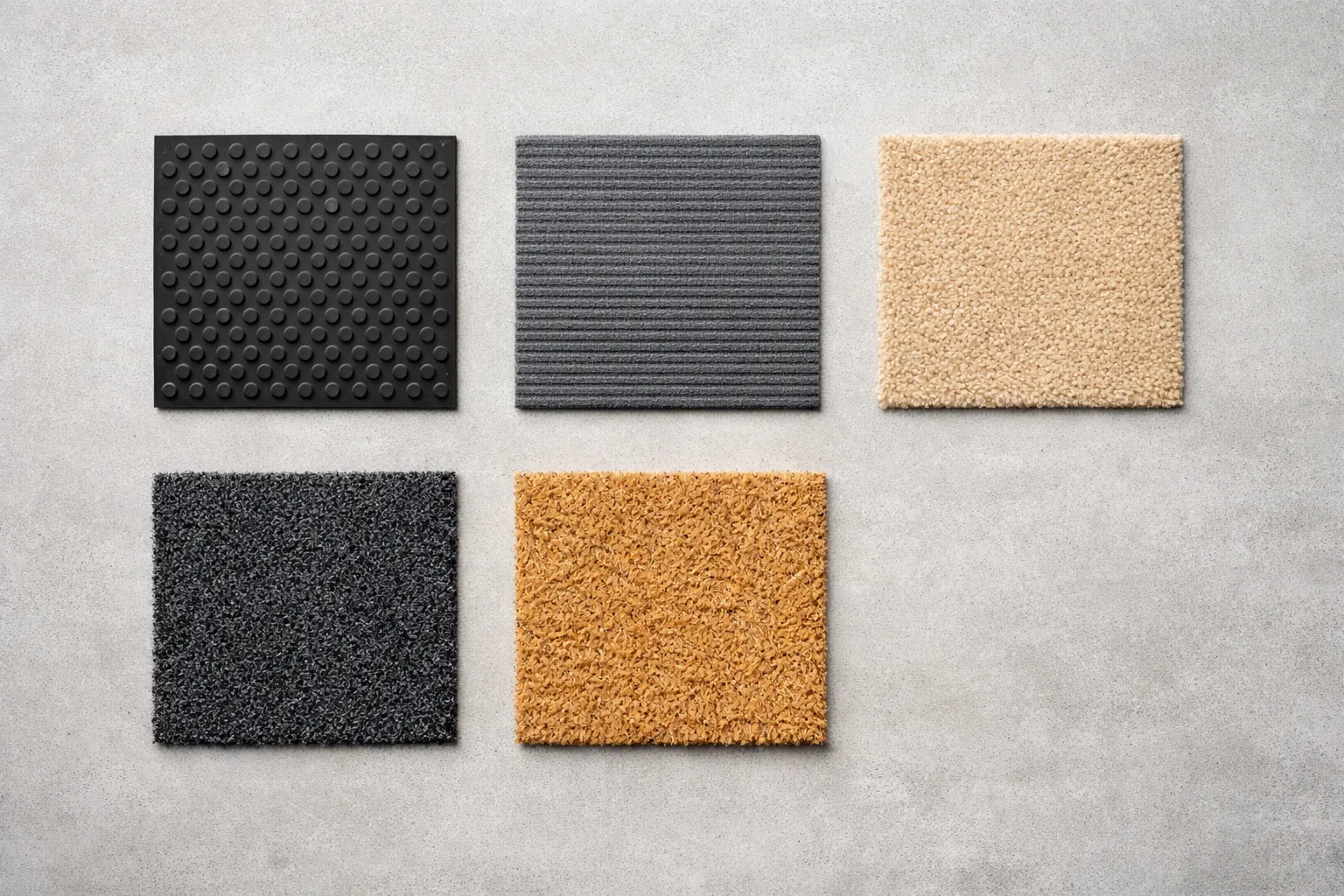
It's tempting to treat a mat as an afterthought something you grab quickly without much thought. But the wrong material in the wrong spot wears out fast, stops doing its job, or just looks out of place. A flimsy mat at a busy commercial entrance won't survive the foot traffic, and a heavy duty outdoor mat indoors can feel completely mismatched with the rest of the interior. Matching the material to where it's actually going saves you from replacing it every few months.
Rubber Mats: Built for Punishment
Rubber is the workhorse option. It holds up to heavy foot traffic, resists water, and doesn't crack or curl the way cheaper materials do over time. This makes it a natural fit for outdoor entrances, factories, warehouses, and anywhere that sees constant use and rough conditions. It's not the most refined looking option, but for pure durability, it's hard to beat.
PVC Mats: The Commercial Standard
PVC strikes a solid balance between durability and a cleaner look, which is exactly why it's such a common choice for commercial buildings and offices. It handles moisture well, cleans up easily, and holds its shape better than most budget materials. If you need something that looks professional at a business entrance without the industrial feel of rubber, PVC is usually the answer.
Nylon Mats: Best for Branding
If the goal is showcasing a logo or company name, nylon is generally the material of choice. It takes color and detail well, which matters a lot when you're trying to get a crisp, professional looking logo mat rather than something that looks faded or blurry after a few washes. Reception areas, retail entrances, and office lobbies tend to lean toward nylon for exactly this reason.
Polypropylene Mats: Versatile and Presentable
Polypropylene sits somewhere between practicality and polish. It's commonly used in hotels, shopping malls, and retail stores spaces that need something durable but still visually appealing to guests. It resists moisture and fading reasonably well, making it a dependable mid range option for businesses that care about both function and first impressions.
Aluminium Mats: Heavy Duty and Long Lasting
For places with serious daily foot traffic think busy commercial lobbies or mall entrances aluminium framed mats are often the strongest option available. They're built for drainage and long term performance, and they tend to outlast almost every other material on this list. The trade off is cost, but for high traffic commercial spaces, the extended lifespan usually justifies it.
Carpet Tiles: A Softer Commercial Option
Carpet tiles aren't quite a traditional "mat," but they serve a similar purpose in meeting rooms, reception areas, and office interiors where a softer, more finished look is preferred over a rubber or PVC surface. They're easy to replace section by section if one tile wears out, which is a genuine advantage over a single large mat that needs full replacement.
Coir Mats: The Classic Natural Look
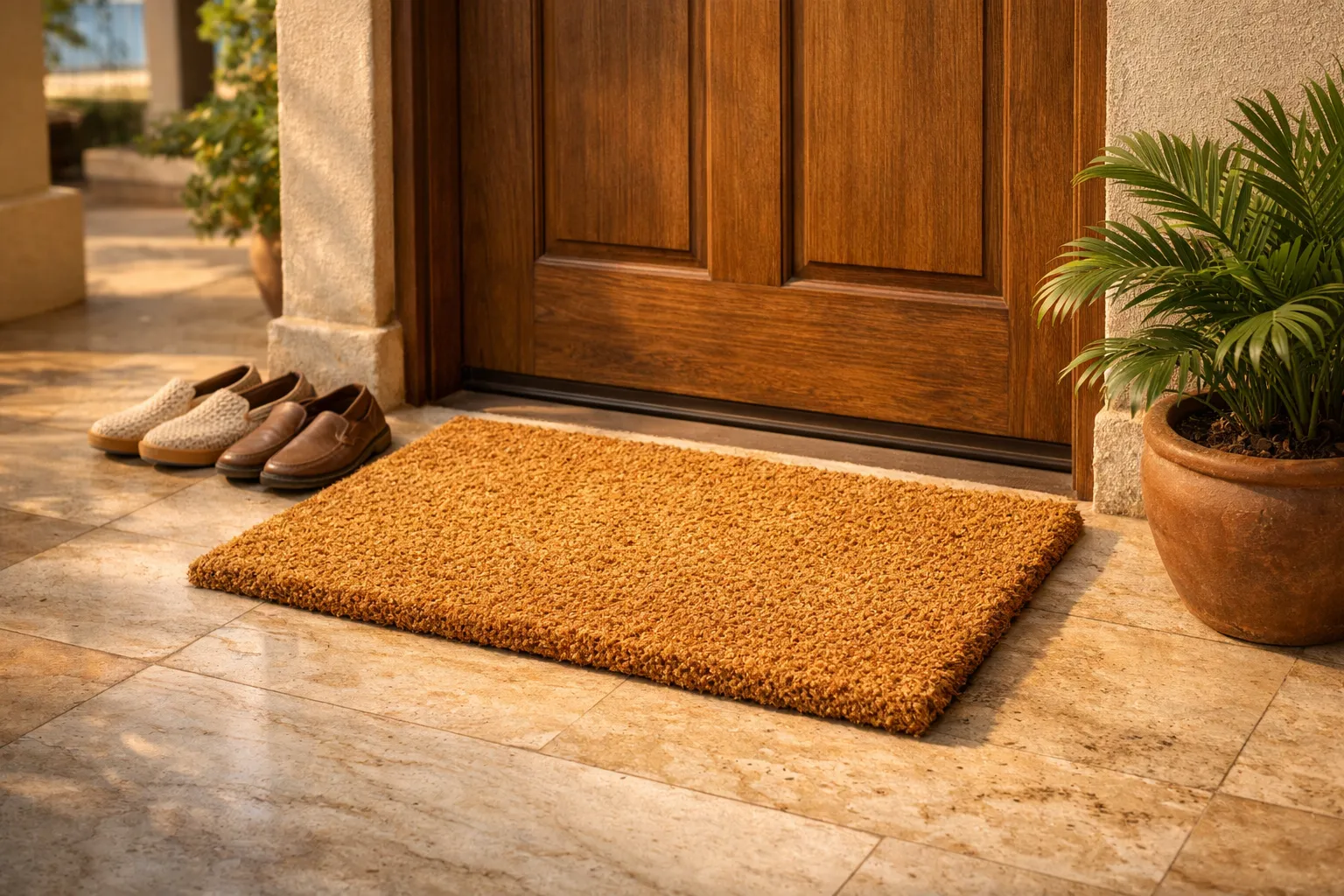
Coir, made from coconut fiber, is the traditional choice for home entrances and doorsteps. It has a natural, textured look that suits residential settings, and it's genuinely effective at scraping dirt and debris off shoes before it makes it indoors. It's not the most weatherproof option long term, but for a home entryway, it strikes a nice balance between function and classic style.
Choosing Based on Where the Mat Is Going
Rather than picking a material first, it helps to start with the location:
Outdoor entrances and industrial spaces call for rubber or heavy duty scraper style mats that can handle dirt, moisture, and constant wear without breaking down.
Office lobbies and commercial entrances generally do best with PVC, nylon, or aluminium, depending on whether the priority is branding, everyday durability, or long term heavy traffic.
Hotels, malls, and retail spaces tend to favor polypropylene or carpet tiles, since these spaces need something that looks presentable to guests while still handling steady foot traffic.
Home entrances usually work well with coir or a smaller nylon logo mat, prioritizing style and a warm first impression over industrial grade durability.
A Few Practical Tips Before You Order
Foot traffic should guide your decision more than appearance alone a beautiful mat that wears out in months isn't actually saving you money. Non slip backing is worth prioritizing almost everywhere, especially in spaces with tile or marble flooring where slips are more likely. And if branding matters, request a sample first, since colors and logo detail can look noticeably different in person compared to a digital mockup.
Finding the Right Fit
With so many materials, sizes, and finishes to choose from, it's usually easier to browse a proper custom mat collection rather than guessing which material suits your space. Seeing the actual textures and finishes side by side makes the decision a lot clearer than comparing specs alone.
Final Thoughts
There's no single best mat type the right choice really depends on where it's going and how much wear it needs to survive. Rubber and aluminium handle the toughest conditions, PVC and nylon strike a good commercial balance, and coir keeps things classic for home entrances. Getting the material right from the start means fewer replacements and a mat that actually holds up to the space it's protecting.
If you're planning an order and want expert guidance on material, size, or branding options, the team at Hayat Interiors can help match the right mat to your specific space, whether it's a single home entrance or a full commercial rollout.




























Sign in to leave a comment.