Your LinkedIn profile sits untouched for months. You check it occasionally, maybe add a new position when you change jobs. Meanwhile, colleagues with less experience land opportunities through recruiter messages and warm introductions. What's the difference? Their profiles work for them while yours collects digital dust.
The numbers tell a stark story. According to recent data, 95% of recruiters and hiring managers believe a LinkedIn profile acts as a business card, while 72% of recruiters use LinkedIn when hiring new talent. Yet most professionals treat their profiles as static resumes rather than dynamic marketing tools. This disconnect costs opportunities.
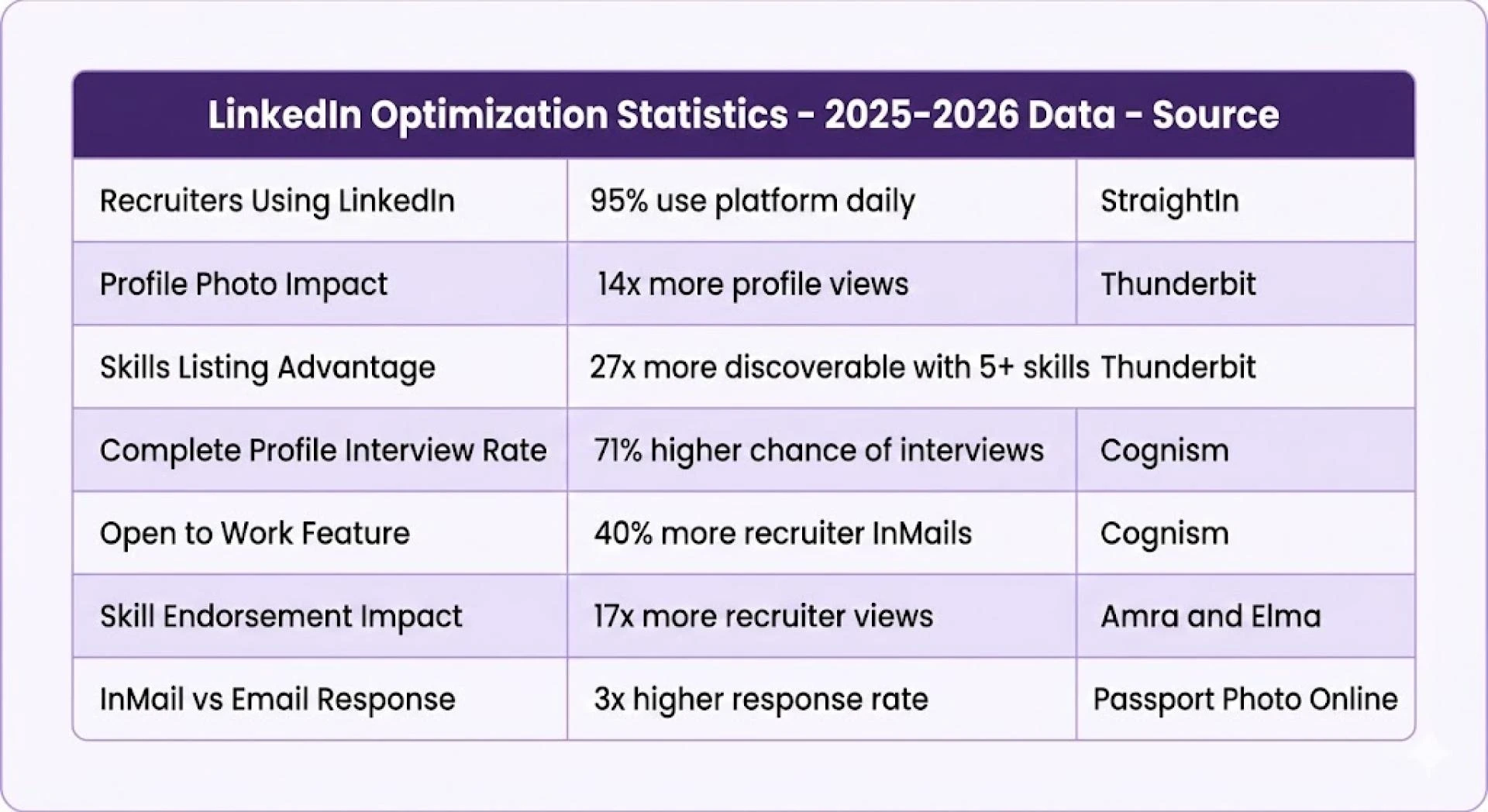
Research shows that profiles with photos receive up to 14 times more views, listing five or more skills makes you 27 times more likely to be discovered by recruiters, and complete profiles lead to 71% higher chances of getting job interviews. These aren't minor improvements. They're the difference between inbox silence and competitive offers.
Tools like the avua resume builder help professionals create ATS-optimized resumes, but LinkedIn requires different optimization strategies. This guide reveals exactly how to transform your profile from invisible to magnetic in 2026, using data-driven techniques that attract recruiters, generate inbound opportunities, and position you as the obvious choice.
Why LinkedIn Profile Optimization Matters in 2026
LinkedIn has evolved from digital rolodex to primary recruiting channel. According to Wave Connect data, the platform now has 1.1 billion members worldwide with 310 million active users monthly. More importantly, nine in ten recruiters use LinkedIn to search for talent, making it the dominant platform for professional discovery.
The hiring landscape has fundamentally shifted. Data from Cognism shows that over 9,000 members apply for jobs on LinkedIn every minute, with seven people hired every minute. This translates to over three million new hires annually through the platform. Meanwhile, job applications surged 45.5% in Q3 2024 despite a 10.6% decrease in posted positions, intensifying competition for every opportunity.
The quality advantage matters too. Research indicates that 67% of recruiters believe professionals hired through LinkedIn are higher quality than those found elsewhere. Additionally, employees sourced via LinkedIn are 40% less likely to quit within six months, making them preferred candidates.
These statistics reveal opportunity for strategic job seekers. While competition has intensified, most profiles remain unoptimized. Only three million users share content weekly out of 310 million active users, meaning just one percent create content. Optimize your profile and you immediately outperform 99% of competitors.
The avua job search platform complements LinkedIn by offering curated opportunities, but LinkedIn remains essential for passive discovery by recruiters who may not post roles publicly.
Critical Profile Sections That Recruiters Check First
Recruiters spend seconds evaluating profiles before moving to the next candidate. Understanding what they prioritize helps you optimize effectively.
Profile Photo and Banner
According to Passport Photo Online data, 80% of HR professionals say candidate profile pictures help them get to know the person better, while 88% of business owners dismiss pictureless profiles. This isn't vanity. It's professional presentation.
Your photo should feature neutral background, professional attire appropriate to your industry, natural smile with direct eye contact, and head and shoulders filling 60% of the frame. Members with profile photos get up to 21 times more views, making this the highest ROI optimization you can make.
The banner provides free billboard space. According to Growleads optimization guidance, your banner should communicate positioning in one line. Use industry-relevant visuals, branded graphics if you're a consultant or entrepreneur, or clean designs highlighting your expertise. Never leave it blank.
Headline Optimization
Your headline appears everywhere on LinkedIn and drives search visibility. Research shows that profiles with strong headlines receive 30% more profile views. Yet most professionals waste this space with generic job titles.
Transform "Marketing Manager" into "Marketing Manager Helping SaaS Companies Scale Through Data-Driven Growth Strategies." The difference? Keywords, value proposition, and specificity. According to career optimization experts, your headline should convey who you are and what you do in a short, clear, concise way while including profession-specific skills and searchable keywords.
Consider this structure: Role plus specialty plus outcome you deliver. Examples include "Software Engineer Specializing in React/Node.js Building Scalable Cloud Applications," "Sales Professional Driving Enterprise Revenue Growth in Healthcare Technology," or "HR Leader Transforming Company Culture Through People-First Strategies."
Avoid buzzwords like innovative, passionate, or strategic without context. According to LinkedIn's own guidance, specific keywords help their search algorithm place you higher in results, making you discoverable for opportunities you want.
About Section as Elevator Pitch
Data from Masters Union research shows that recruiters prioritize the About section for understanding candidate positioning. Think of it as your elevator pitch, where storytelling meets branding.
Structure your About section in three parts. First paragraph states who you are and what you do now. Second paragraph highlights key accomplishments with quantifiable metrics. Third paragraph explains what you're looking for or how people can work with you, ending with a soft call to action.
According to Growleads optimization strategies, clarity and proof outperform cleverness. Create clear positioning statements, include outcomes in your experience, add proof through metrics and transformations, embed trust signals, and end with invitations to reach out.
Wrong approach: "Passionate marketing professional with innovative ideas and creative solutions looking to make an impact in a dynamic organization."
Right approach: "Marketing strategist with seven years driving growth for B2B SaaS companies. Increased MQL generation 143% year-over-year through data-driven campaigns at current role. Skilled in marketing automation, content strategy, and analytics. Currently exploring senior marketing roles at high-growth technology companies. Open to connecting with founders and hiring managers."
The avua cv analysis tool helps identify which accomplishments from your resume translate most effectively to your LinkedIn About section.
Experience Section With Quantified Results
According to optimization guidance from Masters Union, your experience section isn't about listing duties but showcasing results. Recruiters love measurable impact.
Transform task lists into achievement statements. Instead of "Responsible for managing social media accounts," write "Increased social media engagement 187% over 18 months, growing follower base from 5K to 43K and generating 120+ qualified leads monthly."
Each position should include 3-5 bullet points emphasizing quantified outcomes, specific projects or initiatives you led, technologies or methodologies you used, and business impact you created. According to Podawaa research, adding relevant keywords that match job descriptions in your field improves discoverability.
Remember that experience descriptions support keyword integration. Masters Union guidance notes that this section aids LinkedIn profile optimization tools in ranking your profile, so natural keyword inclusion matters.
Skills Section Strategy
Research clearly demonstrates that profiles with skill endorsements receive 17 times more recruiter views. Yet most professionals either leave this section incomplete or list irrelevant skills.
You can list up to 50 skills, but strategic selection matters more than quantity. According to Masters Union optimization advice, prioritize skills aligning with future career goals. If your focus is digital marketing, skills like SEO, paid ads, and analytics matter more than event planning.
Encourage endorsements for your top three skills since they appear prominently on your profile. Data shows that listing five or more skills makes you 27 times more likely to be discovered. This isn't optional optimization. It's fundamental visibility.
According to ORS Partners guidance, LinkedIn's search tool uses SEO similar to Google. Putting together job-seeking language, industry keywords, and specific technologies optimizes your profile for search.
Keyword Optimization for Maximum Discoverability
LinkedIn operates like a search engine. According to Passport Photo Online research, 59% of HR professionals say using keywords is vital for profile visibility. Understanding how to incorporate them makes the difference between appearing in searches or remaining invisible.
Identifying Your Target Keywords
The Muse career guidance recommends examining job postings for positions you want and identifying repeated terms. These are likely what recruiters search for when looking for people like you. Look for people who have the jobs you want and see what skills and experiences they emphasize on profiles.
Create a master list of 10-15 keywords including your job title and variations, technical skills or certifications, industry-specific terminology, methodologies you use, and software or tools you master. For a data analyst, this might include data analyst, business intelligence, SQL, Python, Tableau, data visualization, statistical analysis, and predictive modeling.
Strategic Keyword Placement
According to Podawaa optimization research, keywords should appear throughout your profile in these locations:
Headline should use a mix of job title and industry-specific terms. About section should naturally integrate key skills and job-related keywords to describe experience. Experience descriptions should add relevant keywords matching job descriptions in your field. Skills section should choose specific skills aligning with job openings you're interested in.
Critical guidance from The Muse emphasizes that keywords should flow naturally with the rest of your writing and aren't just jammed in. Never write "Keywords:" in your About section with a contextless list. This appears desperate and damages credibility.
Use variations of important terms. If data analysis is crucial, also include data analytics, analytical skills, and business analysis naturally throughout your profile. LinkedIn's algorithm recognizes semantic relationships and rewards comprehensive coverage.
Avoiding Keyword Stuffing
While keywords matter, according to optimization experts, overuse creates problems. Recruiters immediately notice unnatural keyword repetition. ATS systems may flag profiles for manipulation. Your writing should prioritize human readability while incorporating keywords naturally.
Test your keyword density by reading your profile aloud. If terms feel forced or repetitive, revise for naturalness. The avua resume analysis tool helps identify optimal keyword balance, showing where to add terms without overwhelming readers.
Active Engagement Strategies That Boost Visibility
According to Podawaa research, optimizing your profile is a great start, but staying active on LinkedIn makes the real difference. Recruiters and hiring managers notice job seekers who regularly engage with content and participate in discussions.
Content Sharing and Creation
Data from Kinsta shows that only three million users share content weekly out of 310 million monthly active users. This represents massive opportunity. By creating content, you immediately differentiate yourself from 99% of users.
Share industry insights, comment meaningfully on others' posts, write short articles about your expertise, and celebrate professional milestones. According to The Undercover Recruiter, you're more likely to show up in LinkedIn updates if you regularly update your status and general profile.
Quality trumps quantity. Wave Connect data shows average engagement rate per LinkedIn post stands at 0.35%, meaning most content generates minimal interaction. Focus on valuable contributions rather than constant posting.
Strategic Connection Building
According to Passport Photo Online statistics, each new LinkedIn connection results in an average of 400 new potential connections and access to 500+ jobs. The average user has 1,300 connections, providing substantial network effects.
Career experts emphasize that at its core, LinkedIn is a professional networking platform, meaning it's acceptable to add people you haven't met in real life. Add recruiters, HR specialists, and hiring managers at companies you want to work for. This keeps you updated with open positions and makes you visible when these recruiters search for your skill set.
Send personalized connection requests rather than generic invitations. Recommended approach from Novoresume includes brief messages like: "Hi Sarah, I noticed you work in HR at TechCorp. I'm currently seeking new opportunities and expanding my network with professionals in the HR field. I'd be happy to discuss any opportunities at any point."
Using the Open to Work Feature Strategically
Research from Cognism shows that members using the #OpenToWork photo frame publicly receive on average 40% more InMails from recruiters. This simple feature dramatically increases visibility.
Consider whether to display this publicly or only to recruiters. Public display generates more outreach but signals to your current employer you're job hunting. According to Amra and Elma data, job seekers using the feature receive significantly more recruiter contacts, making it valuable for active searches.
When implementing this feature, specify your preferences clearly including job titles you're interested in, location preferences, and whether you're open to remote opportunities. Specificity helps recruiters match you with appropriate roles.
Industry-Specific Optimization Approaches
Different industries prioritize different elements. Tailor your optimization strategy to your field's norms and recruiter expectations.
Technology and Software Development
Tech recruiters search for specific technologies and programming languages. Your skills section should list languages, frameworks, databases, cloud platforms, and methodologies prominently. Include GitHub links in your contact information and feature notable projects in your experience section.
According to Amra and Elma research, digital marketing skills have seen 60% increases in job postings, but technology skills remain most in-demand overall. Highlight contributions to open source, technical blog posts you've written, and speaking engagements at tech meetups.
Sales and Business Development
Sales professionals should emphasize quota attainment and revenue generation. Every position should include metrics about deals closed, revenue generated, pipeline built, or client relationships managed. Skills should include CRM platforms, sales methodologies, and negotiation techniques.
Use your About section to highlight your approach to sales and what makes you successful. Recommendations from satisfied clients add tremendous credibility for sales roles.
Marketing and Creative Fields
Marketing professionals benefit from portfolio integration. Use LinkedIn's featured section to showcase campaigns, content samples, or case studies. Your About section should demonstrate strategic thinking while your experience proves execution capability.
Wave Connect data shows marketing represents the most popular sector in LinkedIn's job market, with over half of marketers using LinkedIn daily. This means intense competition requiring differentiation through demonstrated results.
Finance and Accounting
Financial professionals should emphasize certifications prominently. CPA, CFA, and similar credentials belong in your headline, summary, and certifications section. Quantify financial impact through metrics about budget management, cost savings, or revenue optimization.
Skills should include financial software, compliance knowledge, and analytical capabilities. Recommendations from supervisors and clients carry particular weight in finance roles.
Common LinkedIn Profile Mistakes Costing You Opportunities
These errors prevent otherwise qualified candidates from appearing in searches or converting profile views into opportunities.
Incomplete Profile Sections
According to Cognism research, candidates with comprehensive LinkedIn profiles have 71% higher chances of getting job interviews. Yet many professionals leave sections blank or minimally completed.
The Undercover Recruiter notes that you achieve more with LinkedIn the more content-rich you make it. Use the experience section to explain what each company did and your role there. Include board positions, advisory roles, and volunteer work.
Generic Headlines and Summaries
Most professionals simply list their current job title in headlines. This wastes the most visible piece of real estate on your profile. According to optimization research, profiles with strong headlines receive 30% more views, yet the majority remain generic.
Similarly, About sections filled with buzzwords and vague statements fail to differentiate. Growleads guidance emphasizes avoiding generic buzzwords, motivational lines, vague experience descriptions, and no calls to action.
Ignoring Recommendations and Endorsements
Research from Masters Union shows recommendations act as testimonials for your career. Instead of generic praise, ask mentors, managers, or clients to highlight specific strengths or projects.
Similarly, data from StraightIn confirms that skill endorsements increase recruiter views 17 times. Actively request endorsements from colleagues who can authenticate your capabilities.
Not Customizing Your URL
According to Novoresume guidance, LinkedIn automatically generates URLs with random numbers. Having a professional, clean, name-only URL is easier to find, read, and share. Customize yours to linkedin.com/in/yourname or add relevant certifications like CPA or PMP.
Passive Profile Management
The Undercover Recruiter emphasizes that if you're on LinkedIn and using it to look for jobs, you want to be found. Passive management means missed opportunities. Data shows that 75% of recruiters believe staying active on LinkedIn helps you get noticed.
Tools like the avua job search platform provide curated opportunities, but LinkedIn requires active participation to maximize effectiveness. Regular engagement signals to LinkedIn's algorithm that your profile deserves visibility.
Also Read - Entry-Level Resume with No Experience 2025: How to Get Your First Job
Frequently Asked Questions
1. How often should I update my LinkedIn profile?
Update quarterly or whenever significant changes occur in your role, certifications, or achievements. More frequent updates signal activity to LinkedIn's algorithm, increasing your visibility in searches. If actively job searching, weekly engagement through posts or comments keeps your profile fresh without constant profile edits appearing desperate.
2. Should I accept all connection requests or be selective?
Be strategic but not overly restrictive. Accept requests from people in your industry, recruiters, colleagues, and potential professional contacts. Decline obvious spam or accounts with no profile information. Growing your network increases your reach, as each connection provides access to their 400+ connections and 500+ jobs on average.
3. Is LinkedIn Premium worth it for job seekers?
Premium provides advantages including InMail credits for contacting recruiters directly, applicant insights showing how you compare to other candidates, and enhanced profile visibility. The value depends on your search intensity and industry. Try the free trial during active searches, but most optimization techniques work equally well on free accounts.
4. How do I optimize my LinkedIn profile if I'm currently employed but passively looking?
Use the "Open to Work" feature visible only to recruiters rather than publicly. Update your skills and experience sections to reflect current capabilities without announcing job searching. Engage with content relevant to target industries, building visibility without alerting your current employer. The avua resume maker helps create materials for applications without broadcasting your search.
5. What's the best way to get skill endorsements and recommendations?
Ask directly. Message former colleagues, managers, or clients with specific requests such as "Would you be willing to endorse my project management skills on LinkedIn?" or "Could you write a brief recommendation highlighting our work together on the product launch?" Offer to reciprocate endorsements. Most people are willing to help but need direct requests rather than waiting for spontaneous endorsements.
Conclusion: Transforming Your Profile Into an Opportunity Magnet
LinkedIn profile optimization isn't optional in 2026. With 95% of recruiters using the platform, 72% relying on it for hiring, and seven people hired every minute through LinkedIn, your profile directly impacts career trajectory.
The difference between optimized and neglected profiles is dramatic. Adding a photo increases views 14 times. Listing five or more skills makes you 27 times more discoverable. Complete profiles generate 71% higher interview rates. These aren't marginal improvements. They're fundamental visibility factors.
Start with high-impact changes. Add a professional photo, optimize your headline with keywords and value proposition, rewrite your About section emphasizing quantified achievements, list relevant skills strategically, and request endorsements from colleagues who know your work.
The avua resume builder complements LinkedIn optimization by ensuring your downloadable materials match your online presence. When recruiters discover you on LinkedIn, they'll request resumes that reinforce rather than contradict your profile messaging.
Remember that only one percent of LinkedIn users share content weekly, meaning minimal activity differentiates you substantially. Comment on posts, share insights, and engage authentically with your network. This visibility compounds over time.
Optimization is ongoing rather than one-time. Masters Union guidance recommends updating quarterly or whenever significant changes occur. Track which optimizations generate results through profile view analytics and recruiter outreach patterns.
The professionals landing opportunities through LinkedIn aren't necessarily more qualified. They're more visible. With strategic optimization using these data-driven techniques, you transform your profile from digital business card into powerful career advancement tool that works continuously in the background, generating opportunities while you focus on current responsibilities.



























Sign in to leave a comment.