Choosing the right time to go trekking in Nepal can completely change your experience on the trail. The same route can feel clear, safe, and full of mountain views in one season, and cloudy, slippery, or quiet in another. Nepal has four major trekking seasons, and each one offers a different mix of weather, crowd level, visibility, and trail conditions. This guide breaks everything down in a simple way so you can decide the best time based on your comfort, fitness, and trekking goals.
Quick Overview Table: Best Time for Trekking in Nepal
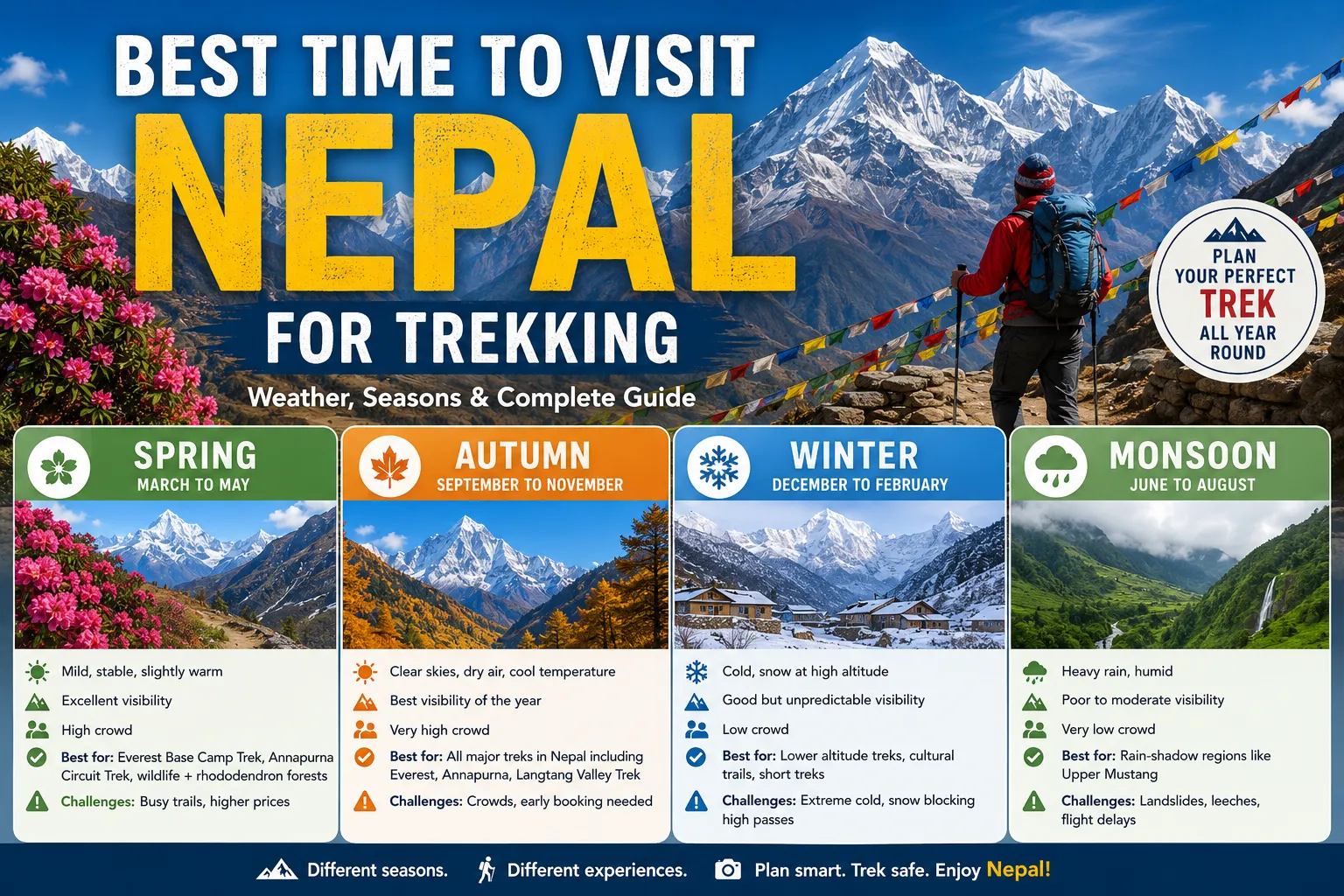
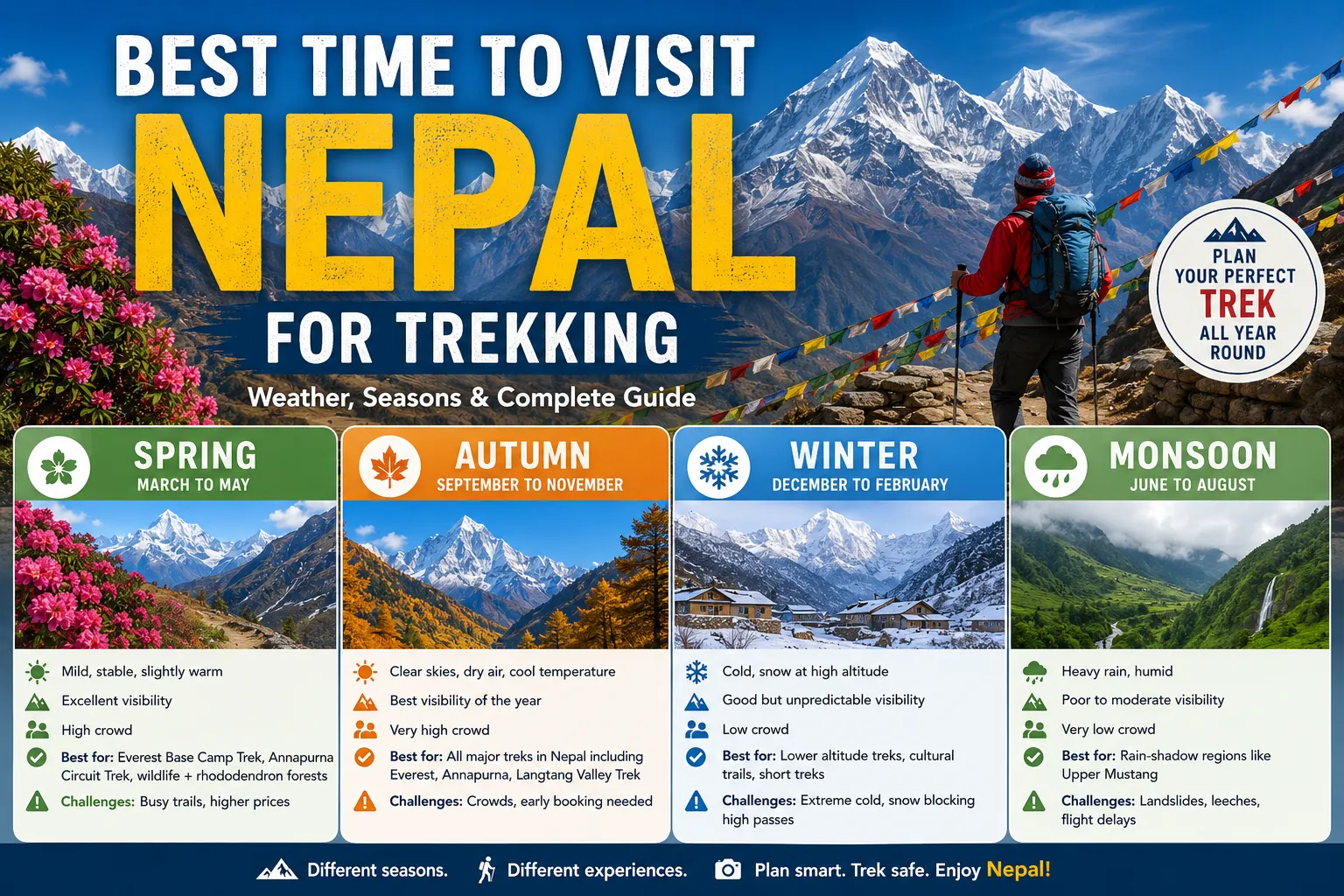
| Season | Months | Weather Condition | Visibility | Crowd Level | Best For | Challenges |
| Spring | March to May | Mild, stable, slightly warm | Excellent | High | Everest Base Camp Trek, Annapurna Circuit Trek, wildlife + rhododendron forests | Busy trails, higher prices |
| Autumn | September to November | Clear skies, dry air, cool temperature | Best of the year | Very High | All major treks in Nepal, including Everest, Annapurna, and Langtang Valley Trek | Crowds, early booking needed |
| Winter | December to February | Cold, snow at high altitude | Good but unpredictable | Low | Lower altitude treks, cultural trails, short treks | Extreme cold, snow blocking high passes |
| Monsoon | June to August | Heavy rain, humid | Poor to moderate | Very Low | Rain-shadow regions like Upper Mustang | Landslides, leeches, flight delays |

Understanding Nepal’s Trekking Climate in Simple Terms
Nepal’s weather is shaped by the Himalayas, which include some of the world’s tallest mountains like Mount Everest and Annapurna I. Because of this extreme geography, weather changes quickly even within a single day.
At lower altitudes like Kathmandu or Pokhara, you may feel warm and humid. But as you climb toward trekking regions like Everest Base Camp Trek routes or Annapurna Circuit Trek trails, temperatures drop sharply, and wind becomes stronger.
There are four clear trekking seasons, and each season affects visibility, safety, and overall trekking experience.
Spring Season (March to May): The Season of Flowers and Stable Weather
Spring is one of the most popular trekking seasons in Nepal. The weather becomes stable after winter, and the skies stay mostly clear. This is also when nature comes alive.
Rhododendron forests bloom in full color, especially in regions like the Annapurna Conservation Area. Trails feel vibrant, and mountain views stay consistent.
Weather Conditions in Spring
Daytime temperatures are comfortable for walking, usually between 10°C and 20°C in mid-altitude regions. At higher elevations, nights can still be cold but manageable with proper gear.
Why Spring Works Well for Trekking
Spring is widely chosen for major routes like the Everest Base Camp Trek and Annapurna Circuit Trek because:
- Mountain visibility stays consistent
- Trails remain open, including high passes like Thorong La Pass
- Wildlife is more active in national parks
- Tea houses operate at full capacity
For Example
A group of trekkers on the Annapurna Circuit Trek in April often experiences clear mornings with panoramic views of the Annapurna and Dhaulagiri ranges. In the afternoon, clouds may gather, but rainfall is rare. This balance makes trekking comfortable and visually rewarding.
Things to Keep in Mind
Spring also attracts a large number of international trekkers. This means popular villages like Namche Bazaar or Manang can feel crowded. Accommodation booking becomes important in advance.
Autumn Season (September to November): The Most Reliable Trekking Window
Autumn is considered the most stable trekking season in Nepal. After the monsoon ends, the air becomes clean, dust settles, and visibility improves dramatically.
This is the season when Nepal shows its clearest mountain views.
Weather Conditions in Autumn
Temperatures are moderate and dry. Days are warm enough for walking without discomfort, while nights become cool but not extreme.
Why Autumn is the Top Choice
Autumn is preferred by most trekkers for a simple reason: reliability.
- Clear skies almost every day
- Best mountain visibility of the entire year
- Stable trail conditions after monsoon washing
- Perfect for high-altitude treks like the Everest Base Camp Trek
Real-Life Example
In October, trekkers walking toward Tengboche Monastery on the Everest Base Camp route often see uninterrupted views of Ama Dablam and Everest itself. These views can last for several hours in a single day, something rare in other seasons.
Important Consideration
Because autumn is the peak season, tea houses, flights to Lukla, and guides get booked quickly. Prices also increase slightly due to demand.
Winter Season (December to February): Quiet Trails and Harsh Cold
Winter in Nepal brings silence to the mountains. Many trekkers avoid this season, but it still has value for the right type of traveler.
Weather Conditions in Winter
Temperatures drop significantly, especially above 3,000 meters. Snowfall is common in higher regions, and some passes become difficult or closed.
Why Some Trekkers Still Choose Winter
Despite the cold, winter offers:
- Very peaceful trekking routes
- Clear skies on many days
- Empty trails and tea houses
- Lower accommodation costs
Shorter and lower-altitude treks like Ghorepani Poon Hill or Langtang Valley Trek base areas are still manageable.
Example
A trek in the lower Annapurna region during January can offer crystal-clear sunrise views over Machapuchare (Fishtail Mountain), with almost no crowd around the viewpoint.
Limitations of Winter Trekking
- High altitude passes like Thorong La often close
- Extreme cold at night
- Limited services in remote villages
Winter trekking is best for experienced trekkers or those who prefer solitude over comfort.
Monsoon Season (June to August): Green Landscapes but Challenging Trails
Monsoon is the least popular trekking season in Nepal due to heavy rainfall. However, it has a unique side that many people overlook.
Weather Conditions in Monsoon
Rainfall is frequent, especially in the afternoon and at night. Trails become slippery, and visibility is often blocked by clouds.
Why Some Trekkers Still Go
Monsoon season is ideal for:
- Rain-shadow regions like Upper Mustang and Dolpo
- Lush green landscapes in the lower regions
- Fewer tourists on trails
For Example
Upper Mustang Trek, located behind the Himalayas, receives very little rainfall due to its geographical position. This makes it one of the rare regions in Nepal where trekking remains stable even during the monsoon.
Challenges
- Flight delays due to weather
- Leeches in forest areas
- Landslides on major trekking routes
- Limited mountain visibility
How Different Trekking Routes React to Seasons
Not all trekking routes behave the same way in Nepal. Choosing the right season depends heavily on the specific trek.
Everest Region (Everest Base Camp Trek)
Best seasons: Spring and Autumn
This region depends heavily on clear skies for mountain views and safe flight conditions to Lukla. Winter is possible but extremely cold.
Annapurna Region (Annapurna Circuit Trek)
Best seasons: Spring and Autumn
High passes like Thorong La Pass become dangerous in winter due to snow. Monsoon affects lower trails but not all areas equally.
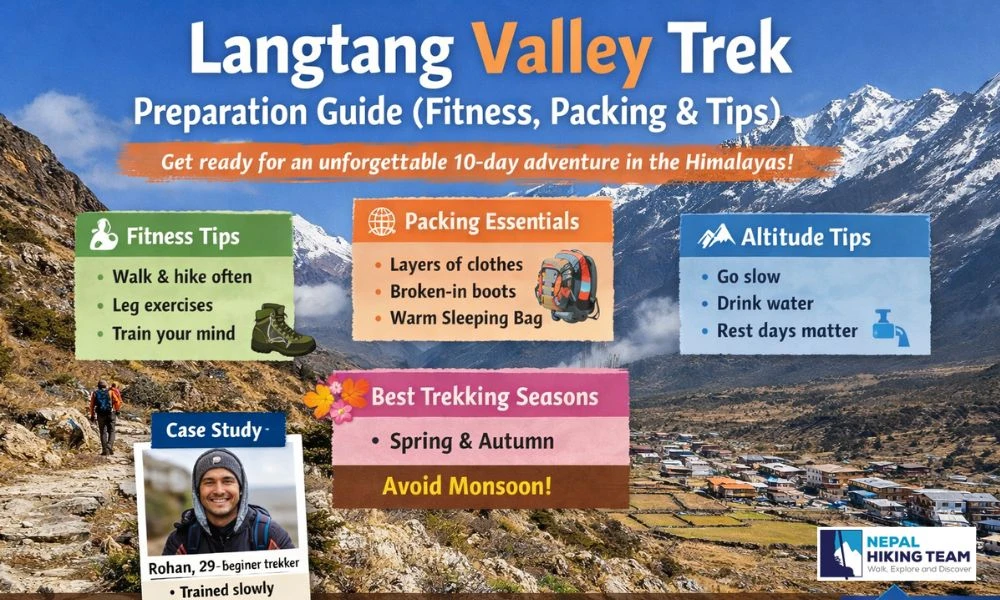
Langtang Region (Langtang Valley Trek)
Best seasons: Spring and Autumn
This region is closer to Kathmandu and easier to access. It is suitable for shorter trekking plans.
Altitude and Weather Connection (Important for Safety)
One key factor many trekkers ignore is altitude. In Nepal, the temperature drops by roughly 6.5°C for every 1,000 meters you climb.
This means:
- A warm day in Kathmandu does not reflect conditions in Namche Bazaar
- Nights at Everest Base Camp can go below freezing even in peak season
- Wind chill increases the temperature impact at high passes
Understanding this helps trekkers pack correctly and avoid altitude-related discomfort.
Common FAQs
What is the safest month to trek in Nepal?
October is generally considered one of the safest months due to stable weather, clear skies, and low rainfall.
Can beginners trek in Nepal?
Yes, beginners can trek in Nepal. Routes like Ghorepani Poon Hill and short sections of the Annapurna region are beginner-friendly.
Is it possible to trek in Nepal during the monsoon?
Yes, but only in specific regions like Upper Mustang, where rainfall is minimal.
Which season has the best mountain views in Nepal?
Autumn offers the clearest and most consistent mountain views across all major trekking regions.
Common Mistakes Trekkers Make When Choosing a Season
Many first-time trekkers focus only on vacation timing rather than weather reality. This leads to avoidable challenges.
Some common mistakes include:
- Booking the Everest Base Camp Trek in the monsoon, expecting clear views
- Underestimating the winter cold in the Annapurna Circuit Trek
- Not planning accommodation in the peak autumn season
- Ignoring the altitude impact on temperature
Real planning always combines season, route, and personal comfort.
Key Takeaways
- Autumn (September to November) is the most reliable trekking season in Nepal
- Spring (March to May) offers great scenery and blooming forests
- Winter is quiet but extremely cold at higher altitudes
- Monsoon is best only for specific rain-shadow regions
- Each trekking route reacts differently to seasonal changes
- Altitude affects the weather more than most people expect
Final Conclusion: Choose the Right Time for Your Trek
There is no single “perfect” time that fits every traveler in Nepal. The best season depends on what you want from your journey.
If you want clear mountain views and stable conditions, autumn is the strongest choice. If you want colorful trails and active nature, spring feels more alive. If you want solitude and quiet landscapes, winter offers that experience. And if you are exploring hidden regions like Upper Mustang, the monsoon becomes a practical option.
For most international trekkers heading to popular routes like the Everest Base Camp Trek or Annapurna Circuit Trek, planning between spring and autumn gives the most balanced and safe experience.
The Himalayas do not offer the same story twice. The season you choose becomes part of your journey, shaping everything you see and feel on the trail.



















Sign in to leave a comment.