
Total Knee Replacement
Knee replacement stands as one of the remarkable achievements in orthopedic surgery today. Many patients undergoing this procedure encounter a notable reduction or complete elimination of knee discomfort, enhanced mobility, and an overall enhancement in their quality of life.
What is knee replacement surgery?
Knee replacement involves the replacement of specific portions of the knee joint's bone structure with artificial implants. This surgical procedure is primarily employed to alleviate knee pain and stiffness resulting from Knee osteoarthritis treatment. Individuals typically considered for this surgery have progressed to an advanced stage of knee arthritis, characterized by the erosion and deterioration of knee cartilage, resulting in a pitted, uneven knee surface. This degeneration gives rise to discomfort, stiffness, instability, and alterations in body alignment.
Knee replacement surgery can also be beneficial for individuals experiencing a weakened knee joint due to injuries or other underlying conditions. In such cases, the surgery aids in restoring knee function and improving the patient's overall quality of life.
What are the different types of knee replacement surgery?
Two primary categories of knee replacement procedures exist:-
Total Knee Replacement: This entails the complete replacement of the entire knee joint with artificial surfaces, addressing comprehensive knee issues.Partial Knee Replacement: In contrast, partial knee replacement surgery involves the replacement of a specific damaged compartment within the knee, offering a targeted solution for localized knee problems.
Knee anatomy
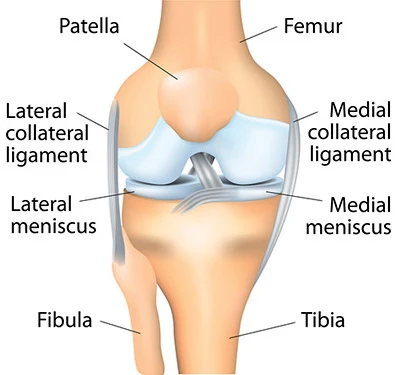
To comprehend the concept of a total knee replacement, also referred to as total condylar total knee arthroplasty, it's essential to have a grasp of the knee's intricate structure. The knee is a complex joint comprising three major bones:-
The femur (thighbone)The tibia (shinbone)The patella (kneecap)Within the knee joint, robust ligaments connect the powerful thigh and calf muscles to these bones, facilitating precise control over knee motion and function. Moreover, the joint is cushioned by cartilage, including structures like the meniscus, and other soft tissues that envelop the bones, ensuring smooth gliding motion.
During knee flexion and extension, the end of the femur articulates with the end of the tibia, while the patella smoothly moves in front of the femur. However, when the protective cartilage that cushions the joint deteriorates or is entirely worn down, the bones start to rub against each other, resulting in rough and abrasive surfaces. This degeneration leads to the development of Knee Osteoarthritis treatment, marked by pain and stiffness, which severely hampers everyday movements such as walking. In the context of knee replacement surgery, the artificial implants are meticulously designed to replicate the smooth surfaces of a healthy knee, thus restoring function and alleviating pain





























Sign in to leave a comment.