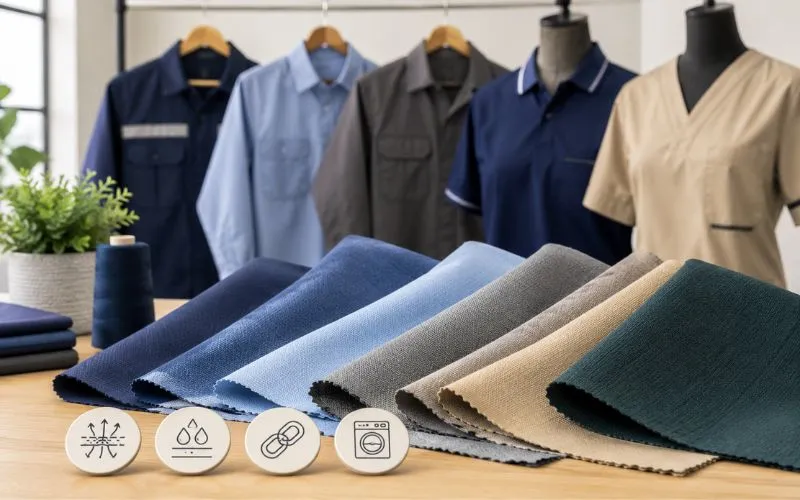

Choosing the right uniform fabric is more than a style decision. It influences the way employees feel when they have to work long shifts how easily they move and how sure they feel representing the company. The appropriate material can enhance comfort and productivity and make daily wear easier to handle. That is why the choice of fabric is to be regarded as an intelligent business choice rather than a design choice.
For brands that want dependable results companies like Futuremind Uniforms offer custom workwear solutions that suit different industries and job roles. In choosing work uniform fabrics it is useful to consider the maintenance of climatic activity level and safety requirements. Considered fabric will produce workwear that are both professional and comfortable to wear and work in during the working day.
Choosing the Right Fabric for Work Uniforms: Expert Tips for Companies

1. Consider the Work Environment
Each working environment has its own needs, and thus the cloth must be suitable to the environment. Hot and humid climates require breathable fabrics which will allow the staff to remain cool. Heavier materials may be required to warm up cooler work areas. The industrial facilities usually necessitate heavy and durable fabrics. The fabric will fit the environment that employees will work in more comfortably and the workwear will be more resilient to the daily stress.
2. Prioritize Comfort and Breathability
One of the initial things that employees will observe when wearing a workwear is comfort. Lightweight material that has good airflow will help alleviate the inconvenience of spending hours. The breathable materials also aid concentration since employees are not burdened by the heat or rigidity. A comfortable workwear helps to promote confidence and makes the employees easier to be active and productive all through the day and night.
3. Focus on Durability and Strength
The uniforms are used frequently and washed frequently and therefore strength is an issue. During this phase of the selection process several companies evaluate the work uniform fabrics on their ability to resist tearing, resist shape and resist repeated launder. Twill and canvas mixed with polyester are frequently good options with busy teams. Long lasting fabrics save replacement costs and enable the business to have a crisp and consistent look over time.
4. Evaluate Ease of Maintenance
Basic maintenance can save time and minimize day to day work on the part of staff and management. Wrinkle-resistant fabrics have quick drying properties and are also effective at removing stains making them less difficult to maintain. This particularly comes in handy in the industries where workwear are required to appear fresh on a daily basis. A low-maintenance fabric helps to maintain a clean professional appearance, and does not require additional ironing or special attention.
5. Check Safety Requirements
Certain work places require uniforms that are beyond mere appearances. They should also safeguard the workers. High risk industries such as welding and oil work use flame resistant materials. Antistatic clothing is used in technical and high visibility garments are used in road work and constructions. When selecting the right protective cloth, businesses can achieve the standards and ensure that employees are safer in the workplace.
6. Assess Color Retention and Appearance
Uniforms will be used to represent the company to the customers and clients hence the appearance is important. Clothes that retain color even after numerous washings can be used to keep workwear fresh and clean. Worn out clothes will give the team a less organized and professional appearance. Good color retention helps in brand building and the workwear retains its original appearance longer.
7. Consider Fabric Weight and Flexibility
The fabric weight influences the ease of wearing such fabrics in the workplace. Light fabrics can be used in warmer conditions and in active activities and heavy fabrics in the more difficult or colder conditions. It is also important that flexibility is provided since staff members should be able to move freely in their work. The appropriate weight-stretch ratio results in increased comfort and enables employees to work freely.
8. Balance Cost with Long Term Value
Price is never the last but that it is not the only choice. A more affordable fabric might appear to be helpful initially but might become more prone to wear and tear and demand more replenishment. Higher quality materials may be expensive in the short run but provide greater returns in the long run. The long term use option assists businesses to save and have a superior standard in all workwear.
Conclusion
The choice of the appropriate fabric is a matter of careful consideration but the outcome is rewarded. The optimal workwear are those that promote comfort, safety, longevity, and a solid professional image. By making the right decisions a business will provide a more positive experience to employees and impress customers more. That is why the choice of fabrics must be considered as always a component of the larger workwear approach.
The correct work uniform fabrics make the teams feel confident working efficiently and make the brand appear in the most appropriate light. By making the right choice of materials businesses can select those that are practical and at the same time appear professional and have a longer lifespan. An investment in people and performance is a well chosen fabric.



















Sign in to leave a comment.