
Introduction
Email is no longer just a communication tool; it is the operational backbone of modern business. From customer conversations and internal approvals to leadership decisions and compliance workflows, every organization depends on a reliable and secure email infrastructure. When legacy platforms no longer meet growing enterprise needs, the decision to migrate becomes a strategic business move rather than a technical upgrade.
Moving beyond AWS WorkMail is about more than replacing inboxes. It is about improving professional communication, strengthening data protection, and choosing an enterprise email solution that aligns with modern collaboration demands. Businesses today need platforms that support scalability, administrative control, and long-term resilience.
At the same time, growing concerns around compliance, privacy, and ownership are making Digital Sovereignty a major decision factor. Organizations want stronger control over where data is stored, how it is governed, and who can access it.
This article explores why businesses are rethinking AWS WorkMail, what the future of secure email looks like, and how to choose the best plans for long-term growth.
Why Moving Beyond AWS WorkMail Is a Strategic Business Decision
For many organizations, AWS WorkMail was a reliable cloud email starting point. However, as enterprise communication grows more complex, businesses require much more than hosted inbox functionality. Modern workflows demand collaboration-ready environments, flexible administration, and stronger governance controls.
The move beyond AWS WorkMail is now directly connected to professional communication performance. Delays in workflows, limited controls, or weak integrations can impact team productivity and customer response speed.
A stronger business email solution enables better communication flow across departments, leadership teams, and customer-facing functions. This makes migration a business transformation initiative rather than a simple platform replacement.
Organizations that make this shift strategically can improve resilience, speed, and operational trust.
The right decision today prevents future communication bottlenecks.
The New Standard for Enterprise Email Security
Secure email today requires much more than spam filtering. Enterprises now expect advanced encryption, identity verification, secure admin controls, and proactive threat prevention as standard capabilities.
A future-ready enterprise email solution must support strong data protection across every communication layer, including internal discussions, client data, and executive approvals.
This becomes especially important as cyber risks and regulatory requirements continue to evolve. Organizations must ensure their communication systems remain secure by design.
Security is no longer just an IT function; it directly affects trust, customer confidence, and business continuity.
The future of secure business email is defined by platforms built around privacy, resilience, and governance.
Why Digital Sovereignty Is Shaping Business Email Decisions
The demand for Digital Sovereignty is changing how enterprises evaluate communication platforms. Organizations want stronger control over data ownership, storage regions, administrative visibility, and third-party access risks.
This is especially important for businesses operating in regulated sectors, government ecosystems, and cross-border environments. Sovereignty is now part of strategic infrastructure planning.
A secure business email solution with sovereignty-focused architecture helps businesses align with privacy expectations while improving trust with customers and regulators.
As compliance requirements expand globally, sovereignty is becoming a differentiator rather than a niche requirement.
The future of enterprise communication belongs to organizations that control their own digital infrastructure.
Features Modern Teams Need Beyond Traditional Email
Modern teams no longer use email in isolation. They need secure collaboration, role-based access, shared workflows, centralized administration, and communication systems that support hybrid work.
A scalable enterprise email solution should support advanced admin tools, flexible user management, integrated file sharing, and workflow-ready architecture. These features strengthen professional communication across departments and time zones.
Organizations also need solutions that align with the best plans for growth, ensuring storage, user scaling, and collaboration features evolve with business demand.
Traditional inbox systems are no longer enough for modern digital workplaces.
The future lies in connected communication ecosystems, not standalone mailboxes.
Why XgenPlus Fits the Future of Secure Business Email
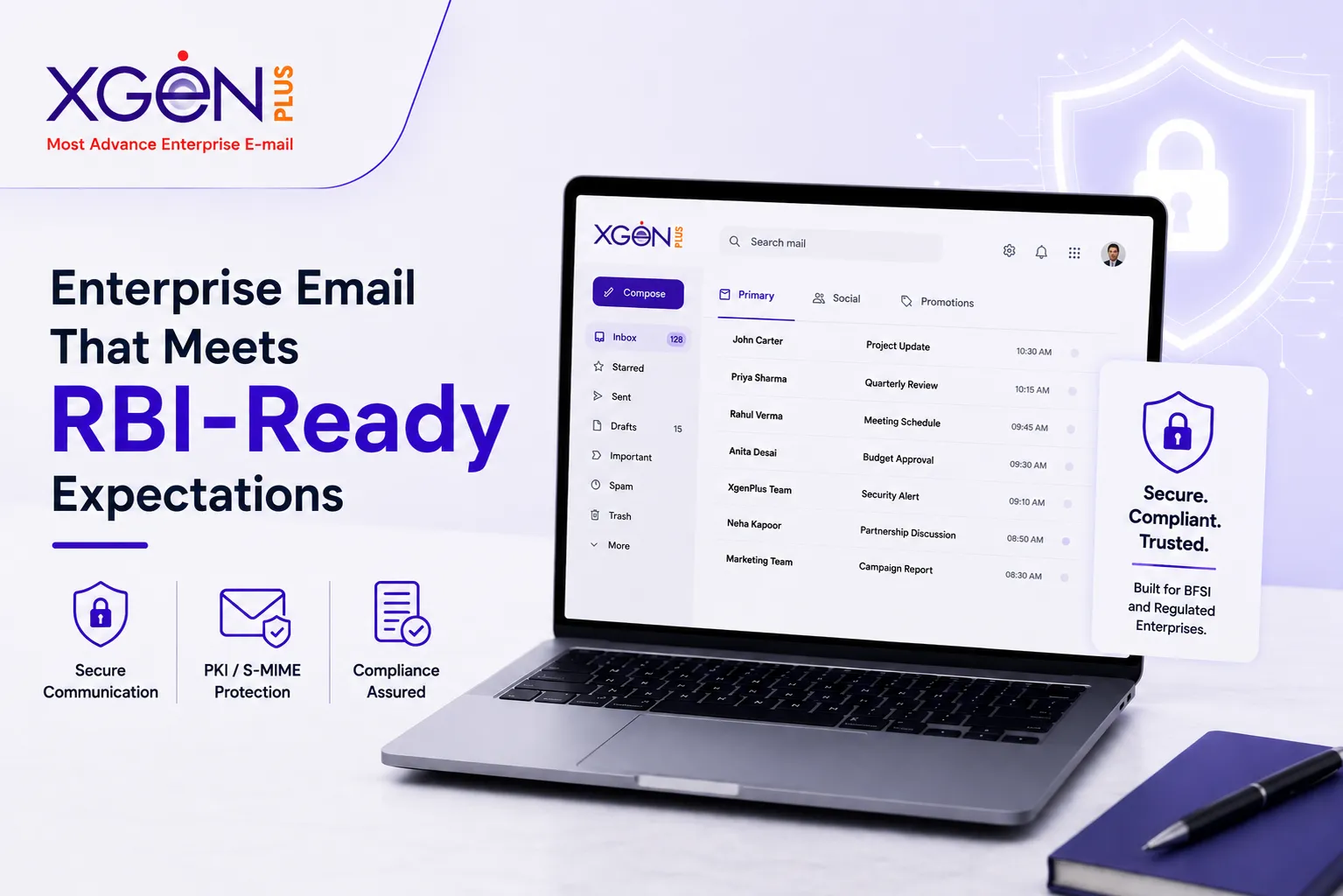
As enterprises rethink their communication strategy, XgenPlus offers a more future-ready approach built for modern business environments. It combines secure business email solution capabilities with stronger governance, collaboration, and privacy-first infrastructure.
For businesses focused on data protection, long-term scalability, and Digital Sovereignty, XgenPlus provides the control and flexibility required for enterprise-grade communication.
Its architecture supports admin visibility, secure collaboration, and business continuity while aligning with modern compliance expectations.
This makes it a strong fit for organizations looking for the best plans without compromising on trust or governance.
The future of secure email belongs to platforms designed for business resilience.
How to Plan a Smarter Migration Strategy
A successful migration requires more than moving inbox data. Organizations must evaluate user roles, retention policies, communication workflows, compliance requirements, and future scalability needs.
The migration process should improve professional communication, not simply replicate old limitations in a new environment.
Businesses should prioritize data protection, user access governance, and workflow continuity when planning their next communication stack.
Treating migration as a transformation strategy helps reduce operational risks and improve productivity.
The smartest migrations create long-term value beyond technical continuity.
Choosing the Best Plans for Long-Term Growth
Selecting the best plans means evaluating long-term business needs rather than short-term costs. Pricing should align with scalability, security controls, admin visibility, and workflow complexity.
A future-ready enterprise email solution should support secure professional communication, user growth, compliance, and cross-functional collaboration without forcing repeated migrations.
Hidden costs often emerge when businesses choose low-cost systems that lack enterprise-grade governance and flexibility.
The right plan creates business continuity, predictable scaling, and stronger communication ROI.
Choosing strategically today prevents costly platform shifts tomorrow.
Conclusion
Moving beyond AWS WorkMail is not just about replacing an email service—it is about preparing for the future of secure business communication. As organizations scale, they need stronger data protection, better governance, and communication systems built for resilience.
The future belongs to businesses that prioritize Digital Sovereignty, secure collaboration, and flexible enterprise email solution platforms that support long-term growth. This is where migration becomes a strategic business advantage.
Solutions like XgenPlus help enterprises move beyond traditional hosted email toward a privacy-first, scalable communication ecosystem designed for modern workflows.
If your organization is evaluating the next step, now is the time to compare the best plans, modernize your communication strategy, and Book a free consultation to build a future-ready migration roadmap.























Sign in to leave a comment.