
Introduction
You can write the perfect email, craft the ideal subject line, and send it at the right time, yet it still never reaches the inbox. For professionals, this is more than an inconvenience. It directly affects professional communication, client relationships, lead generation, and the credibility of your business.
In today’s digital-first environment, email remains one of the most important channels for sales, support, approvals, and executive decision-making. When messages consistently land in spam, the impact silently spreads across workflows, response times, and revenue opportunities.
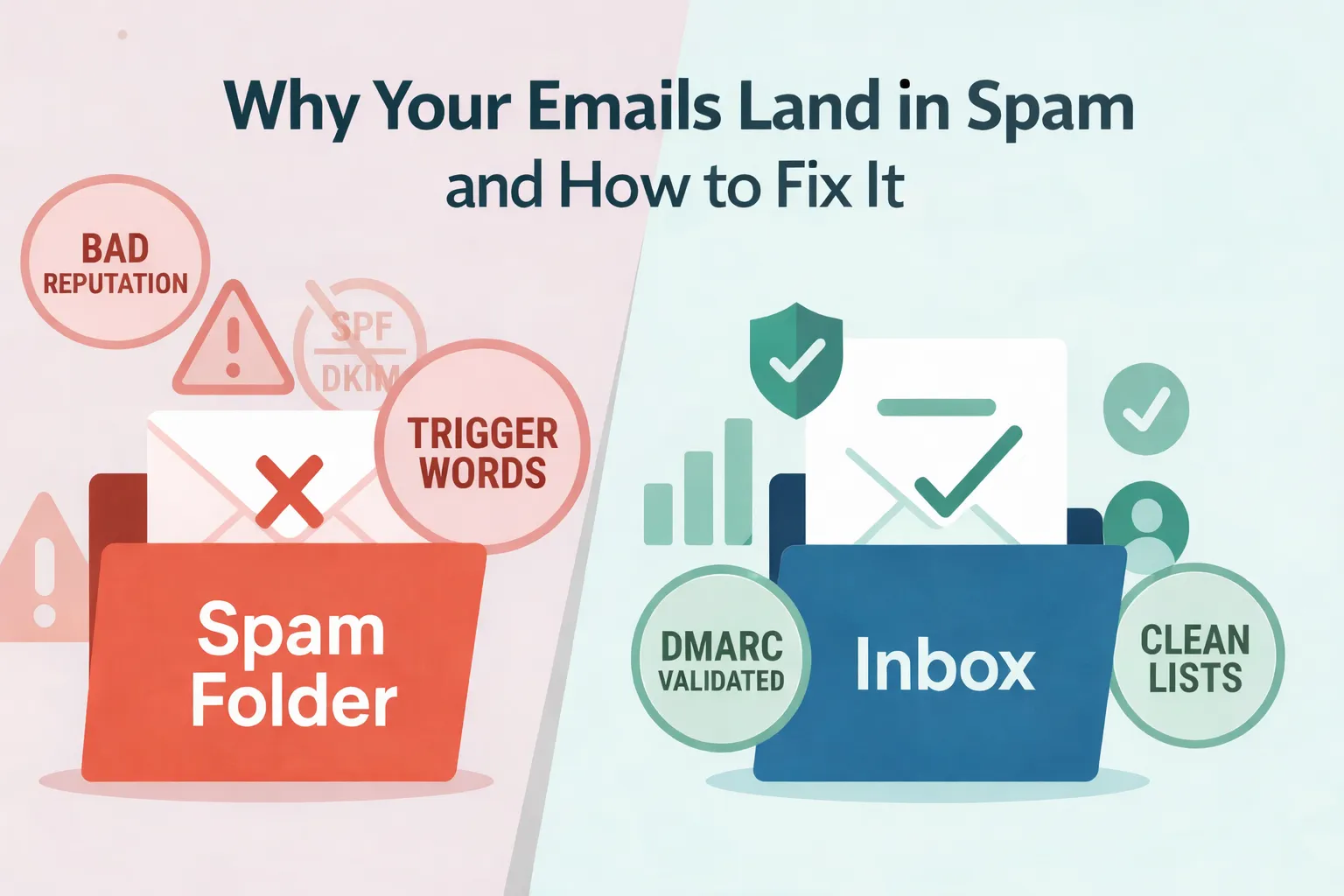
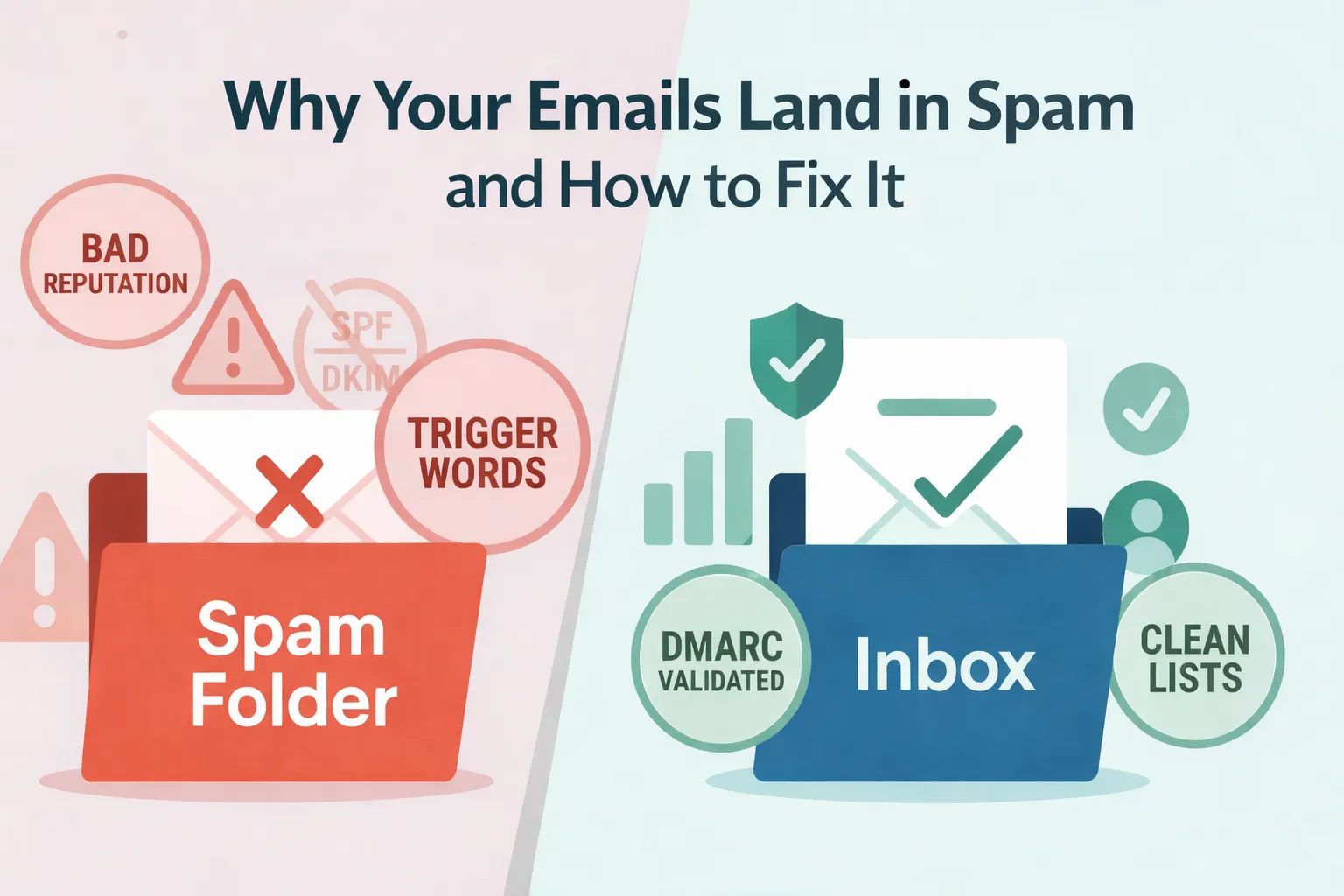
The root causes are often technical but highly fixable. Issues such as SPF, DKIM, and DMARC failures, weak domain reputation, poor content practices, and lack of Secure Email controls can all push legitimate messages into spam folders.
This guide explains the most common reasons business emails land in spam and shows how professionals can improve inbox delivery with stronger authentication, security, and smarter email infrastructure.
Why Spam Placement Is a Business Problem, Not Just an IT Problem
Spam placement is often misunderstood as a technical inconvenience, but in reality, it creates direct business consequences. Email is the backbone of modern professional communication, supporting customer engagement, internal approvals, vendor coordination, and executive updates.
When important emails fail to reach the inbox, teams lose momentum. Sales conversations stall, customer trust weakens, and urgent operational workflows slow down. For growing businesses, this can directly affect revenue and response efficiency.
Organizations using a business email solution or enterprise email solution must treat deliverability as part of their communication strategy, not just infrastructure maintenance.
Inbox placement is ultimately about trust, and trust is critical for every business relationship.
1) Missing SPF, DKIM, and DMARC Authentication
One of the most common reasons emails land in spam is missing or incorrect SPF, DKIM, and DMARC configuration. These authentication protocols allow receiving mail servers to verify that your email is truly sent from your domain and not from an unauthorized source.
Without proper authentication, mailbox providers treat messages as suspicious, regardless of how professional the content may be. This significantly increases the likelihood of spam placement.
For businesses, authentication failures also increase the risk of spoofing and Email Phishing Attacks, where attackers impersonate trusted domains.
Implementing and regularly validating these DNS records is one of the most effective ways to improve inbox trust and protect brand reputation.
Authentication is the technical foundation of modern Secure Email delivery.
2) Weak Domain Reputation
Your domain reputation acts as a credibility score for every email your organization sends. Mailbox providers monitor how recipients engage with your messages, how often emails bounce, and whether users report them as spam.
If your sending history shows poor engagement, high complaint rates, or irregular sending patterns, your reputation weakens. Even important emails may then be redirected to spam automatically.
This becomes especially critical for sales teams, marketing workflows, and customer communication channels.
Using a trusted enterprise email solution helps businesses maintain consistent sender trust, stronger reputation signals, and healthier inbox performance over time.
A strong domain reputation is essential for scalable professional communication.
3) Triggering Spam Filters With Poor Email Practices
Spam filters evaluate more than technical authentication. They also analyze email structure, formatting, links, attachments, and message behavior.
Poor HTML, misleading subject lines, too many promotional words, excessive links, or suspicious attachments can all trigger spam rules. Even legitimate emails may be filtered if they resemble common spam patterns.
For professional organizations, inconsistent formatting can damage both deliverability and brand trust.
Using clean templates and sending emails through a secure business email solution helps improve consistency and reduce spam triggers.
Good content practices are just as important as technical authentication.
4) Your Emails Resemble Email Phishing Attacks
Modern spam systems are heavily focused on blocking Email Phishing Attacks. If your messages use urgent wording, suspicious links, impersonation signals, or unusual sender behavior, they may be flagged automatically.
This is especially common for businesses sending invoices, password resets, login alerts, and payment requests. While these are legitimate use cases, the email structure can still resemble phishing patterns.
To reduce false positives, organizations must strengthen Secure Email practices through sender verification, encryption, and anti-phishing controls.
A technically trustworthy email is far more likely to reach the inbox.
Professional communication depends on both clarity and sender legitimacy.
5) Sending From Shared or Low-Trust Infrastructure
Email infrastructure quality plays a major role in deliverability. Sending through low-quality or heavily shared servers can negatively affect your sender reputation, even if your own practices are strong.
In shared environments, other users’ poor sending behavior may impact the reputation of the same IP range. This can silently damage inbox placement for your organization.
A robust enterprise email solution gives businesses greater control over infrastructure, authentication, and sender reputation management.
For organizations focused on Digital Sovereignty, trusted infrastructure also supports compliance, data ownership, and stronger communication governance.
Infrastructure trust directly translates into inbox trust.
How to Fix Spam Placement and Improve Inbox Delivery
The good news is that most spam issues can be fixed with structured improvements. Businesses that treat deliverability strategically often see significant improvements in response rates and communication efficiency.
The most effective actions include:
- Configure SPF, DKIM, and DMARC correctly
- Monitor and improve domain reputation
- Use secure and verified sending domains
- Avoid spam-triggering content patterns
- Use clean recipient lists
- Reduce bounce and complaint rates
- Use a trusted business email solution
- Strengthen anti-phishing protection
- Move to a secure enterprise email solution
Even small improvements in authentication and sending practices can dramatically improve inbox performance.
Why Secure Email Infrastructure Matters More Than Ever
Deliverability today is no longer just about bypassing spam filters. It is about identity, trust, compliance, and long-term professional communication reliability.
Modern organizations must ensure that every email is authenticated, encrypted, and protected against spoofing. This is where Secure Email infrastructure becomes a business-critical advantage.
Secure systems also reduce the risk of Email Phishing Attacks, data leaks, and impersonation attempts. Combined with Digital Sovereignty, this gives enterprises stronger control over communication and data ownership.
Platforms like XgenPlus support secure, compliant, and reputation-focused email ecosystems designed for modern business needs.
The stronger your infrastructure, the stronger your inbox trust.
Conclusion
When emails land in spam, the real loss is not just visibility but also trust, response speed, and business continuity. Every missed email can delay deals, weaken customer confidence, and disrupt critical workflows.
The good news is that spam placement is rarely random. It is usually the result of fixable issues such as weak SPF, DKIM, and DMARC records, poor domain reputation, spam-triggering practices, or unreliable infrastructure.
By investing in stronger Secure Email, better authentication, trusted enterprise email solution platforms, and Digital Sovereignty-focused infrastructure, businesses can dramatically improve inbox performance and communication reliability.
In today’s digital economy, inbox trust is business trust. The organizations that protect their sender identity and email reputation will always communicate with more confidence, credibility, and control.



























Sign in to leave a comment.