

The CWNP CWDP-305 exam validates a professional's expertise in designing enterprise-grade wireless local area networks (WLANs). This Certified Wireless Design Professional certification demonstrates a candidate's ability to plan, implement, and optimize robust wireless infrastructures that meet complex business requirements. For network architects and engineers aiming to prove their advanced skills in wireless design, understanding the CWDP-305 exam objectives and preparation strategies is paramount. This comprehensive guide offers practical insights to help aspiring candidates navigate their journey toward achieving this respected professional credential.

CWDP-305 Exam Structure Overview
The Certified Wireless Design Professional (CWDP-305) exam is a focused assessment of advanced wireless design principles and practices. Candidates face a structured examination designed to test their deep understanding of WLAN planning and deployment. Understanding the fundamental characteristics of the exam is a crucial first step for effective preparation.
Here are the key details for the CWDP-305 exam:
- Exam Name: Wireless Design Professional
- Exam Code: CWDP-305
- Exam Price: $349.99 USD
- Duration: 90 minutes
- Number of Questions: 60
- Passing Score: 70%
This structure indicates that candidates must not only grasp the concepts but also apply them efficiently under timed conditions. Each question contributes significantly to the final score, making a thorough understanding of all objectives essential.
Grasping the CWDP-305 Syllabus Content
A successful CWDP-305 candidate possesses a strong grasp of the fundamental domains underpinning wireless network design. The exam syllabus is divided into critical areas, each with a specific weightage, guiding test-takers on where to focus their study efforts. These topics ensure a well-rounded understanding of the entire WLAN design lifecycle.
The CWDP-305 exam syllabus covers four main domains:
- Define Specifications for the WLAN - 25%: This section requires candidates to gather and analyze customer requirements, define coverage and capacity needs, assess environmental factors, and establish security policies. It involves understanding various business and technical constraints that influence design decisions, ensuring the proposed solution aligns with organizational goals and user expectations.
- Design the WLAN - 40%: As the most heavily weighted section, this domain focuses on the practical application of design principles. It encompasses choosing appropriate hardware, designing the RF environment for optimal performance, selecting antenna types, planning for power requirements, and integrating with existing wired infrastructure. This involves making critical decisions that directly impact the WLAN's efficiency and reliability.
- Deploy the WLAN - 10%: This domain addresses the practical implementation aspects of the designed network. It includes tasks such as pre-deployment site surveys, mounting access points, cabling considerations, and initial configuration of wireless devices. While a smaller percentage, successful deployment is vital for translating design into a functional network.
- Validate and Optimize the WLAN - 25%: Post-deployment activities are covered here, focusing on ensuring the network performs as expected and can adapt to changing conditions. This includes performing validation surveys, analyzing network performance metrics, troubleshooting common issues, and implementing optimization strategies. Continuous monitoring and adjustment are key to maintaining a high-performing wireless environment.
Each domain represents a crucial phase in the wireless design process, and proficiency across all areas is essential for achieving certification. Detailed understanding of each objective is provided on the CWNP Official Page, offering a deeper dive into what to expect.
Defining Your Pathway: Who Should Pursue CWDP-305?
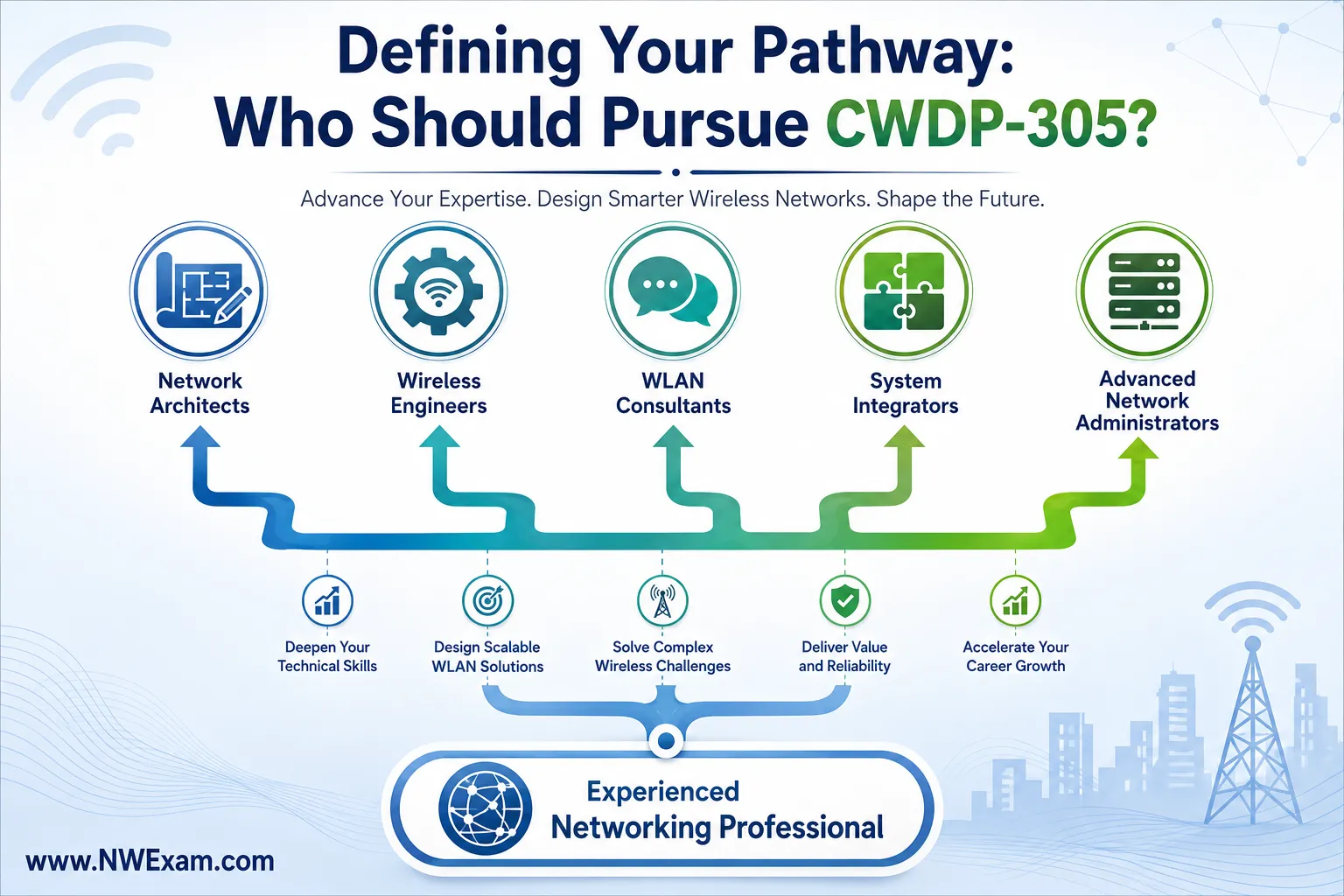
The CWDP-305 certification targets experienced networking professionals seeking to specialize in wireless design and implementation. This credential is ideal for individuals whose roles involve planning and executing complex wireless infrastructure projects for various organizational scales. It is not merely a technical exam but a validation of strategic thinking in network architecture.
The Certified Wireless Design Professional certification is particularly beneficial for:
- Network Architects and Engineers: Those responsible for the high-level design and engineering of enterprise wireless networks.
- WLAN Consultants: Professionals who advise clients on wireless solutions and need to demonstrate a high level of expertise in design principles.
- System Integrators: Individuals involved in deploying and integrating wireless solutions into larger IT infrastructures.
- Advanced Network Administrators: Administrators looking to elevate their skills beyond basic management to encompass comprehensive design capabilities.
- Pre-Sales Engineers: Those who need to articulate and design wireless solutions for prospective clients, requiring deep technical understanding.
Professionals aiming for this certification often have prior experience with CWNA or equivalent foundational wireless knowledge. The CWDP-305 builds upon these fundamentals, focusing heavily on the architectural and design aspects of WLANs.
Strategic Preparation for CWDP-305 Success
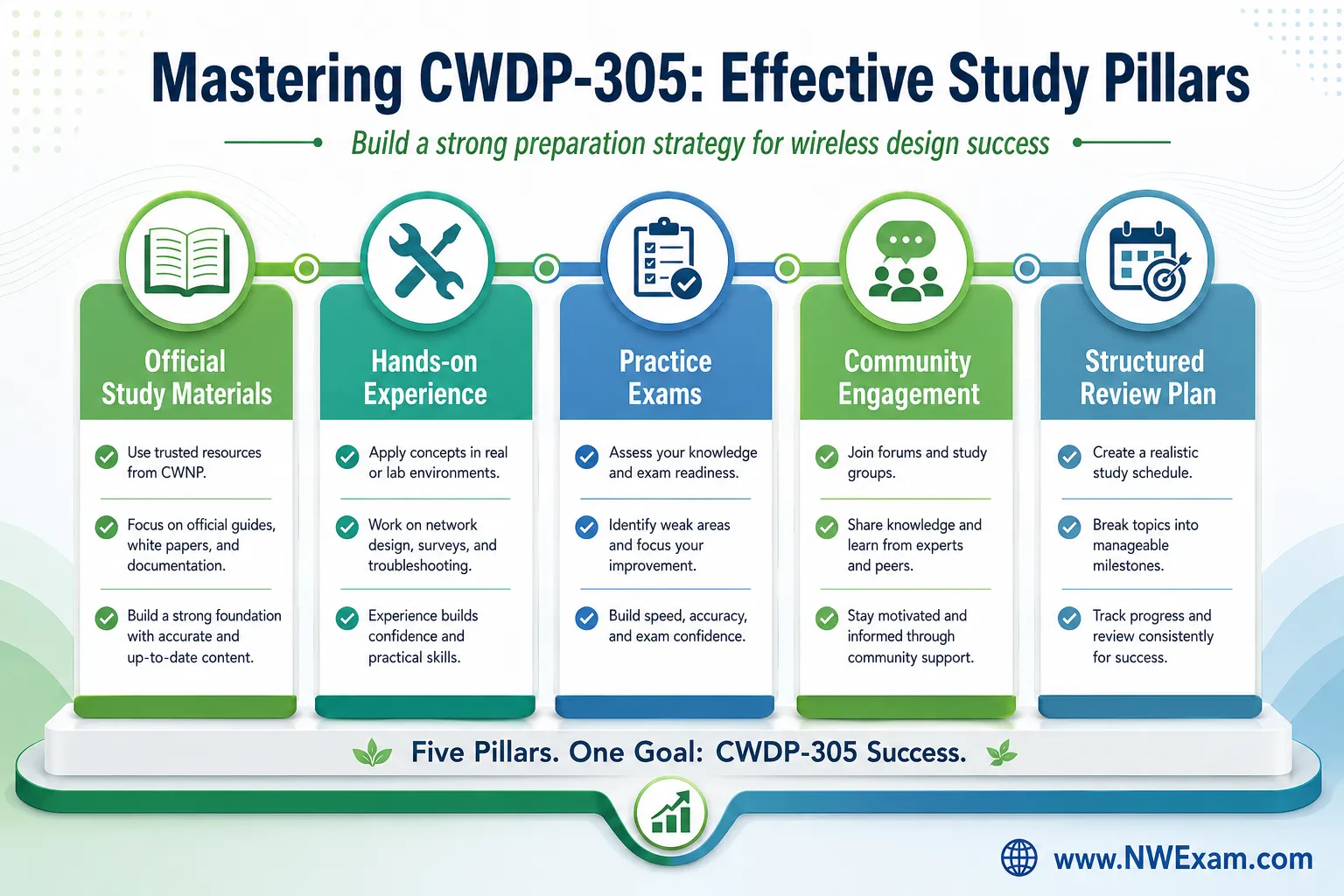
Effective preparation for the CWDP-305 exam extends beyond simply reviewing textbooks; it requires a multi-faceted approach combining theoretical knowledge with practical application. Candidates should develop a structured study plan that covers all syllabus domains, dedicating ample time to each section based on its weightage and their current skill level. A well-organized strategy is the cornerstone of passing this rigorous professional certification.
Consider these components for your study regimen:
- Official Study Materials: Begin with the official CWNP study guide and curriculum. These resources are specifically tailored to the exam objectives and provide the most accurate information. They form the core foundation of your theoretical understanding.
- Hands-on Experience: Practical experience with wireless design tools, site survey software, and actual WLAN hardware is invaluable. Simulating design scenarios and troubleshooting potential issues reinforces theoretical knowledge.
- Deep Dive into Objectives: Download and meticulously review the CWNP CWDP-305 Exam Objectives document. Each objective listed is a potential exam question, so ensure you understand the concepts and their practical implications thoroughly.
- Community Engagement: Participate in wireless networking forums and study groups. Discussing complex topics with peers can offer new perspectives and clarify difficult concepts. The collective knowledge of a community can be a powerful learning tool.
- Regular Practice: Consistently test your knowledge with practice questions. This helps identify areas needing further study and familiarizes you with the exam format.
Building a solid understanding of RF theory, antenna characteristics, and wireless security protocols is critical. Remember, the CWDP-305 focuses on the *why* and *how* of design decisions, not just simple memorization.
Navigating Core WLAN Design Principles
The design phase, encompassing 40% of the CWDP-305 exam, demands a robust understanding of how to translate business requirements into a functional wireless network architecture. This involves making informed decisions about technology choices, spectrum management, and capacity planning. A well-designed WLAN must balance performance, security, and cost-effectiveness.
Key design considerations include:
- RF Propagation and Behavior: Understanding how radio waves interact with different environments is crucial for predicting coverage and minimizing interference. This includes knowledge of absorption, reflection, refraction, and scattering.
- Capacity Planning: Determining the number of access points, channels, and bandwidth required to support the expected number of users and applications. This involves analyzing throughput requirements and client densities.
- Channel Planning: Strategically assigning channels to avoid co-channel interference and adjacent-channel interference, especially in high-density environments. This is fundamental for maintaining signal integrity and network speed.
- Antenna Selection: Choosing the right antenna type (omnidirectional, directional, patch, etc.) based on desired coverage patterns, gain, and environmental constraints. Proper antenna selection directly impacts signal quality and range.
- Power Management: Designing for appropriate transmit power levels to ensure optimal cell sizes and minimize interference, while also considering regulatory compliance.
Successfully navigating these principles requires not only theoretical knowledge but also the ability to apply them in diverse, real-world scenarios.
Implementing Efficient WLAN Deployments
While only 10% of the exam, the deployment phase of a WLAN is where the design plans are brought to life. A robust design can quickly fail if not deployed correctly, emphasizing the importance of meticulous execution. This section of the CWDP-305 focuses on the practical steps and best practices for physically installing and configuring wireless infrastructure.
Successful WLAN deployment typically involves:
- Pre-Deployment Site Surveys: Conducting initial surveys to verify environmental conditions, identify potential interference sources, and confirm access point placement before installation. This reduces surprises during actual deployment.
- Physical Installation: Proper mounting of access points, ensuring correct orientation, securing cabling, and verifying power connectivity. Adherence to manufacturer guidelines and safety standards is critical.
- Staging and Configuration: Preparing access points and controllers with initial configurations in a controlled environment before on-site installation to streamline deployment.
- Network Integration: Seamlessly integrating the new wireless network with existing wired infrastructure, including VLANs, routing, and directory services. This ensures a cohesive network environment.
- Documentation: Maintaining detailed records of installed hardware, configurations, cable runs, and survey results. Comprehensive documentation is vital for future troubleshooting and expansion.
Attention to detail during deployment directly impacts the performance and long-term stability of the wireless network.
Validating and Optimizing WLAN Performance
The final stage of the wireless network lifecycle, and a significant portion of the CWDP-305 exam, involves validating the deployed network and continuously optimizing its performance. This ensures that the WLAN meets its original design specifications and adapts to evolving demands. Effective validation and optimization contribute significantly to user satisfaction and network longevity.
Key activities in this phase include:
- Post-Deployment Site Surveys: Conducting thorough surveys after installation to confirm actual coverage, capacity, and signal strength match the design goals. This verifies the network is performing as intended.
- Performance Baseline Establishment: Measuring and documenting key performance indicators (KPIs) such as throughput, latency, and packet loss under normal operating conditions. This baseline serves as a reference for future troubleshooting.
- Troubleshooting Common Issues: Identifying and resolving typical wireless problems like signal interference, client connectivity issues, authentication failures, and rogue access points. Effective troubleshooting requires diagnostic skills and a systematic approach.
- Security Audits: Regularly reviewing wireless security configurations, performing vulnerability assessments, and updating security policies to protect against emerging threats.
- Optimization Techniques: Implementing adjustments such as channel tuning, power adjustments, firmware updates, and load balancing to enhance network efficiency and user experience.
- Capacity Management: Monitoring network usage and planning for future expansions or modifications to accommodate growth in users, devices, or applications.
This continuous cycle of validation and optimization is what truly distinguishes a professional wireless designer.
Choosing Quality CWDP-305 Exam Preparation Materials
Selecting the right study resources is a critical factor in how to pass CWDP-305 exam. While official guides are foundational, supplementing your learning with diverse materials can deepen understanding and readiness. Focusing on high-quality, reputable resources is key to ethical and effective preparation.
Consider incorporating these resources:
- CWNP Authorized Curriculum: Engaging with courses offered by CWNP authorized training partners provides structured learning and expert instruction. These programs are often designed to cover the exam objectives comprehensively.
- Reputable Books and E-books: Seek out highly-rated books on wireless design by recognized industry experts. These can offer alternative explanations and additional real-world scenarios.
- Online Learning Platforms: Many platforms offer video courses, labs, and interactive content that can enhance your understanding of complex topics, especially for visual learners.
- Practice Exam Platforms: Utilizing platforms that offer CWDP-305 practice exam questions can significantly boost your confidence. A good practice test helps you understand the exam format, question types, and time management. For effective preparation, consider using study resources like those found on CWNP CWDP-305 Exam Questions. Always prioritize ethical preparation and avoid unofficial "dump" sites.
- Wireless Industry Blogs and Podcasts: Staying current with industry trends, new technologies, and real-world case studies through blogs and podcasts can provide valuable context and reinforce learning.
The goal is to build a robust knowledge base, not just memorize answers. A combination of theoretical study, practical application, and rigorous self-assessment will yield the best results.
Financial Planning for CWNP Certification Cost
Investing in the CWDP-305 certification involves not only time and effort but also a financial commitment. Understanding the various costs associated with the CWNP CWDP-305 certification path allows candidates to budget effectively and plan their career advancement strategically. This foresight ensures that the certification journey remains financially viable.
The primary cost component is the exam fee itself:
- Exam Price: The CWDP-305 exam currently costs $349.99 USD. This fee is paid directly to the testing vendor or CWNP.
- Beyond the exam fee, other potential expenses may include:
- Training Courses: Official CWNP training can range from hundreds to thousands of dollars, depending on the format (self-paced, instructor-led, online, in-person). While not mandatory, these courses often provide significant value.
- Study Guides and Books: Purchasing official study guides, textbooks, or access to online learning platforms will incur costs, typically ranging from $50 to $300+.
- Practice Exams: Subscribing to high-quality practice exam platforms often involves a fee, which can vary widely but generally provides good value for exam readiness.
- Travel Expenses: If you opt for an in-person proctored exam at a testing center, consider potential travel costs, though online proctoring is often available.
- Recertification: CWNP certifications typically have a validity period, and recertification involves either retaking an exam or passing a higher-level exam, each incurring new fees.
While the initial outlay might seem substantial, consider it an investment in your professional development and career progression within the specialized field of wireless networking.
Advantages of a Certified Wireless Design Professional Credential
Earning the CWDP-305 certification signals to employers and peers that an individual possesses advanced, vendor-neutral expertise in wireless network design. This credential is more than just a certificate; it’s a testament to a professional’s capability to tackle complex WLAN challenges, leading to enhanced career prospects and increased confidence. The benefits extend across various aspects of a professional's career.
The advantages of holding this certification include:
- Enhanced Credibility: It solidifies your standing as a subject matter expert in wireless design, distinguishing you from non-certified peers.
- Career Advancement: CWDP-305 is often a prerequisite or a highly preferred qualification for senior wireless engineering, architect, and consulting roles.
- Increased Earning Potential: Certified professionals typically command higher salaries due to their specialized skills and validated expertise.
- Broader Industry Recognition: CWNP certifications are globally recognized, opening doors to opportunities with a wide range of organizations and clients.
- Improved Job Performance: The knowledge gained through certification directly translates into more efficient and effective wireless network designs and deployments.
- Demonstrated Commitment: Pursuing and achieving a professional-level certification showcases your dedication to continuous learning and professional development within the wireless industry.
This certification can be a pivotal step in establishing yourself as a leader in the dynamic field of wireless networking.
Avoiding Common CWDP-305 Preparation Pitfalls
While the journey to CWDP-305 certification is rewarding, it's also fraught with potential pitfalls that can hinder progress or lead to exam failure. Being aware of these common mistakes allows candidates to proactively adjust their study strategies and maintain an effective learning path. Smart preparation involves not only knowing what to do but also what to avoid.
Watch out for these common missteps:
- Underestimating the Depth: The CWDP-305 is a professional-level exam requiring deep conceptual understanding, not just surface-level knowledge. Skimming topics or relying solely on memorization is often insufficient.
- Neglecting Hands-on Experience: Wireless design is inherently practical. Without hands-on experience with site surveys, design tools, and real equipment, theoretical knowledge remains abstract and difficult to apply.
- Ignoring Weaker Domains: It's tempting to focus on areas where you already feel strong. However, a balanced approach requires dedicating extra time to your weaker syllabus domains, as each contributes to the passing score.
- Using Unofficial or Outdated Resources: Relying on unverified "exam dumps" or outdated study materials can lead to incorrect information and a false sense of readiness. Always prioritize official and current CWNP resources.
- Poor Time Management: Failing to create a realistic study schedule or neglecting to practice time management during practice exams can lead to rushing during the actual test, impacting performance.
- Lack of Review and Reinforcement: Simply going through the material once is rarely enough. Regular review sessions, flashcards, and self-quizzing are essential for knowledge retention.
By consciously avoiding these pitfalls, candidates can streamline their preparation and significantly increase their chances of success on the CWDP-305 exam.
Advancing Your Career with CWNP Professional Level Certifications
The CWDP-305 is one of several CWNP professional level certifications designed to validate specialized skills within wireless networking. Achieving the CWDP-305 places you among a select group of experts capable of designing robust and efficient wireless networks. This broader certification path offers structured progression for those committed to a career in wireless technology.
The CWNP professional level certifications include:
- CWAP (Certified Wireless Analysis Professional): Focuses on advanced Wi-Fi troubleshooting, analysis, and optimization using protocol analyzers.
- CWDP (Certified Wireless Design Professional - CWDP-305): Specializes in designing Wi-Fi networks for various applications and environments.
- CWSP (Certified Wireless Security Professional): Centers on implementing and managing wireless security protocols and best practices.
These certifications build upon the foundational CWNA (Certified Wireless Network Administrator) credential, offering distinct but complementary skill sets. Pursuing multiple professional certifications can create a highly specialized and versatile wireless expert profile, opening doors to diverse career opportunities and leadership roles within the industry. Understanding the entire CWNP CWDP-305 certification path provides a clear roadmap for long-term career growth.
Conclusion
The CWDP-305 certification is a powerful credential for any professional dedicated to advanced wireless network design. It not only validates your ability to strategically plan and implement complex WLAN solutions but also significantly enhances your career trajectory in a rapidly evolving technological landscape. By understanding the exam details, mastering the syllabus, adopting a disciplined preparation strategy, and leveraging quality study materials, you equip yourself for success.
Embark on this challenging yet rewarding journey with confidence. For further insights into certification pathways and to explore more resources, you can visit our extensive collection of articles and guides at Professional Certification Guides. Elevate your expertise and stand out in the competitive field of wireless networking.
Frequently Asked Questions
1. What does the CWDP-305 certification validate?
The CWDP-305 certification validates a professional's advanced knowledge and skills in designing enterprise-level wireless local area networks (WLANs), including defining specifications, designing the RF environment, and planning for deployment, validation, and optimization.
2. Is prior experience required for the CWDP-305 exam?
While there are no strict prerequisites, the CWNP recommends holding the CWNA (Certified Wireless Network Administrator) certification or possessing equivalent foundational knowledge of wireless networking concepts before attempting the CWDP-305, as it builds on these fundamentals.
3. How long is the CWDP-305 certification valid?
CWNP certifications, including CWDP, are typically valid for three years. To recertify, candidates usually need to pass the current version of the same exam or pass a higher-level CWNP exam before their certification expires.
4. What is the best way to prepare for the CWDP-305 exam?
The best preparation involves a combination of official CWNP study guides, hands-on experience with wireless design tools and equipment, thorough review of the exam objectives, and consistent practice with sample questions to simulate the exam environment and identify areas for improvement.
5. What career opportunities open up with the CWDP-305?
Achieving CWDP-305 can open doors to roles such as Wireless Network Engineer, WLAN Architect, Wireless Consultant, and Senior Network Designer. It signifies specialized expertise valued in enterprise, healthcare, education, and other sectors reliant on robust wireless infrastructure.



























Sign in to leave a comment.