
The "Single Model Fallacy" is a persistent trap for creative teams entering the generative media space. It is the belief that a single large-scale model—be it Flux, Midjourney, or an LLM like GPT-4o—should be capable of handling an entire creative pipeline from the first rough concept to the final, high-resolution render. In a laboratory or a hobbyist setting, this works fine. You roll the dice, you get a decent image, and you move on.
In a professional production environment, however, "decent" is a liability. When a brand requires specific facial consistency, precise object placement, and a certain lighting temperature, the "one-prompt" approach falls apart. Operators quickly realize that high-fidelity production requires a sequence of specialized tools. We are moving away from simple prompt engineering and toward "model routing"—the practice of deciding which specific engine should handle which stage of the asset lifecycle.
The Tiered Infrastructure of Generative Media
Most professional workflows today are shifting toward a tiered infrastructure. We can categorize these tiers into three distinct layers: the Generative Foundation, the Corrective Precision layer, and the Motion Bridge.
The foundational layer is where the "heavy lifting" of creativity happens. Models like Flux or Nano Banana excel here because they have high semantic density—they understand complex instructions and can manifest them into a raw visual. However, these foundational models are rarely the end of the road. They are broad, not deep. They might get the composition right but fail on the anatomy of a hand, or they might nail the lighting but hallucinate a stray object in the background.
Content teams are beginning to treat these foundations as "raw stock" generators rather than final output sources. The goal of the operator at this stage isn't to get a perfect image; it’s to get a viable composition that has a manageable amount of "generation debt"—the visual errors that will need to be cleaned up in the next stage of the pipeline.
Routing the Initial Generation: Detail vs. Flexibility
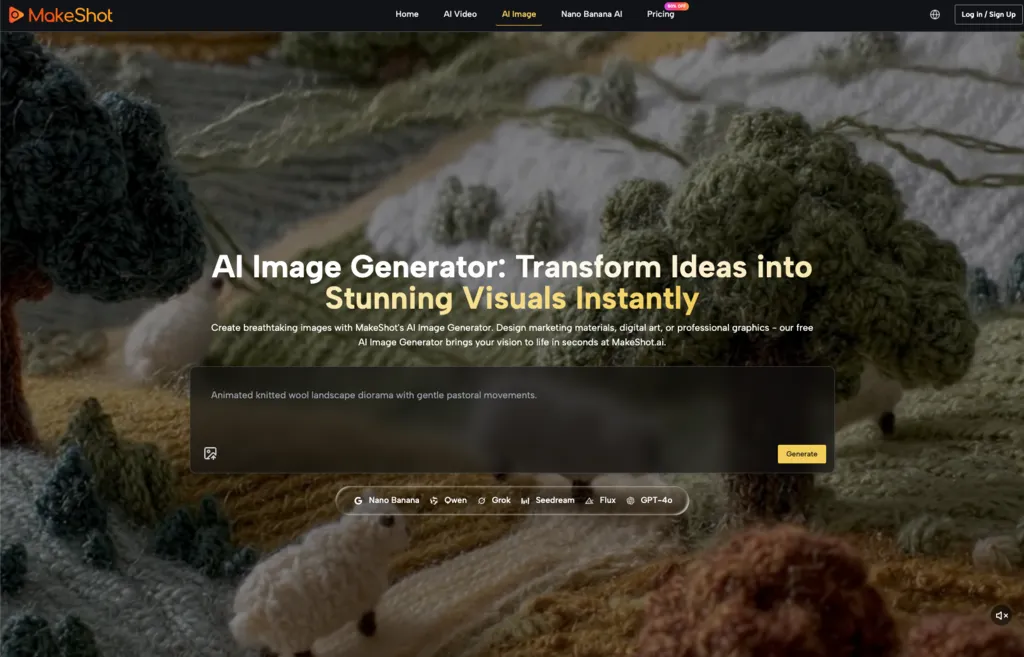
Choosing the right starting point is the first routing decision an operator makes. For instance, if the project requires hyper-realistic textures and legible text within the image, an operator might route the request to Flux. If the project is more about fluid, stylistic concept art, a model like Seedream might be the better choice due to its aesthetic flexibility.
There is also a cost-to-latency trade-off that often goes ignored in non-commercial discussions. Using a massive, high-compute model for every single iteration is a waste of resources. Many teams now use lighter models, such as Qwen, to draft the "logic" of an image or to iterate on composition before committing to a high-fidelity generation.
At this stage, the primary risk is over-investing in the prompt. If you spend three hours trying to "prompt out" a small artifact in the background, you are failing as an operator. It is often more efficient to accept a 90% perfect image and route it immediately to a specialized AI Photo Editor to fix the final 10%.
The Correction Tier: Where the AI Photo Editor Stabilizes Assets
The middle tier of the production pipeline is where the most value is created. This is the corrective layer. Foundational models are notorious for their lack of "spatial memory." If you ask a generator to move a cup two inches to the left, it will often regenerate the entire image, changing the person's face, the lighting, and the background texture in the process.
This is why edit a photo is a non-negotiable part of a professional stack. Instead of "re-rolling" the entire prompt and hoping for a better result, an operator uses the editor to target specific failures.
Consistency and Face Swapping
One of the hardest things to achieve in AI production is character consistency across different scenes. Foundational models struggle to keep a face identical across ten different prompts. The routing solution here is to generate the scene for its composition and lighting first, then use a face-swapping tool within an AI Photo Editor to overlay the consistent brand-approved face. This decouples the "environment" from the "subject," allowing for much tighter creative control.
Object Erasure and Inpainting
Inpainting and object removal are the surgical tools of the operator. If a foundational model generates a stunning interior but adds a bizarre, six-legged chair in the corner, a manual fix in an AI Photo Editor is five times faster than trying to refine the prompt. This stage is about "stabilizing" the asset—removing the hallucinations and ensuring the image meets the technical requirements of the brief.
Bridging to Motion: When Static Assets Become Video
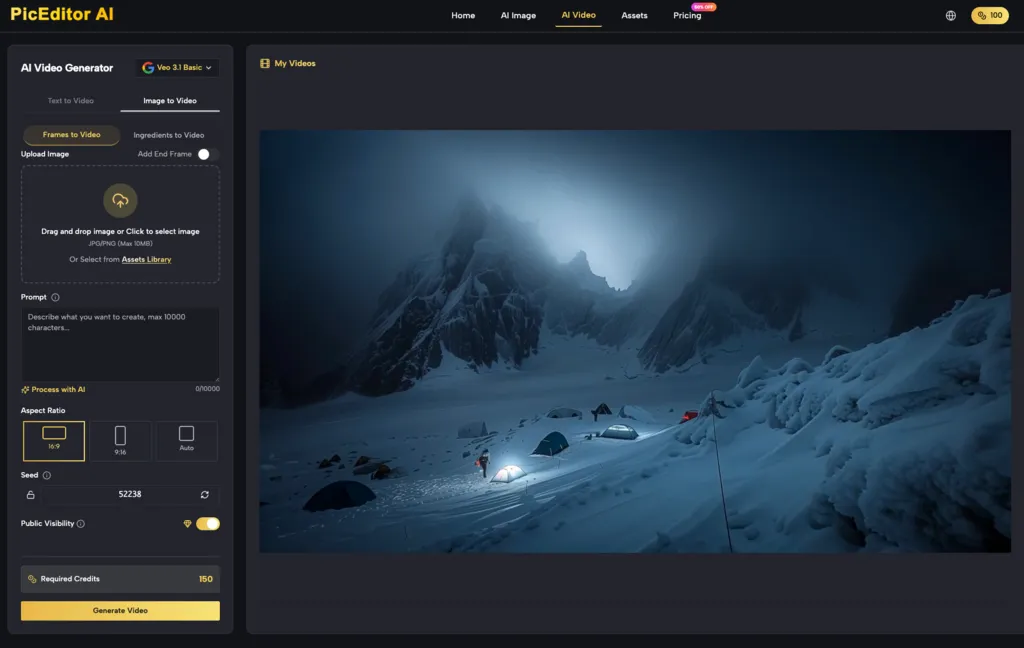
The most recent shift in model routing involves the transition from static images to video. Models like Kling, Veo, and Seedance have made "image-to-video" (I2V) the gold standard for high-end AI cinematography. However, the quality of the video is almost entirely dependent on the quality of the "seed" image.
If you feed a raw, unedited AI generation into a video model, the video model will often "interpret" the static artifacts as intentional movement. A slight blur on a person’s hand in the static image becomes a flickering, morphing nightmare once it’s animated.
Operators have learned that they must route their assets through a correction phase before hitting the "animate" button. Refining the image in an AI Photo Editor—sharpening the edges, fixing the lighting contrast, and ensuring anatomical correctness—is what prevents the "jitter" that plagues amateur AI video. By the time the asset reaches a model like Kling, it should be a "clean" file. The video model's job is to calculate physics and motion, not to fix the mistakes of the image generator.

The Production Ceiling: What We Can’t Yet Route
Despite the sophistication of current routing workflows, there are significant limitations that every operator must acknowledge. We are not yet at a point where this process can be fully automated by an "AI orchestrator."
The Spatial Consistency Gap
One major uncertainty is maintaining spatial consistency across 50 or more frames of video. While we can route an image to a video model and get 5-10 seconds of coherent motion, the "drift" that occurs over longer sequences is still a massive hurdle. We cannot yet confidently route a long-form narrative project through these tools without heavy manual intervention and traditional compositing. The "auto-router" that can perfectly maintain a 3D environment across disparate shots simply doesn't exist yet.
The Creative Director’s Eye
There is also the "Prompt Decay" problem. As models become more aligned with "average" aesthetic preferences, they tend to produce images that look increasingly similar. If an operator relies too heavily on the "default" routing, the output loses its edge and starts to feel generic. This is where the human element is irreplaceable. No matter how well you route between Flux and an AI Photo Editor, the software cannot tell you if the "vibe" is right for the brand’s soul. It can only tell you if the pixels are technically correct.
Strategic Execution for Content Teams
For teams building these pipelines, the goal should be to reduce the "time to correction." The faster you can move an asset from the foundational generation stage into the corrective stage, the more efficient your production will be.
This requires a shift in mindset. Instead of looking for the "best" AI model, start looking for the most effective "stack." A team that uses a moderate foundational model but has a world-class workflow involving an AI Photo Editor and high-end video routing will consistently outperform a team that spends all its time trying to write the "perfect" 500-word prompt for a single model.
In the end, production is about control. Foundational models offer raw power, but routing offers the precision needed to turn that power into a professional product. The future of AI creation isn't in the prompt; it’s in the pipeline.



















Sign in to leave a comment.