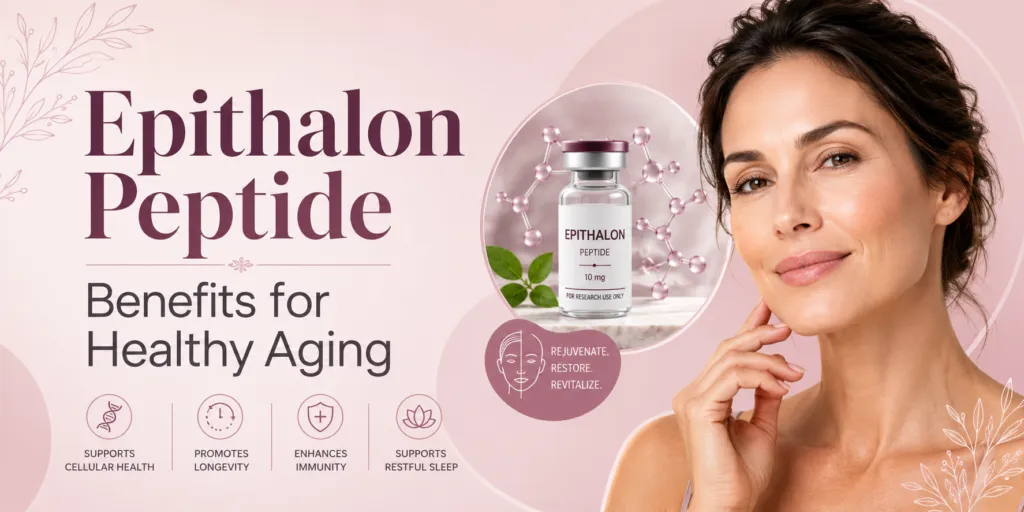

Did you know that most of the white powder sold in vials across the internet never actually sees the inside of a certified testing facility? You might find it surprising but the digital marketplace for research compounds is often more like a wild frontier than a regulated pharmacy. When you look for specific peptides to support your biology, you are likely encountering a mix of high quality scientific suppliers and fly-by-night operations that prioritize profit over the purity of their catalog.
Searching for Epithalon is a path many take when they become interested in the science of the pineal gland and cellular aging - this synthetic tetrapeptide mimics a natural substance found in the body and its role in telomere research makes it a frequent topic in longevity circles. Because these products are for laboratory use, the burden of verification falls entirely on you. If you are not careful, you might end up with a product that is ineffective or, worse, contains unwanted contaminants.
You deserve to know exactly what you are putting into your research environment. Navigating the world of online peptide vendors requires a sharp eye for detail and a healthy dose of skepticism. By learning the most frequent errors others make, you can protect your resources and ensure your data remains accurate and safe. Let us walk through the specific pitfalls that often trap even the most well meaning researchers.
Ignoring the Importance of Third Party Testing
The biggest error you can make is taking a vendor at their word. Many websites claim their products are 99 % pure but they do not provide the paperwork to prove it. A reputable supplier should always offer a Certificate of Analysis (COA) from an independent laboratory - this document confirms the identity of the molecule and checks for heavy metals or leftover solvents from the manufacturing process. Without this, you are essentially blind to what is inside the vial.
You should also look for the date on these tests - A COA from three years ago does not tell you anything about the batch sitting in the warehouse today. Purity can vary significantly between different production runs. If a company is hesitant to share current lab results, it is usually a sign that they are skipping the expensive step of verification. Trust is good but in the world of synthetic peptides, data is much better.
High-quality research demands high quality materials - When you review a detailed overview of peptide research, you will notice that scientific accuracy depends on using substances that are free from impurities. If a batch contains even a small amount of an unknown substance, it can change the results of your study or cause unexpected reactions. Always insist on seeing High Performance Liquid Chromatography (HPLC) results before you finalize any transaction.
Confusing Synthetic Epithalon with Glandular Extracts
People often confuse Epithalon with Epithalamin but the are not the same thing. Epithalamin is a crude extract from the pineal glands of cattle, containing a mix of different proteins and molecules. Epithalon is a precise, four-amino-acid chain (Ala-Glu-Asp-Gly) created in a laboratory to mimic the most active part of that extract. Many online sellers use the names interchangeably to confuse you or to sell cheaper, less refined products.
Buying a glandular extract when you intended to buy a synthetic peptide can lead to inconsistent results. Extracts are much harder to standardize, meaning the "strength" of the product changes from one bottle to the next. Extracts carry a higher risk of biological contamination compared to the clean environment of a peptide synthesis lab. You need to be specific about what your research protocol requires.
- Check the sequence
Ensure the product is listed as the Ala-Glu-Asp-Gly tetrapeptide. - Look for the CAS number
This unique identifier helps confirm you are looking at the right chemical structure. - Avoid "natural" labels
In this context, "synthetic" is actually the gold standard for purity and precision.
Misunderstanding Proper Storage & Temperature Sensitivity
Peptides are fragile chains of amino acids held together by delicate bonds. A common mistake is buying from a vendor that does not understand how to ship these items. If a package sits in a hot delivery truck for three days in the middle of summer, the Epithalon can begin to degrade. While many peptides are stable at room temperature for short periods in their "lyophilized" (freeze-dried) powder form, extreme heat is a constant enemy.
Once you receive your package, you must know how to handle it. You should keep the powder in a cool, dark place, preferably a freezer for long term storage. Light and moisture are also factors that can ruin your investment. If you see a vial where the powder looks "melted" or sticky, it is a sign that moisture has entered the container, likely compromising the stability of the peptide.
Your research also depends on what you do after you turn that powder back into a liquid. Using the wrong bacteriostatic water or shaking the vial too hard can break the peptide chains. For those who want to be thorough, reading up on laboratory handling practices can provide a much clearer picture of how to maintain the integrity of your samples from the moment they arrive at your door.
Overlooking Detailed Research on Laboratory Handling
Many researchers jump straight into their work without a solid plan for reconstitution - this is a mistake because the concentration of your solution determines the accuracy of your measurements. If you add too much or too little liquid, your data will be skewed. It is helpful to use a peptide calculator to ensure your math is correct before you start adding any diluent to the vial.
You should also be aware of the shelf life of a reconstituted peptide. Even when refrigerated, a liquid solution will not stay potent forever. Many experts suggest using the solution within a few weeks to ensure the amino acid chain remains intact. If you are planning a long term study, it is better to reconstitute small amounts at a time rather than mixing your entire supply right away.
Getting familiar with information on peptide formulation is a smart move before you start your project. Understanding the pH levels and the type of water needed for your specific compound ensures that the peptide stays stable. Small errors in the lab environment can lead to large discrepancies in your findings - taking the time to learn the technical side of the process pays off in the long run.
Relying on Unrealistic Price Points & Marketing Hype
We all love a good bargain but if the price of a peptide seems too good to be true, it almost certainly is. The process of synthesizing high purity peptides and then paying for third party lab verification is expensive. If a vendor is selling Epithalon for half the price of everyone else, they are cutting corners somewhere - this usually means they are skipping the cleaning steps or selling under dosed vials.
Marketing language is another trap - Be wary of sites that use "hype" words or make grand medical claims. Since these products are for research purposes, reputable sellers tend to stick to neutral, technical descriptions. If a site looks more like a supplement store for bodybuilders than a scientific supplier, you should proceed with extreme caution. A professional vendor focuses on the data, not the sales pitch.
- Compare prices
Check three or four established vendors to find the "average" price. - Read the fine print
Ensure the vendor has a clear reshipment policy if the package is lost or damaged. - Check the community
Look for independent reviews on research forums to see if other scientists have had success with that specific source.
FAQ
Is Epithalon legal to buy?
In most countries, you can legally buy Epithalon as a research chemical, which means it is intended for laboratory use and not for human consumption. You should always check the specific regulations in your own region, as laws regarding synthetic peptides can change quite often.
How should I store my peptides when they arrive?
You should keep the unmixed powder in a freezer for the best results. If you plan to use it soon, a refrigerator is also fine. The main goal is to keep the vials away from direct sunlight, moisture and high heat, as the can break down the amino acid chains.
What does "lyophilized" mean?
This is just a scientific word for freeze dried - The peptide is turned into a stable powder - removing all the moisture while it is frozen - this process allows the peptide to stay stable during shipping and storage until you are ready to mix it with a liquid for your research.
How can I tell if a COA is real?
A real COA should have the name of the testing lab, a batch number that matches your vial and a signature from the chemist. You can often contact the laboratory listed on the report to verify that they actually performed the test for that specific vendor.
Can I mix different peptides in the same vial?
It is generally a bad idea to mix different peptides in one container - this can lead to chemical interactions that might degrade the compounds. To keep your research clean and accurate, keep each substance in its own separate vial.


























Sign in to leave a comment.