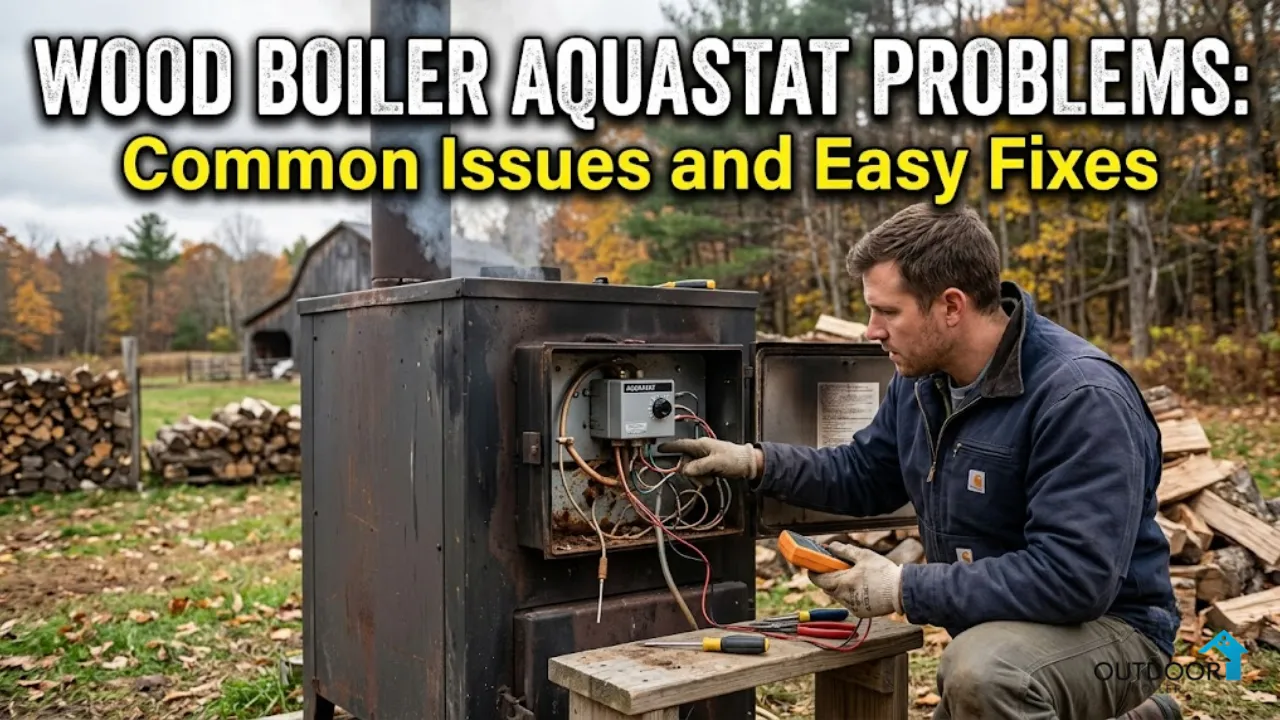

A wood boiler aquastat is the control that monitors your boiler's water temperature and helps regulate the operation of components like the circulator pump and blower. If your wood boiler aquastat is not working correctly, it can lead to poor heating performance, higher fuel consumption, and unnecessary wear on your heating system.
A wood boiler is built to provide reliable heat during cold weather, but like any heating system, it depends on several key components working together. One of the most important is the aquastat. We often find that many homeowners focus on the boiler itself while overlooking the control that keeps everything operating at the right temperature.
In this guide, we will explain the most common wood boiler aquastat problems, what causes them, and how to fix them safely. We will also cover maintenance tips, signs of failure, and answer frequently asked questions to help you better understand your heating system.
What Is a Wood Boiler Aquastat?
A wood boiler aquastat is a temperature-sensing control that monitors the water temperature inside the boiler. Based on the temperature, it activates or deactivates components such as:
- Circulator pumps
- Draft fans or blowers
- Dampers
- High temperature safety controls
Its primary purpose is to maintain consistent water temperatures while protecting the boiler from overheating or operating inefficiently.
Without a properly functioning aquastat, your wood boiler may burn more wood than necessary or fail to provide enough heat throughout your home.
Common Wood Boiler Aquastat Problems
1. Incorrect Temperature Readings
One of the most common issues is inaccurate temperature sensing.
Possible causes include:
- Faulty temperature sensor
- Loose wiring connections
- Mineral buildup around the sensor well
- Worn internal components
Signs you may notice include:
- Water temperature appears much higher or lower than expected.
- The boiler cycles too frequently.
- Heating performance becomes inconsistent.
A calibrated thermometer can help verify whether the aquastat is reading temperatures correctly.
2. Boiler Overheating
If the aquastat fails to stop the blower or draft control, the boiler may continue generating heat even after reaching the desired temperature.
Possible causes include:
- Stuck relay contacts
- Failed aquastat switch
- Incorrect temperature settings
- Damaged sensor bulb
Overheating should never be ignored because excessive temperatures can damage system components and create safety risks.
3. Circulator Pump Does Not Turn On
The aquastat often controls when the circulator pump begins moving hot water through the heating system.
Common reasons include:
- Failed relay inside the aquastat
- Wiring problems
- Low temperature setting
- Pump failure unrelated to the aquastat
Before replacing the aquastat, verify that the pump itself is functioning correctly.
4. Boiler Short Cycling
Short cycling occurs when the boiler repeatedly turns on and off within a short period.
Potential causes include:
- Faulty aquastat calibration
- Incorrect differential setting
- Sensor problems
- Electrical issues
Frequent cycling reduces efficiency and increases wear on motors, relays, and other components.
5. No Heat From the Boiler
Sometimes the boiler simply does not produce heat even though plenty of firewood is burning.
Possible causes include:
- Failed aquastat
- Broken wiring
- Blower not receiving power
- Safety limit preventing operation
Inspecting the aquastat is often one of the first diagnostic steps.
Signs Your Wood Boiler Aquastat May Be Failing
We recommend paying attention to these warning signs:
- Temperature swings become larger than normal.
- The blower runs continuously.
- The circulator pump behaves unpredictably.
- The boiler water overheats regularly.
- Heating output decreases.
- The aquastat makes clicking sounds without activating the equipment.
- Burn times become inconsistent.
These symptoms do not always confirm aquastat failure, but they often indicate that further inspection is needed.
How to Troubleshoot a Wood Boiler Aquastat
Many basic checks can be performed safely before replacing parts.
Check the Temperature Settings
Confirm that both the high limit and any differential settings match the manufacturer's recommendations.
Inspect Wiring
Look for:
- Loose terminals
- Burned wires
- Corrosion
- Damaged insulation
Always disconnect electrical power before inspecting wiring.
Verify Sensor Placement
The sensing bulb or probe should be fully inserted into the immersion well with good thermal contact.
Test the Aquastat
Using a multimeter, experienced homeowners or qualified technicians can test relay continuity and switching operation.
If electrical testing is unfamiliar, hiring a professional is the safest option.
Can You Repair a Wood Boiler Aquastat?
In many cases, replacement is more practical than repair.
Modern aquastats contain sealed electrical components that are generally not designed for internal servicing.
However, some issues can be corrected without replacing the unit, including:
- Tightening loose wiring
- Cleaning corrosion
- Correcting temperature settings
- Replacing damaged sensor wells
If the internal relay or sensing mechanism has failed, replacing the aquastat is usually the recommended solution.
Tips to Prevent Future Aquastat Problems
Routine maintenance helps extend the life of both the aquastat and the boiler.
We recommend:
- Inspecting electrical connections annually.
- Cleaning around the control housing.
- Checking temperature accuracy each heating season.
- Keeping moisture away from electrical components.
- Following the manufacturer's maintenance schedule.
- Having the heating system professionally inspected every year.
Preventive maintenance often costs much less than emergency repairs during winter.
Safety Tips When Working Around a Wood Boiler
Safety should always come first.
Before performing any inspection:
- Turn off the electrical power.
- Allow the boiler to cool.
- Wear protective gloves.
- Avoid bypassing safety controls.
- Never operate the boiler with a defective high limit control.
If you suspect overheating or electrical failure, contact a qualified heating technician.
When Should You Replace a Wood Boiler Aquastat?
Replacement is usually recommended when:
- Temperature readings remain inaccurate after troubleshooting.
- Internal relays fail repeatedly.
- The housing shows heat damage.
- The controller no longer responds to adjustments.
- Replacement parts are unavailable.
Most aquastats provide many years of reliable service when properly maintained.
Frequently Asked Questions
What does a wood boiler aquastat do?
A wood boiler aquastat monitors water temperature and automatically controls components such as pumps, blowers, and safety limits to keep the heating system operating efficiently.
What temperature should a wood boiler aquastat be set to?
The correct setting depends on the boiler manufacturer and heating system. Many residential wood boilers operate with high limit settings between 170°F and 190°F, but always follow the manufacturer's recommendations.
Can a faulty aquastat cause overheating?
Yes. If the aquastat fails to shut off the blower or draft control at the correct temperature, the boiler may continue heating beyond its intended operating range.
How long does a wood boiler aquastat last?
Many aquastats last between 10 and 20 years, depending on operating conditions, maintenance, and overall system usage.
Can I replace a wood boiler aquastat myself?
Experienced homeowners with electrical knowledge may be able to replace one safely. However, because the aquastat controls important safety functions, many people choose to have a qualified heating technician perform the installation.
Is every wood boiler aquastat the same?
No. Aquastats vary by voltage, temperature range, switching capacity, and application. Always choose a replacement that matches your boiler manufacturer's specifications.
Conclusion
A wood boiler aquastat plays a critical role in maintaining safe water temperatures and ensuring your heating system runs efficiently. Problems such as inaccurate temperature readings, overheating, short cycling, or pump failures can often be traced back to the aquastat or its related wiring. By understanding the warning signs, performing routine maintenance, and following safe troubleshooting practices, we can often identify issues early and avoid more expensive repairs down the road.
If you found this article useful, visit our website at outdoorboiler.com and explore our other heating system guides for more practical maintenance tips, troubleshooting advice, and homeowner-friendly resources to help keep your boiler operating reliably throughout the heating season.




























Sign in to leave a comment.