Introduction
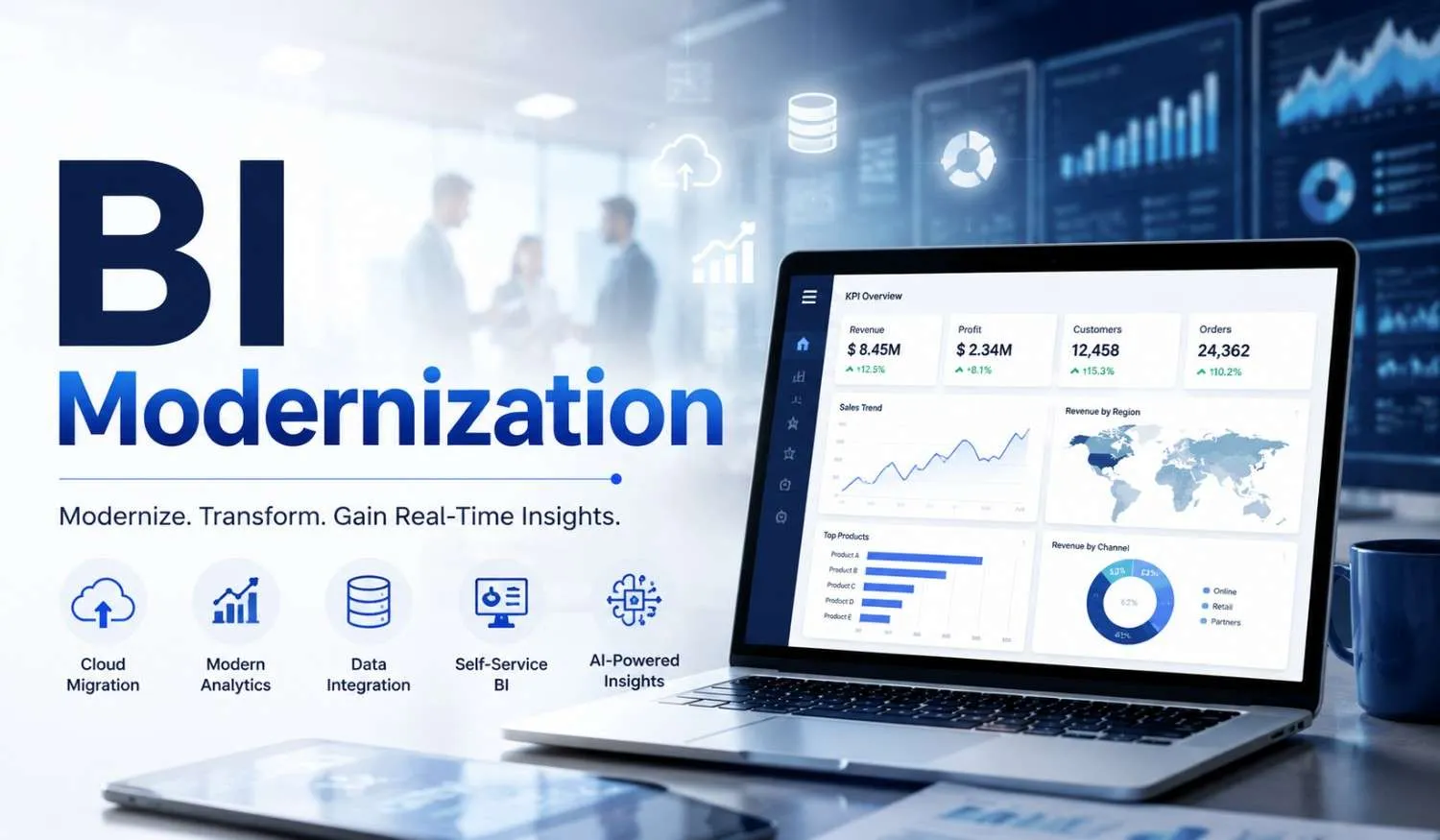
As organizations generate increasing volumes of data, traditional business intelligence (BI) systems often struggle to keep pace with evolving business needs. Legacy BI platforms may lack the flexibility, scalability, and real-time capabilities required to support modern decision-making. As a result, businesses face challenges such as slow reporting, data silos, and limited analytical insights.BI modernization addresses these issues by upgrading outdated BI environments with cloud technologies, advanced analytics, automation, and self-service reporting tools. Modern BI solutions enable organizations to access accurate, real-time data, improve collaboration, and make faster, data-driven decisions. This guide explores BI modernization, its benefits, implementation strategies, and best practices for successful transformation.
What Is BI Modernization?
BI modernization is the process of transforming legacy business intelligence systems into modern, scalable, and cloud-enabled analytics platforms. It involves replacing outdated reporting tools, improving data integration, adopting advanced visualization technologies, and enabling real-time analytics. Rather than relying on static reports and manual data processing, modern BI platforms provide interactive dashboards, automated insights, and AI-powered analytics that support faster and more informed business decisions.
Why BI Modernization Is Important
Businesses today operate in a highly competitive and data-driven environment. Modernizing BI systems helps organizations keep up with growing data volumes while improving efficiency and business agility.
Key reasons businesses invest in BI modernization include:
- Faster access to business insights
- Improved decision-making
- Better data quality and governance
- Enhanced reporting accuracy
- Reduced infrastructure costs
- Greater scalability
- Improved collaboration across departments
- Support for advanced analytics and AI
Modern BI empowers organizations to turn raw data into actionable intelligence that drives growth.
Key Components of BI Modernization
Successful BI modernization involves upgrading multiple aspects of an organization's analytics ecosystem.
Cloud-Based BI Platforms
Migrating to cloud-based BI solutions offers greater scalability, flexibility, and lower infrastructure costs while enabling remote access to analytics.
Data Integration
Modern BI platforms integrate data from multiple sources, including databases, cloud applications, CRM systems, ERP software, APIs, and IoT devices.
Self-Service Analytics
Business users can build reports and dashboards without relying heavily on IT teams, increasing productivity and reducing reporting delays.
Interactive Dashboards
Modern dashboards provide dynamic visualizations that allow users to explore trends, monitor KPIs, and drill down into detailed business data.
AI and Machine Learning
Artificial intelligence enhances BI by identifying patterns, predicting future trends, detecting anomalies, and generating automated insights.
Data Governance
Modern BI solutions include governance frameworks that improve data security, compliance, access control, and data consistency.
Benefits of BI Modernization
Organizations that modernize their BI infrastructure gain significant competitive advantages.
Faster Decision-Making
Real-time dashboards provide immediate access to business performance metrics, enabling leaders to make informed decisions quickly.
Improved Operational Efficiency
Automation reduces manual reporting tasks and allows teams to focus on higher-value business activities.
Enhanced Scalability
Cloud-native BI platforms easily accommodate growing datasets, users, and analytical workloads without requiring major infrastructure upgrades.
Better Collaboration
Teams across departments can access consistent, centralized data, improving communication and alignment.
Increased Data Accuracy
Modern integration tools reduce duplicate records and improve data consistency across business systems.
Cost Optimization
Cloud-based BI reduces hardware investments and lowers ongoing maintenance expenses.
Common Challenges in BI Modernization
While BI modernization offers substantial benefits, organizations may encounter several implementation challenges.
Legacy System Integration
Older applications may require custom integrations or phased migration strategies.
Data Quality Issues
Inaccurate, inconsistent, or incomplete data can reduce the effectiveness of modern BI platforms.
Change Management
Employees may require training to adopt new tools and workflows successfully.
Security and Compliance
Organizations must ensure sensitive business data remains secure while meeting regulatory requirements.
Migration Complexity
Moving historical reports, dashboards, and datasets requires careful planning to minimize disruption.
Proper planning and governance help businesses overcome these challenges efficiently.
Best Practices for BI Modernization
Organizations should follow proven strategies to maximize the success of their modernization initiatives.
Define Business Objectives
Identify specific business goals, reporting needs, and performance metrics before selecting new BI technologies.
Assess Existing Infrastructure
Evaluate current BI tools, databases, reporting processes, and integration requirements.
Choose the Right Technology Stack
Select scalable BI platforms that support cloud deployment, AI capabilities, and seamless integration with existing business applications.
Prioritize Data Governance
Establish policies for data quality, security, ownership, and compliance throughout the modernization process.
Train End Users
Provide comprehensive training to help employees confidently use new dashboards, analytics tools, and reporting features.
Monitor Performance
Continuously measure adoption, reporting efficiency, and business outcomes to optimize the BI environment over time.
Industries Benefiting from BI Modernization
Nearly every industry can benefit from modern business intelligence capabilities.
Healthcare
Improve patient outcomes, operational efficiency, and regulatory reporting.
Retail
Analyze customer behavior, inventory performance, and sales trends in real time.
Financial Services
Monitor risk, detect fraud, and optimize financial reporting.
Manufacturing
Track production efficiency, supply chain performance, and equipment utilization.
Logistics
Enhance route optimization, warehouse management, and delivery performance.
Education
Measure student performance, operational efficiency, and institutional outcomes.
Future Trends in BI Modernization
Business intelligence continues to evolve with emerging technologies.
Key trends shaping the future include:
- AI-powered decision intelligence
- Predictive and prescriptive analytics
- Natural language querying
- Embedded analytics within business applications
- Real-time streaming analytics
- Automated data preparation
- Augmented analytics
- Data fabric architectures
- Cloud-native BI ecosystems
Organizations that embrace these innovations will gain deeper insights and greater competitive advantages.
How BigDataCentri Can Help
BigDataCentri helps organizations modernize their business intelligence ecosystem with scalable, secure, and future-ready analytics solutions. Our experts work closely with businesses to transform legacy BI systems into cloud-enabled platforms that support real-time insights and data-driven decision-making.
Our BI modernization services include:
- Legacy BI assessment and modernization strategy
- Cloud BI migration
- Data warehouse modernization
- Dashboard and reporting development
- Self-service analytics implementation
- AI and machine learning integration
- Data governance and security
- ETL and data pipeline modernization
- Performance optimization
- Ongoing support and maintenance
With deep expertise in modern analytics technologies, BigDataCentri enables businesses to unlock the full value of their data while improving operational efficiency and accelerating digital transformation.
Conclusion
BI modernization enables organizations to replace outdated reporting systems with agile, cloud-based analytics platforms that deliver faster insights, improved scalability, and enhanced decision-making. By adopting modern BI technologies, businesses can increase efficiency, strengthen data governance, and empower teams with real-time intelligence. Partnering with BigDataCentri ensures a smooth modernization journey, helping organizations build a future-ready business intelligence ecosystem that drives long-term growth and innovation.


























Sign in to leave a comment.