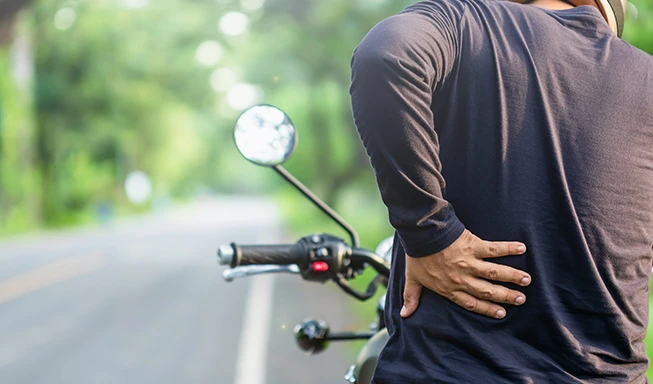

Lower back pain isn't just about "getting older"; it's a mechanical failure of posture and support. From bike fits to braces, the gear you choose dictates your comfort. With rider posture tips, a lumbar belt for bike riders, or back support, you can easily manage lower back pain.
Let’s get into it.
Why Do Riders Get Lower Back Pain?
Riders across all disciplines (cycling, motorcycling, and equestrian) often suffer from lower back pain due to a combination of physical strain and equipment setup. Here are the primary causes:
- Weak Core Stability: When abdominal and deep back muscles fatigue, they stop supporting the spine, forcing the lower back muscles to overwork.
- Static Postural Loading: Maintaining one position for hours reduces blood flow to spinal discs and creates "postural fatigue" in the lumbar region.
- Bad Fit of Equipment: On bikes and motorcycles, a seat that is too high or too low and bars that require overreaching force the spine to bend in ways that are not natural.
- Vibration and Impact: Continuous vibration (“road buzz”) or the up-and-down impact of a horse’s gait repeatedly stresses the intervertebral discs.
- Tight Hip Flexors: Prolonged sitting or gripping with the legs tightens the hips, which pulls the pelvis forward and increases the arch (and stress) in the lower back.
- Spinal Flexion: Leaning forward (common on sportbikes or road bikes) puts significant pressure on the front of the spinal discs, potentially leading to bulges.
- Muscle Imbalance: Strong legs but a weak back create an "asymmetrical pull" on the pelvis, resulting in chronic misalignment and pain.
What Is the Correct Bike Riding Posture to Avoid Back Pain?
Maintaining correct posture is crucial for distributing road impact and minimizing muscle overuse. Implement these measures to achieve a safe, pain-free position while bike riding:
- Maintain a Neutral Spine: Avoid the extremes of a "humped," rounded back or a "hollowed," arched back. Try to keep your hips and shoulders a straight line to keep spinal discs aligned.
- Keep Elbows Slightly Bent: Lock-straight arms act like rigid pillars, transferring every road vibration directly to your spine. Maintaining a mild flexion allows your arms to function as shock absorbers.
- Engage Your Core: Consider your abdominal muscles as a "girdle" that supports your torso. A relaxed core forces the lower back to bear your upper body weight, leading to constant tiredness.
- Relax Your Shoulders: Strain often causes shoulders to "creep" up toward the ears. Carefully drop them down and back to open the chest and reduce strain on the upper and lower back.
- Proper Hinge at the Hips: While reaching for the handlebars, hinge forward from the pelvis rather than bending at the waist. This keeps the lumbar vertebrae from excessive flexion.
- Level Saddle Alignment: Ensure your saddle is level or tilted down by only 1–2 degrees. A nose-up saddle prevents the pelvis from rolling forward, forcing the spine to compensate.
Is It Safe to Wear a Lumbar Support Belt While Riding Daily?
Wearing a lumbar support belt every day can be a helpful temporary solution for riders, but it carries long-term risks if used improperly. Here is what you need to know about safety and daily usage:
- Short-Term Relief: Belts provide external stabilization and compression, which can reduce muscle fatigue and "road buzz" impact during long, strenuous rides or commutes.
- Risk of Muscle Dependency: Using a belt daily for extended periods can cause "disuse atrophy." Your core and back muscles may stop engaging because the belt is doing its job.
- Sense of Security: Braces can make you feel more stable than you actually are, often leading you to ignore pain signals or push your body beyond its natural limits.
- Circulation and Digestion: If worn too tightly during a ride, a belt can compress the abdomen, leading to digestive discomfort, restricted breathing, or reduced blood flow to the legs.
- Skin Irritation: Wearing the belt repeatedly, mostly when sweating under riding gear, can cause heat rashes, chafing, or skin breakdown in the lumbar area.
- The "Training Wheel" Approach: It is often seen that using the belt only during the most taxing parts of your ride, rather than as a permanent substitute for a strong core.
- Proper Sizing is Critical: An ill-fitting belt can shift during movement, pushing your spine into an even more awkward position than riding without one.
How to Reduce Back Pain Due to Bike Riding?
Managing bike riding back pain is not as complicated as you may think.
During Your Ride
- Maintain Proper Posture: Keep your back straight (slight forward lean), shoulders relaxed, and elbows slightly bent; avoid hunching.
- Take Breaks and Stretch: Regularly pause to stretch your back, hips, and legs; shoulder rolls and gentle bends are beneficial.
- Vary Your Position: To alleviate pressure, change the position of your hands and stand up every so often.
- Check Your Bike Fit: Ensure your saddle height allows a slight knee bend at the bottom of the pedal stroke; adjust handlebar reach to avoid overreaching.
Before & After Riding
- Strengthen Your Core: Do exercises like planks, cat-cow, and bird-dog to build stability for your spine.
- Improve Flexibility: Try hamstring and hip flexor stretches to alleviate tension pulling on the lower back.
- Warm-Up and Cool-Down: Prepare muscles with dynamic stretches and cool down with static stretches.
Bike & Gear Adjustments
- Tire Pressing: Lowering tyre pressure can reduce road vibrations.
- Supportive Gear: Padded shorts and gloves add comfort.
- Consider Upgrades: A suspension seatpost can absorb bumps.
Which Type of Lumbar Belt Is Best for Bike Riders?
The best Lumbar belt for bike riders, for example, Contoured Lumbo Sacral Belt from Leeford Ortho, involve features like:
- Adjustability & Comfort: You should be able to easily adjust the belt so that it fits you comfortably, particularly on prolonged trips.
- Breathability: High-quality, breathable materials make sure that the belt remains comfortable during prolonged rides, particularly in warm weather.
- Flexibility: While providing support, the belt should still allow for a range of motion required for controlling the bike, particularly on motorcycles, where you may be bent forward.
- Support Level: It should give the lumbar region strong but flexible support, which will help ease the strain on the lower spine, which is important for pain relief.
- Design: A high or broad style of belt often provides better coverage for the lower back region.
Wrapping Up
Achieving a pain-free ride comes from pairing the right gear and the right habits. You can change how you ride by incorporating Leeford Ortho back supports like lumbo sacral belt to offer firm immobilization. Don’t just ignore discomfort; instead, take control of your comfort with targeted support and better posture.



























Sign in to leave a comment.