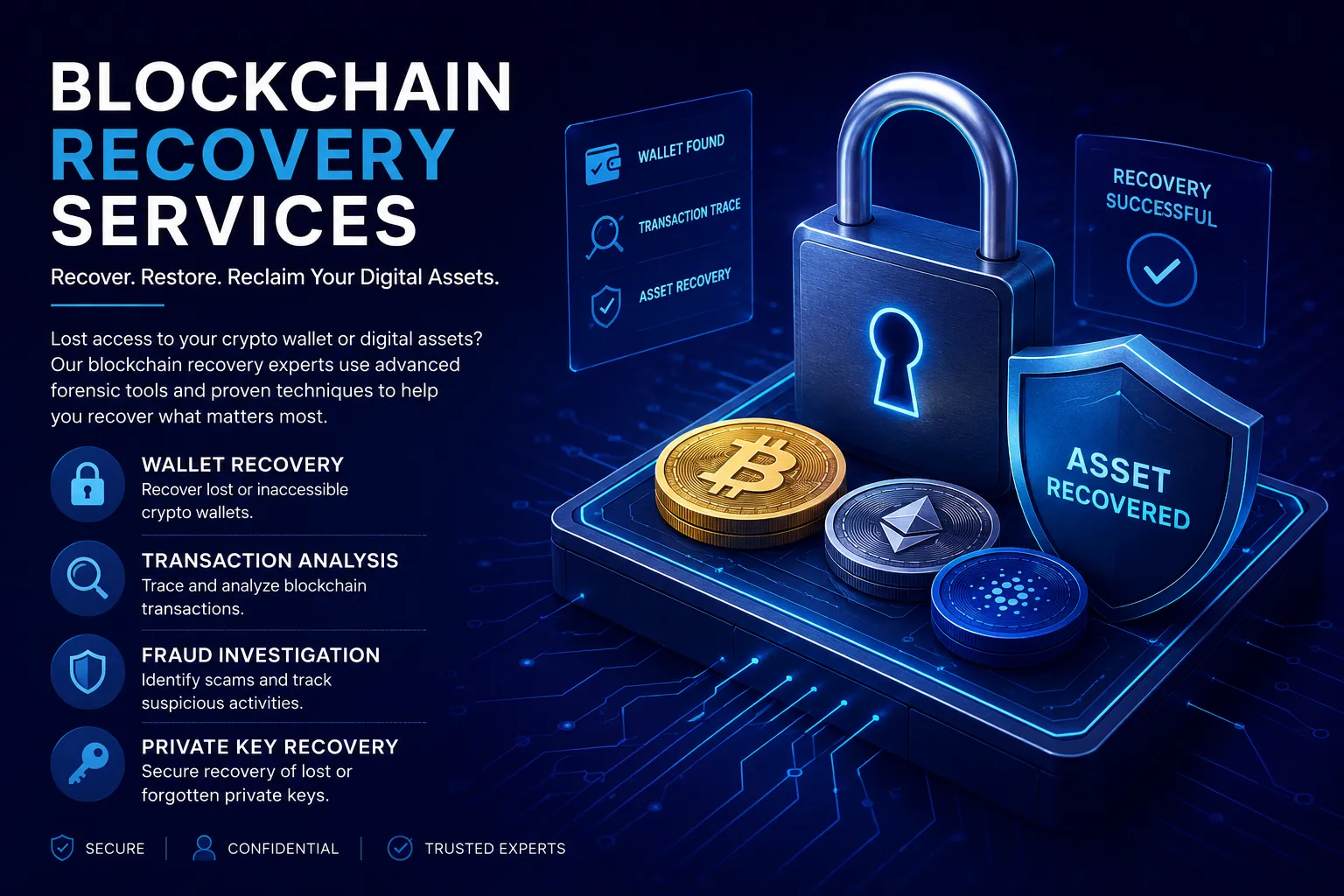

Blockchain technology has transformed the financial world by enabling secure, decentralized, and transparent transactions. From cryptocurrency investments to digital asset management, millions of users now rely on blockchain systems every day. However, with the rise of digital assets comes the growing challenge of lost wallets, forgotten private keys, scams, and unauthorized transactions. This is where blockchain recovery services play a crucial role.
In this guide, we’ll explore what blockchain recovery services are, how they work, common recovery situations, and how users can protect their digital assets from permanent loss.
What Are Blockchain Recovery Services?
Blockchain recovery services are specialized solutions designed to help individuals and businesses recover lost, inaccessible, or stolen digital assets. These services may involve wallet recovery, transaction tracing, password recovery, forensic blockchain analysis, and cybersecurity investigations.
Since blockchain transactions are immutable, recovering assets requires technical expertise, advanced tracking tools, and a deep understanding of blockchain networks such as Bitcoin, Ethereum, and other decentralized ecosystems.
Why Blockchain Recovery Services Are Important
Digital assets are protected by cryptographic security. While this offers strong protection against unauthorized access, it also means that users can permanently lose access to their funds if they lose critical information such as:
- Wallet passwords
- Seed phrases
- Private keys
- Access to hardware wallets
- Exchange login credentials
Blockchain recovery professionals use advanced methods to identify potential recovery options and help users regain access to their digital assets whenever possible.
Common Situations That Require Blockchain Recovery Services
1. Lost Wallet Passwords
Many users forget the passwords to their crypto wallets after years of inactivity. Recovery specialists can assist by using secure password recovery techniques and wallet analysis tools.
2. Missing Seed Phrases
A seed phrase is essential for restoring access to a wallet. In some cases, users may have partial backup information that can help recovery experts reconstruct missing details.
3. Fraudulent Transactions
Scams and phishing attacks continue to affect blockchain users globally. Recovery services may include transaction tracing and blockchain forensic investigations to track suspicious activity.
4. Exchange Account Access Problems
Some users lose access to exchange accounts due to outdated email addresses, authentication issues, or hacked accounts. Recovery specialists can help identify the safest steps to restore account access.
5. Corrupted Hardware Wallets
Damaged or malfunctioning hardware wallets can sometimes still be recovered using specialized data extraction and wallet restoration techniques.
How Blockchain Recovery Services Work
Blockchain Analysis
Recovery experts analyze blockchain transaction histories using forensic tools to identify wallet activity and transaction paths.
Wallet Diagnostics
Specialists examine wallet files, backups, and recovery information to determine whether access can be restored.
Password Recovery Techniques
Secure password recovery methods may be used to test possible password combinations while maintaining data integrity.
Cybersecurity Investigations
In scam-related cases, investigators may trace wallet addresses linked to suspicious transactions and collect blockchain evidence.
Features of Professional Blockchain Recovery Services
When selecting a recovery provider, it’s important to look for:
- Blockchain forensic expertise
- Transparent recovery processes
- Strong privacy and confidentiality policies
- Secure handling of wallet data
- Experience with multiple blockchain networks
- Positive industry reputation
Reliable providers focus on ethical and legal recovery methods while prioritizing client security.
Risks of Fake Recovery Services
The growing popularity of digital assets has also led to an increase in fraudulent recovery companies. Users should be cautious of services that:
- Guarantee 100% recovery success
- Request large upfront payments
- Ask for full private keys unnecessarily
- Lack verifiable contact information
- Use aggressive marketing tactics
Always research a company carefully before sharing sensitive information.
Tips to Protect Your Digital Assets
Preventive security is the best defense against digital asset loss. Consider the following best practices:
Use Secure Backups
Store wallet backups and seed phrases in multiple safe offline locations.
Enable Two-Factor Authentication
2FA adds an extra layer of security for exchange accounts and wallet applications.
Avoid Phishing Scams
Never click suspicious links or share wallet credentials with unknown parties.
Use Hardware Wallets
Hardware wallets provide stronger protection for long-term asset storage.
Regularly Update Security Practices
Stay informed about the latest blockchain security threats and cybersecurity recommendations.
The Future of Blockchain Recovery Services
As blockchain adoption continues to grow, recovery services are becoming increasingly sophisticated. Artificial intelligence, advanced blockchain analytics, and cybersecurity innovations are helping investigators improve transaction tracing and digital asset recovery capabilities.
Businesses, investors, and individual users are expected to rely more heavily on blockchain security and recovery solutions in the coming years.
Conclusion
Blockchain recovery services provide valuable assistance for users facing wallet access problems, fraudulent transactions, or digital asset security challenges. While recovery is not always guaranteed, experienced professionals can often identify potential solutions through forensic analysis and technical expertise.
The best strategy is to combine strong security practices with trusted recovery support when needed. By safeguarding wallet information, using secure storage methods, and staying informed about blockchain security, users can better protect their digital assets in the evolving digital economy.




















Sign in to leave a comment.