
The leap from middle school to high school is more than just a change of buildings; it is a significant escalation in cognitive expectations. By age 12 and 13, students are expected to move beyond foundational learning and begin applying their knowledge in multi-disciplinary ways. To succeed in this new environment, students must develop a "cognitive toolkit" that includes logic, deductive reasoning, and advanced problem-solving skills.
The Rise of Executive Functioning
In elementary school, teachers often act as the "external prefrontal cortex" for their students—organizing their schedules, breaking down tasks, and reminding them of deadlines. By age 12, the training wheels begin to come off. High school success depends on internal executive functioning.
Students must now manage long-term projects, balance multiple subjects with varying requirements, and prioritize information during lectures. This requires a high level of "cognitive load management." If a student's working memory or processing speed is not aligned with these demands, they may feel overwhelmed regardless of their actual intelligence. This is why identifying a child's cognitive baseline is so valuable during these middle school years.
Logic as a Competitive Advantage
In the modern educational landscape, "what you know" is becoming less important than "how you think." With information available at the click of a button, the modern student must excel at evaluating that information. Logical reasoning—the ability to identify fallacies, recognize patterns, and build sound arguments—is the most important skill a 12-year-old can develop.
Whether it is solving a complex algebraic equation or analyzing the causes of a historical conflict, logic is the common thread. Many parents use an IQ test for 12 year olds to identify where their child stands in these critical areas. These assessments aren't about a single number; they are about identifying the "logic style" of the student. Is the child an intuitive leaper who sees the answer instantly but struggles to show the steps? Or are they a systematic processor who is highly accurate but needs more time?
Cultivating an Intellectual Growth Mindset
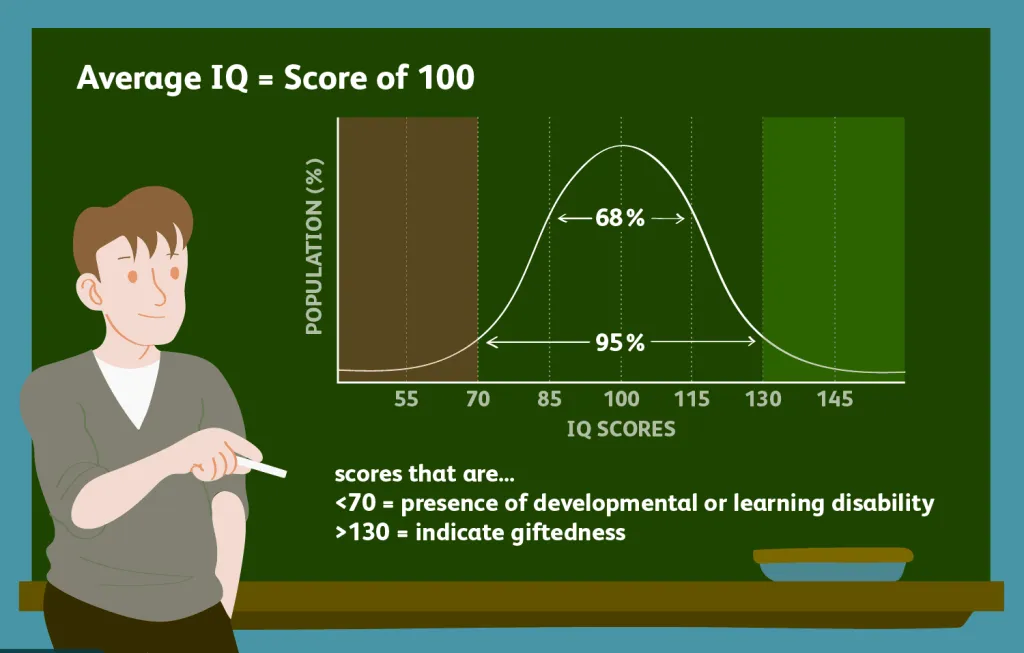
The results of a cognitive evaluation should always be framed through the lens of a growth mindset. If an assessment shows a high aptitude for visual-spatial tasks but a lower score in verbal processing, this isn't a "fixed" state. Because the 12-year-old brain is so plastic, it is highly responsive to targeted intervention.
By identifying these areas early, parents can provide specific "brain training" through hobbies like coding, competitive chess, or creative writing. The goal is to ensure that by the time the student reaches high school, their cognitive toolkit is diverse and robust enough to handle any academic challenge thrown their way.




























Sign in to leave a comment.