
Most people think self-publishing fails because the writing isn’t good enough. That sounds reasonable until you spend a few months inside the Amazon KDP ecosystem and realize something slightly uncomfortable: visibility matters just as much as quality — sometimes more.
A genuinely useful book can disappear into Amazon’s marketplace within hours of publication. Not because readers wouldn’t want it. Not because the cover is terrible. But because Amazon never had enough metadata confidence to show it to the right audience in the first place.
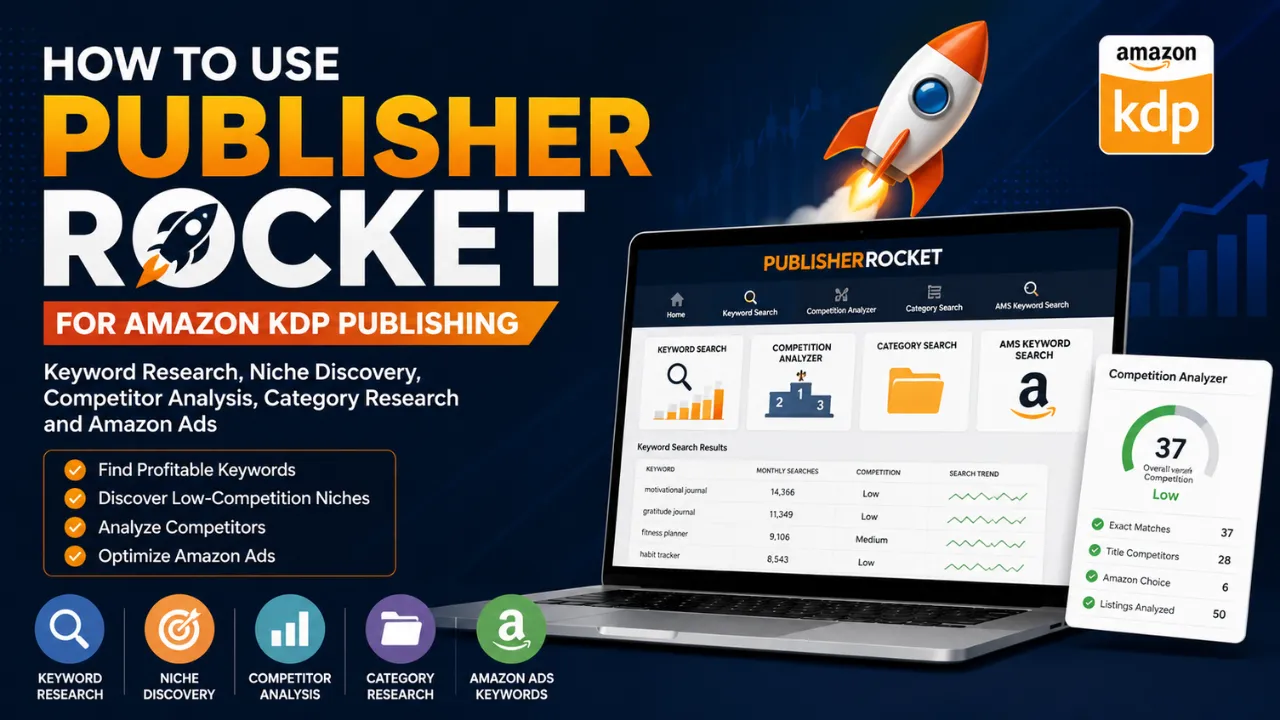
That’s the real problem Publisher Rocket was built to solve.
If you’ve ever uploaded a Kindle book and watched it sit in complete silence — no rankings, no organic traffic, no discoverability — you already understand the emotional side of KDP publishing most tutorials ignore. There’s a strange frustration that happens when effort and visibility stop correlating. You assume publishing is broken. Then eventually you realize the marketplace itself is behaving exactly as designed.
Amazon rewards discoverability, buyer intent alignment, keyword relevance, and conversion probability. Publisher Rocket helps decode those signals before you publish blindly into a saturated niche.
And honestly, that shift alone changes how serious KDP authors approach publishing forever.
PS: Please enter $0 in the suggested amount section to get this course for FREE
What Is Publisher Rocket for KDP?
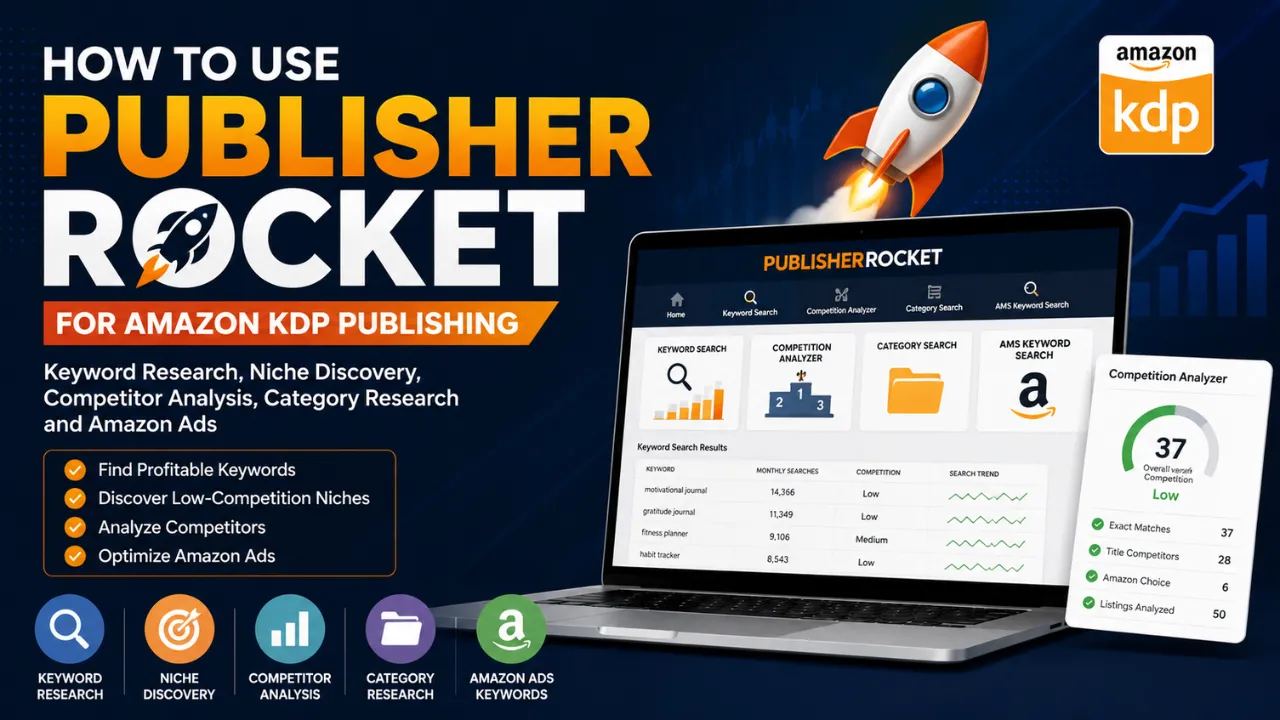
Publisher Rocket is a keyword and market research tool designed specifically for Amazon Kindle Direct Publishing (KDP). Unlike general SEO software built for Google search, Publisher Rocket focuses entirely on Amazon’s internal search ecosystem — where books compete based on keywords, categories, buyer behavior, and marketplace demand.
In practical terms, Publisher Rocket helps authors:
- Find low-competition KDP keywords
- Discover profitable book niches
- Analyze competing books
- Research Amazon categories
- Generate Amazon Ads keyword ideas
- Validate publishing opportunities before writing
At first glance, it looks like another keyword tool. But that’s not really what makes it valuable.
The real advantage is contextual publishing intelligence.
Because Amazon search behaves differently than traditional search engines. Readers searching on Amazon usually have transactional intent. They’re closer to purchasing. Which means keyword quality matters far more than keyword quantity.
That distinction becomes painfully obvious once you start researching niches.
For example, broad phrases like:
- “weight loss”
- “productivity”
- “mindfulness”
- “passive income”
…might seem attractive because search demand appears massive.
But inside Amazon’s ecosystem, those terms are often overcrowded by established publishers, high-review books, celebrity authors, and aggressive ad campaigns. Competing there as a beginner can feel like trying to open a coffee shop inside an airport already dominated by global chains.
Publisher Rocket exposes those realities quickly.
And honestly? Sometimes the data feels brutally honest in a way most publishing advice never is.
PS: Please enter $0 in the suggested amount section to get this course for FREE
Why Most KDP Books Never Gain Visibility
Here’s the part many beginner authors don’t expect:
Publishing a book does not automatically create discoverability.
Amazon’s algorithm still needs signals:
- Keyword relevance
- Buyer engagement
- Click-through behavior
- Conversion probability
- Metadata alignment
- Competitive positioning
Without those signals, your book effectively becomes invisible.
This is where many new KDP authors accidentally sabotage themselves. They choose keywords emotionally rather than strategically.
Maybe they target a niche because they personally love it. Or they assume broad keywords equal more opportunity. Or they follow outdated YouTube advice from someone who published journals in 2021 and hasn’t adapted since.
The result?
Books enter markets with impossible competition density and almost zero ranking feasibility.
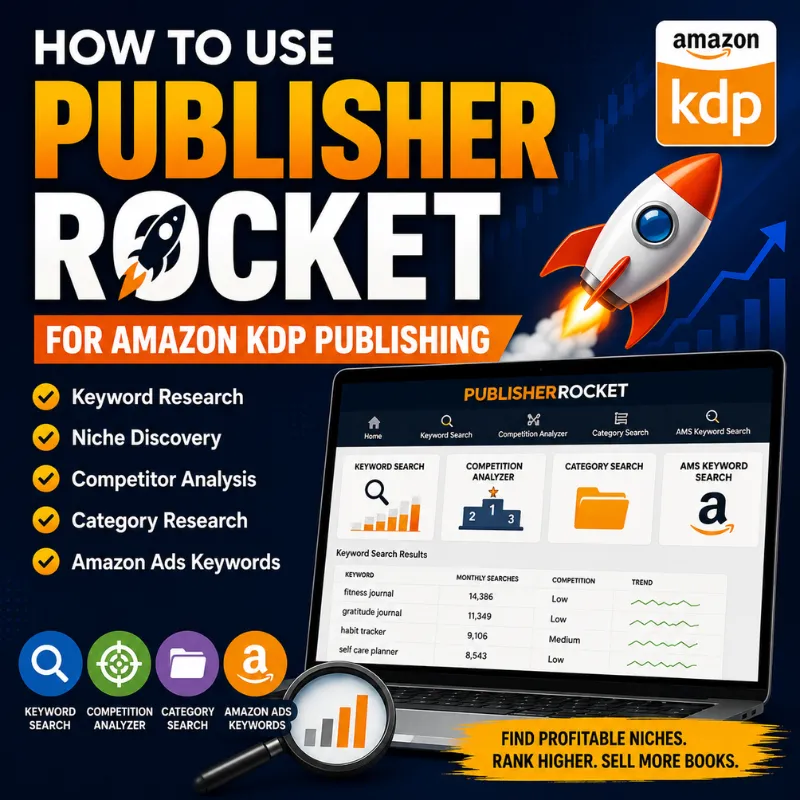
Publisher Rocket helps prevent that by revealing:
- Estimated search volume
- Competition strength
- Average monthly earnings
- Category opportunity
- Keyword competitiveness
And sometimes one search completely changes your publishing strategy.
You realize the niche you planned to enter is flooded beyond reason… while smaller long-tail opportunities nearby still have meaningful demand with weaker competition.
That’s usually the moment KDP publishing stops feeling random.
How Publisher Rocket Keyword Research Actually Works
Keyword research inside Publisher Rocket begins with seed terms — broad ideas connected to your book topic.
Suppose you’re publishing a fasting guide.
You might start with:
- intermittent fasting
- fasting cookbook
- fasting for beginners
Publisher Rocket then expands those into related Amazon search terms while showing estimated monthly search volume and competitiveness.
But here’s where beginners often misunderstand the process.
The goal isn’t finding the biggest keyword.
The goal is finding realistic ranking opportunities connected to buyer intent.
There’s a massive psychological difference between:
- “diet”
and - “low carb meal prep for busy moms”
The second keyword reveals specificity, emotional context, and purchase readiness. Readers searching it already know what problem they’re trying to solve.
That’s exactly the kind of intent Amazon’s algorithm responds to.
Publisher Rocket helps uncover these hidden long-tail opportunities:
- keto meal prep for beginners
- anxiety workbook teens
- budgeting planner for couples
- adhd productivity habits
- chair yoga for seniors
These phrases usually have:
- lower competition
- stronger conversion behavior
- clearer reader expectations
- higher ranking potential
And weirdly enough, targeting smaller opportunities often creates more sustainable publishing growth than chasing giant competitive niches everyone else wants.
Actually, scratch that.
It’s not weird at all once you understand how marketplaces behave. Small demand pools with weak competition are often far more profitable than massive demand pools dominated by entrenched competitors.
Using Publisher Rocket for Category Research
Categories on Amazon aren’t just organizational labels. They influence discoverability, bestseller rankings, visibility loops, and recommendation systems.
Publisher Rocket helps authors identify categories where ranking is realistically achievable.
This matters because many beginners instinctively choose broad categories like:
- Self-Help
- Business
- Romance
- Health & Fitness
Those categories sound logical. They’re also brutally competitive.
A narrower category often creates stronger visibility momentum because ranking thresholds are lower.
For example:
A book ranking #15 in a hypercompetitive category might receive less visibility than a book ranking #2 in a smaller niche category with stronger topical alignment.
Publisher Rocket helps analyze:
- Category competition levels
- Estimated sales needed for ranking
- Related subcategories
- Hidden category opportunities
And this creates an important strategic shift.
Instead of asking:
“Which category sounds most accurate?”
You begin asking:
“Which category gives this book the best chance to gain algorithmic traction?”
That subtle change completely alters discoverability outcomes.
Competitor Analysis: The Most Underrated Feature
Most beginner publishers use Publisher Rocket for keyword ideas.
Experienced publishers use it for market psychology.
The competitor analysis feature reveals:
- Estimated monthly earnings
- Keyword overlap
- Category positioning
- Review counts
- Pricing patterns
- Metadata structures
And after analyzing enough successful books, patterns emerge.
You start noticing how winning books position themselves emotionally. Some dominate because their subtitle instantly communicates transformation. Others succeed because they occupy underdeveloped niches competitors ignored.
Some books honestly succeed despite mediocre writing because their discoverability strategy is exceptionally strong.
That realization frustrates some authors initially.
Then eventually it becomes liberating.
Because it means success isn’t purely luck-based.
Publisher Rocket lets you reverse-engineer:
- market demand
- reader behavior
- niche saturation
- discoverability pathways
And once you see those patterns repeatedly, publishing becomes less emotional and more strategic.
Not robotic. Strategic.
There’s a difference.
Using Publisher Rocket for Amazon Ads
Amazon Ads can accelerate visibility — or quietly destroy your budget if your targeting is weak.
Publisher Rocket helps authors discover high-intent Amazon Ads keywords connected to real buyer searches.
Inside the Ads feature, you can uncover:
- long-tail ad keywords
- competitor keyword targeting
- buyer-intent phrases
- related search terms
- AMS keyword ideas
This matters because broad targeting usually fails on Amazon.
Targeting:
“fitness”
…is incredibly vague.
Targeting:
“home workouts for women over 50”
…immediately aligns with a much more specific audience.
That specificity improves:
- click-through rate
- conversion potential
- ad efficiency
- audience relevance
And honestly, this is where many KDP beginners accidentally waste hundreds of dollars. They assume more traffic automatically means more sales.
Usually, precision wins.
Common Publisher Rocket Mistakes Beginners Make
Publisher Rocket is powerful, but data without interpretation still creates bad decisions.
Some of the most common mistakes include:
- chasing only high-volume keywords
- ignoring buyer intent
- entering oversaturated niches
- copying competitors blindly
- stuffing metadata unnaturally
- choosing irrelevant categories
- publishing without validation
Another surprisingly common mistake?
Treating keyword research as a one-time activity.
Amazon marketplaces evolve constantly. Reader interests shift. Competition changes. New niches emerge quietly while old opportunities become overcrowded almost overnight.
Successful publishers continuously adapt.
That flexibility matters more now because Amazon’s algorithm increasingly rewards contextual relevance rather than simplistic keyword repetition. RankBrain-style interpretation and behavioral signals influence visibility far more aggressively than they did years ago.
Which means modern KDP publishing requires a hybrid mindset:
- part writer
- part marketer
- part researcher
- part behavioral analyst
Publisher Rocket supports that ecosystem remarkably well.
Is Publisher Rocket Worth It for Beginners?
For serious KDP publishers, yes — especially beginners trying to avoid costly mistakes.
Because honestly, most publishing failures happen before launch:
- weak niche selection
- impossible competition
- poor keyword targeting
- low buyer intent alignment
Publisher Rocket helps reduce those risks before you spend weeks writing books nobody can realistically discover.
That doesn’t guarantee success, obviously.
A bad cover still hurts conversions.
Weak writing still damages reviews.
Poor positioning still limits visibility.
But Publisher Rocket dramatically improves strategic clarity.
And clarity inside Amazon’s marketplace is valuable because confusion compounds fast.
Especially when thousands of new books enter KDP every single day.
Final Thoughts
Publisher Rocket isn’t magic software. It won’t instantly turn random books into bestsellers.
What it does provide is something arguably more important: informed decision-making.
And in the Amazon KDP ecosystem, informed decisions create discoverability advantages most authors never develop.
The biggest shift happens psychologically.
You stop publishing based purely on assumptions and start thinking like a market observer. You begin understanding how keywords connect to buyer intent, how categories influence visibility, how competition shapes ranking probability, and how Amazon’s algorithm evaluates relevance signals beneath the surface.
That awareness changes everything.
Because successful KDP publishing today isn’t just about writing books.
It’s about understanding the ecosystem those books are entering.
And honestly? Publisher Rocket gives beginners one of the clearest maps available.
PS: Please enter $0 in the suggested amount section to get this course for FREE
Frequently Asked Questions
What is Publisher Rocket used for?
Publisher Rocket helps Amazon KDP authors research keywords, validate niches, analyze competitors, find profitable categories, and improve book discoverability on Amazon.
Is Publisher Rocket good for beginners?
Yes. Publisher Rocket is beginner-friendly and especially useful for new self-publishers trying to avoid highly competitive niches and poor keyword targeting.
Does Publisher Rocket help with Amazon Ads?
Yes. The software includes Amazon Ads keyword research tools that help authors find buyer-intent keywords for advertising campaigns.
Can Publisher Rocket guarantee book sales?
No. Publisher Rocket improves discoverability and publishing strategy, but sales still depend on factors like cover quality, reviews, pricing, demand, and reader experience.
Is Publisher Rocket worth buying for KDP publishing?
For authors serious about long-term KDP growth, Publisher Rocket is often worth the investment because it reduces guesswork and improves market research accuracy.





























Sign in to leave a comment.