
There’s a quiet shift happening right now—and if you’ve ever thought about building a website but stopped at the word “coding,” you’re exactly who this is for.
Because here’s the truth most people don’t say directly:
It was never just about coding. It was about friction. Too many steps. Too many decisions. Too many chances to get stuck.
And now? AI has compressed all of that.
You can go from idea → live website in a single afternoon. No technical background. No expensive developers. No endless tutorials.
But—and this matters more than it sounds—ease doesn’t automatically create quality.
So this guide isn’t just about how to build a website with AI (no coding for beginners). It’s about doing it in a way that actually works. A way that feels intentional, performs well, and doesn’t disappear into the growing sea of AI-generated sites.
What Building a Website with AI Actually Means (And Why It Feels Different)
Let’s clear something up first—because this is where expectations quietly break.
When people hear “AI website builder,” they imagine one-click perfection.
That’s… not quite how it works.
What AI actually does is combine several systems:
- Language models that generate content
- Design engines that assemble layouts
- UX patterns based on high-performing websites
- Automation layers that connect everything together
So instead of manually building each piece, you’re guiding a system that predicts what your website should look like.
Which leads to a subtle but important shift:
You’re no longer the builder. You’re the director.
And like any director, the result depends on how clearly you communicate your vision.
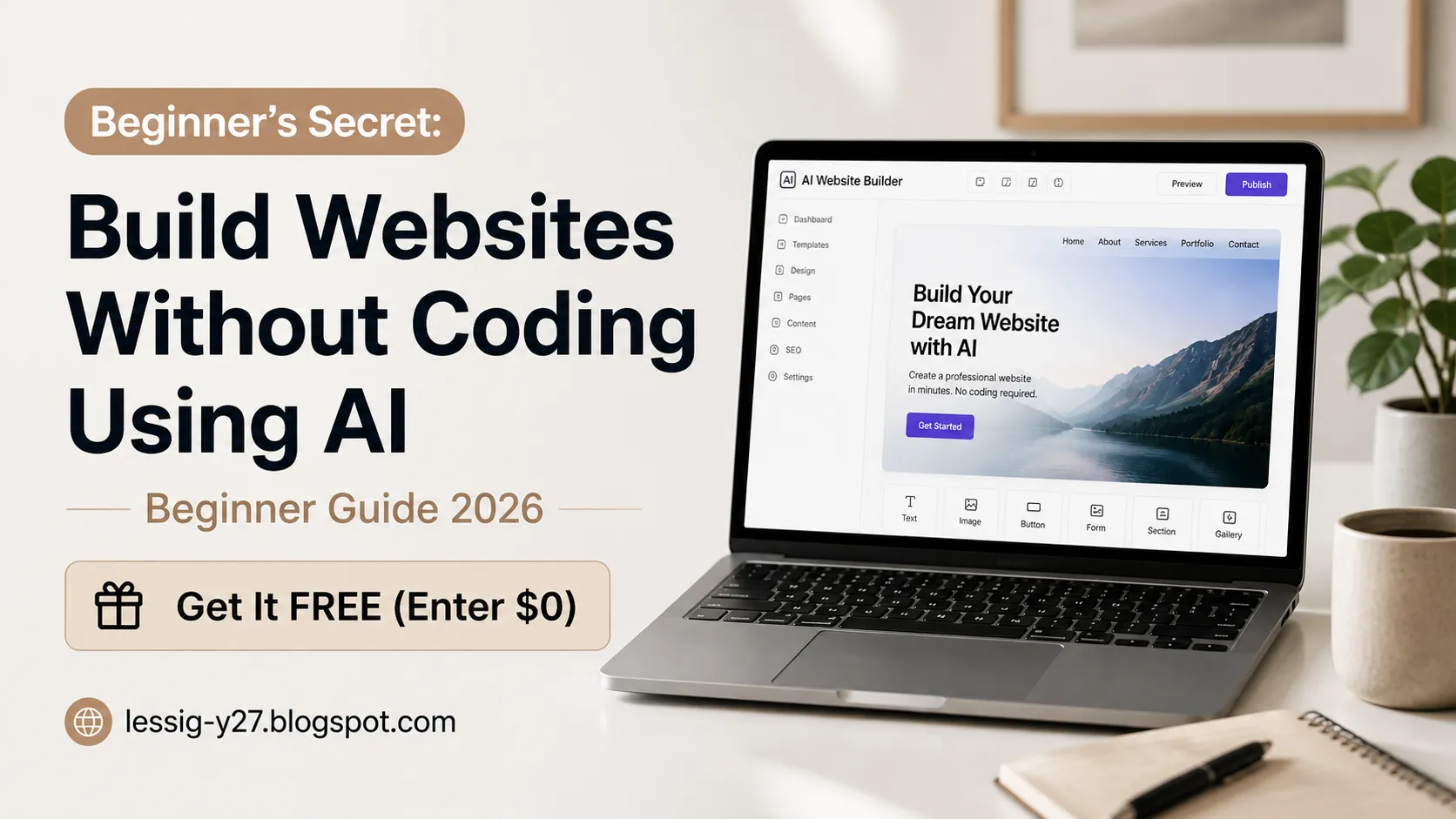
PS: Please enter $0 in the suggested amount section to get this course for FREE
Why Beginners Are Winning with AI (And Why Some Still Struggle)
This is where things get interesting.
On paper, AI removes the biggest barrier—technical skill.
So why do some beginners build impressive websites… while others end up with something forgettable?
It usually comes down to one thing:
Clarity.
AI amplifies input.
- Clear idea → strong output
- Vague idea → generic output
And that’s why two people using the same tool can get completely different results.
One treats AI like a shortcut.
The other treats it like a collaborator.
Guess who wins?
Step-by-Step: How to Build a Website with AI (No Coding Required)
Let’s walk through this in a way that actually reflects reality—not just theory.
Step 1: Define Your Website’s Purpose (Before Tools)
This step feels simple. It’s not.
Ask yourself:
- What is this website for?
- Who is it for?
- What action should visitors take?
If you skip this, everything that follows becomes messy.
AI doesn’t fix confusion—it scales it.
Step 2: Use AI to Generate Structure First
Most beginners jump straight into design.
That’s backwards.
Start with structure.
Example prompt:
- “Create a simple website structure for a beginner-friendly fitness coach targeting busy professionals, including homepage sections and conversion-focused elements.”
What you get:
- Page layout
- Section flow
- Messaging hierarchy
This becomes your invisible foundation.
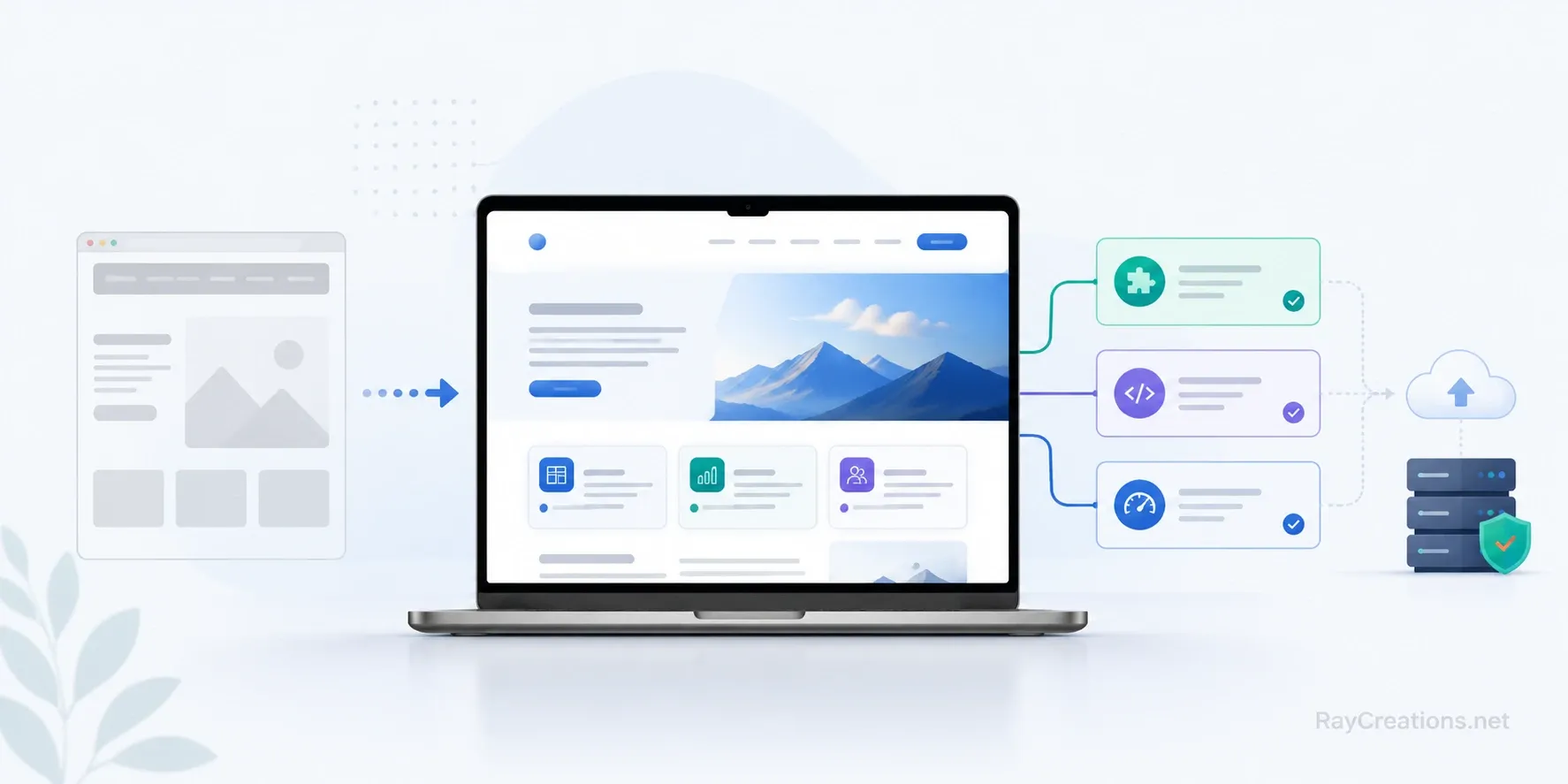
Step 3: Generate Your Website with an AI Builder
Now you bring in the tool.
You input:
- Your niche
- Your goal
- Your preferred style
And within minutes, you get:
- A full layout
- Multiple pages
- Pre-written content
At first glance, it looks impressive.
But if you look closer… it feels slightly generic.
That’s normal.
Step 4: Customize Until It Stops Feeling Like AI
This is where most people either level up—or quit.
You’ll:
- Rewrite headlines
- Simplify sections
- Remove filler content
- Add specificity
This stage is less about building—and more about refining judgment.
And honestly? It’s where the real skill develops.
Step 5: Launch Early (Even If It Feels Incomplete)
This part triggers hesitation.
Because the site doesn’t feel perfect yet.
But here’s what experienced builders understand:
- Version 1 is not the goal
- Feedback is the goal
Launch → observe → improve
That loop matters more than any tool you use.
PS: Please enter $0 in the suggested amount section to get this course for FREE
The Hidden Skill: Prompt Thinking (Why It Changes Everything)
This is the part no one emphasizes enough.
AI tools don’t just respond to instructions—they respond to context.
Compare this:
❌ “Build me a website for a business”
✅ “Create a clean, modern website for a freelance graphic designer targeting startups, focusing on minimal design and high-conversion messaging”
The second one:
- Defines audience
- Sets tone
- Clarifies purpose
And AI responds accordingly.
So the real leverage isn’t in the tool.
It’s in how you think.
Common Mistakes Beginners Make (And How to Avoid Them)
Let’s be honest—most people don’t fail because AI is hard.
They fail because they misuse it.
1. Trusting the First Output
AI’s first result is a draft—not a final product.
2. Trying to Appeal to Everyone
Broad messaging = weak connection.
Specific wins.
3. Overloading the Website
More content doesn’t equal better experience.
Clarity always wins.
4. Ignoring Emotional Impact
People don’t just read websites.
They feel them.
If your site doesn’t trigger:
- Trust
- Curiosity
- Relevance
It won’t convert.
5. Treating the Website as Finished
Websites evolve.
The best ones are constantly improving—not frozen in time.
PS: Please enter $0 in the suggested amount section to get this course for FREE
Can You Actually Make Money with AI Websites?
Short answer: yes.
Long answer… depends on how you approach it.
AI removes barriers, but it also increases competition.
So the opportunity isn’t just:
- “Build websites faster”
It’s:
- Build better websites faster
People are using AI to:
- Launch freelance services
- Build niche blogs
- Create landing pages for offers
- Start online businesses
But clients and users don’t care that you used AI.
They care about:
- Results
- Clarity
- Experience
AI just helps you get there faster.
PS: Please enter $0 in the suggested amount section to get this course for FREE
FAQ: How to Build a Website with AI (No Coding for Beginners)
Can I really build a website without coding?
Yes. AI tools handle the technical side. You focus on guiding and refining.
How long does it take?
A basic website can be built in 30–60 minutes. A high-quality version may take several iterations.
Are AI websites good for SEO?
They can be—but only if optimized. Raw AI content often needs refinement to match search intent.
Do AI websites look generic?
They can. Customization is what makes them stand out.
Final Thought: The Real Advantage Isn’t AI
It’s access.
For the first time, building a website isn’t limited by technical skill.
It’s limited by:
- Clarity
- Decision-making
- Willingness to start
Which is both exciting… and slightly uncomfortable.
Because it removes the excuse.
You don’t need to learn code.
You don’t need expensive tools.
You don’t need to wait.
You just need to begin.
And maybe that’s the real shift here.
Not that AI builds websites.
But that it removes everything that used to stop you from building one.



























Sign in to leave a comment.