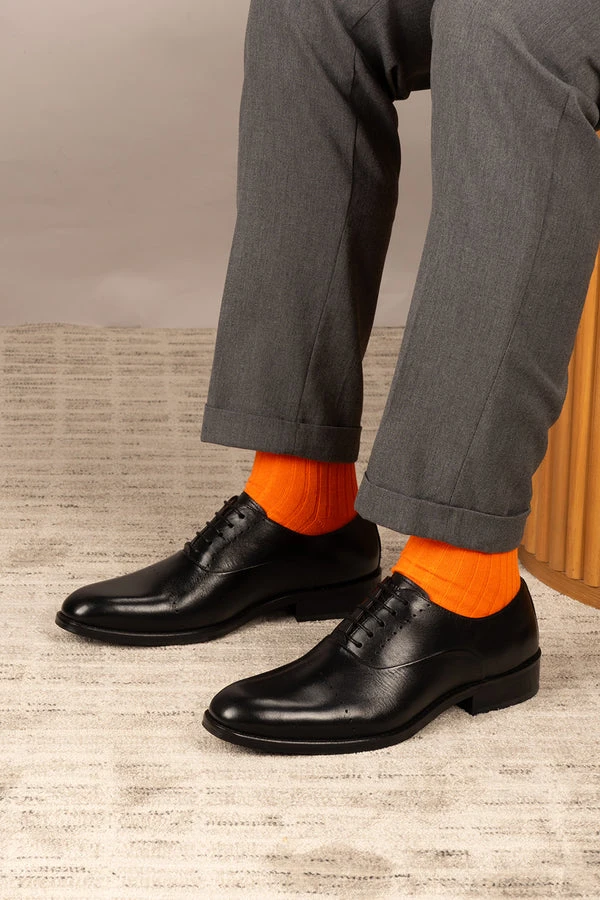

Walk into any well-stocked shoe department and you will face the same question that has divided well-dressed men for generations. Do you go for black or brown? It seems like a simple choice on the surface, but the answer has real consequences for how versatile your wardrobe becomes, how many outfits you can build around a single pair, and how polished you look across different occasions. Both colours have genuine strengths, and both have situations where they simply do not belong. Understanding the difference is what separates a thoughtful dresser from someone who just hopes for the best.
This guide breaks it all down in plain terms. By the end, you will have a clear picture of what each colour does well, where each one falls short, and how to decide which deserves a place in your wardrobe first.

The Case for Black Shoes
Black shoes have history on their side. For most of the twentieth century, black was considered the only acceptable colour for formal footwear, and that legacy still carries weight today. If you are attending a black-tie event, a formal wedding, or an important professional occasion, black shoes remain the safest and most appropriate choice available.
The strength of black lies in its simplicity. It pairs effortlessly with dark suits in navy, charcoal, and black. It works with formal trousers and creates a clean, unbroken line from hem to floor that gives any outfit a sense of sharpness and intention. For men who work in conservative industries such as law, finance, or government, black footwear communicates exactly the right level of seriousness.
Black shoes also tend to be more forgiving in low light. Scuffs and uneven shine are far less visible on a dark surface, which means a pair of black shoes can look presentable with minimal upkeep compared to lighter alternatives. This is not an excuse for neglect, but it is a practical advantage worth acknowledging.
Where black begins to struggle is in casual and relaxed settings. Black shoes can feel heavy and overly formal when paired with lighter fabrics, casual trousers, or weekend outfits. Trying to make black shoes work with mid-grey chinos or washed denim often creates a visual clash that simply does not sit right. The formality of the shoe fights against the relaxed nature of the outfit, and neither element wins.
The Case for Brown Shoes
Brown shoes offer something that black cannot: warmth, personality, and genuine versatility across a wider range of everyday settings. The range of shades available within the brown spectrum is itself a significant advantage. Tan, mid-brown, cognac, mahogany, and burgundy all carry different visual weight and suit different outfit combinations, giving men far more flexibility when building a wardrobe around a single colour family.
Brown shoes tend to look most at home in the real world of modern dressing, where most occasions fall somewhere between fully formal and completely casual. Business meetings, social lunches, weekend errands, and smart evenings out are all occasions where brown footwear performs confidently. A rich mid-brown leather shoe worn with dark jeans and a blazer, for example, creates an effortlessly put-together look that black would struggle to match in that same context.
Brown leather also ages more attractively than black. Over time, with regular conditioning and polishing, brown shoes develop a patina that adds depth and character to the leather. The colour evolves in ways that feel personal and lived-in, turning a good pair of shoes into something genuinely distinctive. This is one of the reasons that experienced dressers often favour brown: the shoes become more interesting with age rather than simply worn out.
The one area where brown requires more care is in formal settings. Deep black-tie occasions and highly conservative professional environments still expect black, and wearing brown in those situations can read as unaware rather than stylish. Knowing where to draw that line is part of dressing well.
Mens Black Loafers: The Smart Casual Essential
When it comes to slip-on footwear, mens black loafers hold a particularly strong position in the modern wardrobe. The loafer itself sits in an interesting space between formal and relaxed, and the black version leans naturally toward the smarter end of that spectrum.
Black loafers work well with tailored trousers, slim-cut chinos, and even certain formal suits when the occasion calls for something slightly less rigid than a lace-up shoe. They are a popular choice in creative industries and business casual environments where polish matters but strict formality does not. Paired with dark trousers and a well-fitted shirt, a black loafer delivers a clean and confident look without requiring the same level of ceremony as an Oxford.
They are also practical in the best sense. The absence of laces means less fuss, and a well-made leather loafer in black can be dressed up or down with very little effort. For men who move between different settings throughout the day, that adaptability is genuinely useful.
Mens Brown Loafers: Warmth and Weekend Versatility
Mens brown loafers bring a relaxed elegance that makes them one of the most enjoyable shoes to own and wear. Where the black version leans formal, brown naturally softens things. A tan or cognac leather loafer worn with slim chinos and a knit jumper strikes a tone that feels effortlessly stylish without trying too hard.
The beauty of brown loafers in particular is how well they complement the earthy, neutral tones that form the backbone of most men's casual wardrobes. Olive trousers, camel coats, grey knitwear, and navy denim all sit comfortably alongside brown leather, creating combinations that feel cohesive and considered. The warmth of the colour brings outfits together in a way that cooler, darker shoes simply cannot replicate.
Suede versions of the brown loafer are worth a particular mention. A mid-brown or tan suede loafer adds texture to an outfit and gives casual looks an elevated quality that leather alone sometimes cannot achieve. They require a little more care and are best avoided in wet weather, but on the right day with the right outfit, they are hard to beat.
Mens Oxford Shoes: Where the Colour Debate Gets Most Interesting
The Oxford is the most formal of the standard shoe styles, and it is also where the black versus brown debate becomes most nuanced. Mens oxford shoes in black represent the pinnacle of formal dressing. A black plain-toe Oxford worn with a dark suit is an unimpeachable combination for the most serious occasions. It communicates that you understand the rules and have applied them without needing to make a statement.
But mens Oxford shoes in brown open up a different and arguably richer set of possibilities. A tan or mid-brown Oxford paired with a navy or mid-grey suit adds warmth and visual interest to an outfit that a black shoe simply would not provide. It feels confident and informed rather than merely compliant. For business meetings, smart social occasions, and most professional environments outside of the very strictest dress codes, a well-made brown Oxford performs beautifully.
Darker brown shades such as burgundy or oxblood push the Oxford even further, lending a level of sophistication that sits very comfortably in evening and smarter casual contexts. These shades are particularly good with grey trousers or mid-blue denim, where their depth creates a focal point that draws an outfit together.
The general principle with Oxfords and colour is this: use black when the occasion demands formality above all else, and reach for brown when you want the same level of craftsmanship with more personality attached.
Which Colour Should You Buy First
If you are building a shoe wardrobe from the beginning and can only start with one colour, the honest answer depends on your lifestyle. If your days are filled with formal meetings, conservative office environments, or regular black-tie occasions, start with black. It will serve you dutifully across every formal context and give you a reliable foundation.
If your life looks more like a mix of business casual settings, weekends, social occasions, and the odd smart event, brown will work harder for you. It covers more everyday ground, pairs with more outfit combinations, and brings genuine versatility to a modern wardrobe that does not live at either extreme.
The ideal, of course, is to own both. One well-made black Oxford and one quality pair in brown will between them cover almost every situation a man encounters. From there, loafers in both colours add range and personality without needing an enormous collection.
Conclusion
The black versus brown debate does not have a single correct answer, but it does have a practical one. Black shoes own formal occasions and bring a sharp professionalism to conservative settings. Brown shoes thrive in the everyday world of modern dressing, where warmth, versatility, and character matter as much as polish. Understanding where each colour performs at its best allows you to make smarter choices with what you buy, how you wear it, and how your overall wardrobe fits together. Great footwear is not about following rules for the sake of it. It is about knowing the rules well enough to use them to your advantage.






















Sign in to leave a comment.