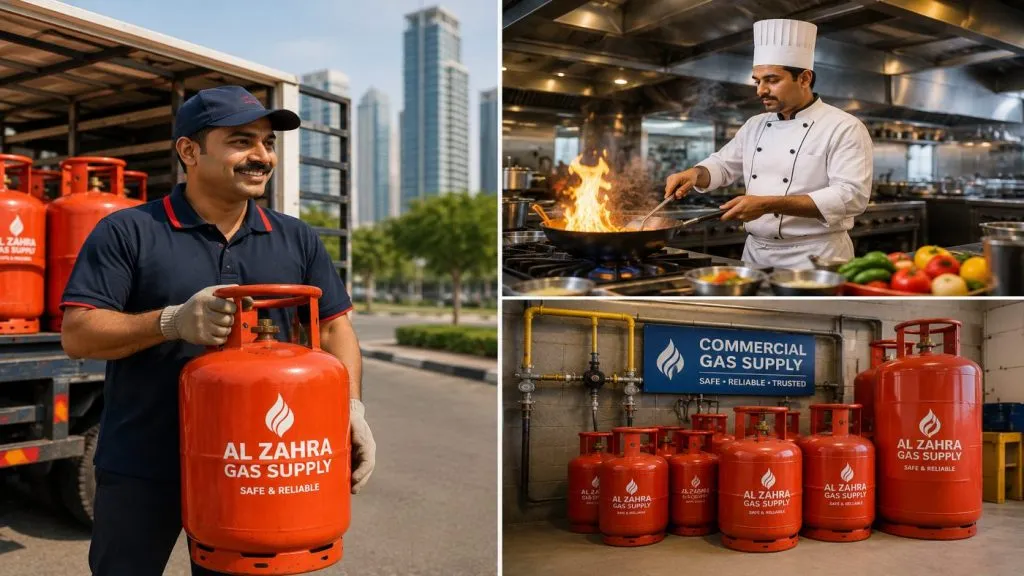

There is a moment familiar to many operations managers in the UAE's hospitality, manufacturing, and facilities sectors — the moment they realise their cylinder-based gas supply model has quietly become their operational bottleneck.
It usually doesn't arrive as a single dramatic failure. It builds gradually: more frequent reorders, more space consumed by cylinder storage, more staff hours spent managing logistics that should run invisibly in the background. More risk accumulating in a supply model that was designed for smaller scale and has been stretched far beyond it.
The shift to bulk LPG gas supply is not a complicated decision once you understand what it solves. But it is a decision that many high-volume operations delay too long — often because no one has laid out the full picture of what bulk supply actually means for operational continuity, cost efficiency, safety, and long-term scalability.
This article does exactly that.
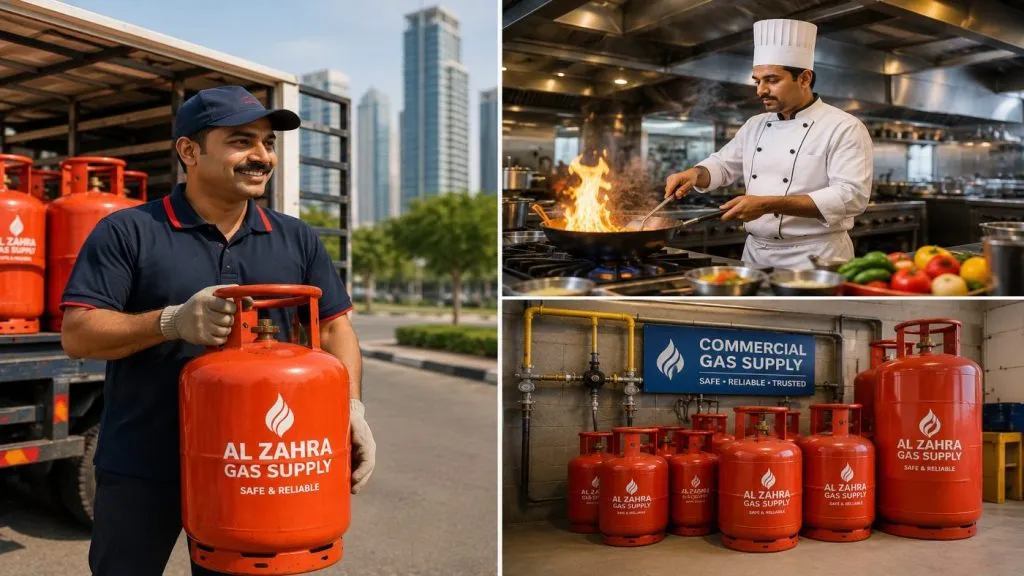
What Is Bulk LPG Gas Supply — And Who Is It For?
Bulk LPG supply refers to the delivery and storage of liquefied petroleum gas in large-volume tanks installed on a customer's premises, rather than through the exchange or delivery of individual cylinders. Gas is delivered by tanker, stored on-site in dedicated vessels, and fed into the facility's gas distribution system as needed.
It is a fundamentally different supply model — and a fundamentally different relationship with your energy provider.
The customers best suited to bulk LPG are those whose gas consumption has moved beyond what cylinder logistics can handle efficiently. In practical terms, that typically includes:
- Hotels and large hospitality venues running commercial kitchens, laundry operations, and heating systems at high daily volume
- Restaurants and food production facilities with multi-burner operations running extended daily hours
- Industrial and manufacturing SMEs using LPG for heat treatment, metal processing, or production line applications
- Schools, hospitals, and large institutional facilities with centralised cooking and water heating demands
- Residential compounds and building complexes managing gas infrastructure for dozens or hundreds of units from a single supply point
- Catering companies and event operators requiring high-volume supply for variable and unpredictable demand
What unites these customers is a common experience: the cylinder model stops being convenient long before it stops being used. Bulk LPG supply replaces that friction with infrastructure that is designed for the actual scale of your operations.
The Hidden Inefficiencies of Cylinder Supply at Scale
Before exploring what bulk LPG offers, it is worth being honest about what high-volume cylinder supply actually costs — because those costs are often absorbed silently, spread across multiple budget lines, and never fully attributed to the supply model that generates them.
Storage footprint. A facility consuming twenty or thirty cylinders per week needs dedicated storage space that meets safety separation requirements. That space has a value — often significant in commercial or industrial premises where every square metre carries a cost.
Staff time and handling. Cylinders need to be received, inspected, moved, connected, disconnected, and returned. At scale, this is a non-trivial operational task that consumes staff hours, creates ergonomic risks, and adds a logistics layer that management needs to coordinate.
Reorder frequency and supply risk. High-volume cylinder customers are constantly managing reorder cycles. A delayed delivery, an undercount, a supplier shortage — any of these can trigger a supply gap at exactly the wrong moment. The larger the operation, the more damaging that gap becomes.
Inconsistent pressure and flow. Individual cylinders deliver gas at varying pressure levels that change as the cylinder empties. For precision cooking applications or industrial processes requiring consistent flame temperature or heat output, this variability creates quality control issues that are difficult to quantify but very real in practice.
Cost at volume. Cylinder pricing includes handling, transport, and cylinder exchange margins embedded in every unit. At scale, these embedded costs add up in ways that bulk supply — priced differently and structured around larger delivery volumes — does not replicate.
None of these costs appear as a line item labelled "cylinder supply inefficiency." But they exist, and in a high-volume operation, they accumulate into a meaningful drag on operational efficiency and financial performance.
Five Operational Advantages of Bulk LPG Supply
1. Supply Continuity Without Constant Management
A bulk LPG storage tank, properly sized and supplied on a managed delivery schedule, removes the reorder cycle from day-to-day operational concerns. Tank levels are monitored — either by the supplier or through telemetry systems on larger installations — and deliveries are scheduled proactively rather than reactively.
For operations where gas supply interruption carries a high cost, this continuity is not a convenience. It is an operational safeguard.
2. Consistent Gas Pressure and Flow Quality
Bulk tanks deliver gas at consistent pressure throughout the supply cycle. There is no pressure drop as the tank empties in the way that individual cylinders experience toward their base. For commercial kitchens, this means uniform flame performance across service periods. For industrial applications, it means process consistency that cylinder supply cannot reliably deliver.
3. Significant Reduction in Handling Risk
Every cylinder handled manually introduces a risk point — in transit, during connection, during storage. At scale, these risk points multiply. Bulk LPG supply eliminates most manual handling from the equation. Gas is delivered by tanker directly to a fixed storage vessel. The distribution from there is through fixed pipe infrastructure. This represents a genuine and measurable improvement in workplace safety for operations that currently manage large cylinder inventories.
4. Space Recovery and Site Efficiency
A single bulk storage tank — sized appropriately for a facility's consumption — occupies a defined, engineered footprint. Compare this to the storage area required for the equivalent gas volume in cylinders, which typically demands more space, more ventilation management, more safety clearance management, and more organisational overhead. The space recovered by moving to bulk supply is often repurposed productively.
5. Long-Term Cost Economics
The per-unit economics of bulk LPG supply are consistently more favourable than cylinder supply at equivalent volume. The delivery efficiency of tanker-based supply, the elimination of cylinder exchange handling, and the ability to lock in supply agreements reduce the total cost of energy procurement for high-volume customers in ways that compound over time.
Bulk LPG and Safety: Getting the Infrastructure Right
One of the most important conversations in bulk LPG supply is around installation and safety infrastructure. This is where supplier expertise matters most, and where the choice of partner has consequences that extend well beyond the initial setup.
A bulk LPG system requires:
A correctly sized storage vessel. Tank sizing must be based on actual consumption data, peak demand analysis, and the physical constraints of the installation site. An undersized tank creates supply gaps. An oversized tank creates unnecessary capital and site footprint costs.
Professionally designed and installed gas piping. From the storage vessel to the point of use, the gas distribution system must be designed by qualified engineers, installed with appropriate materials and jointing methods, pressure-tested before commissioning, and certified to UAE regulatory standards.
Regulator and safety valve specification. The pressure regulation and safety equipment on a bulk LPG installation is more complex than a cylinder regulator. Correct specification, installation, and periodic inspection of this equipment is a technical requirement, not a preference.
Ongoing inspection and maintenance. Unlike cylinder supply, where the physical condition of individual cylinders is managed by the supplier, bulk LPG installations place ongoing maintenance responsibility partly with the site operator. A quality supplier will provide clear guidance on inspection schedules, maintenance protocols, and the signs of system issues that require professional attention.
Regulatory compliance. In the UAE, LPG storage and distribution installations must comply with relevant civil defence, municipality, and energy sector standards. A supplier with experience in bulk installation will be familiar with these requirements and will ensure that the installation process includes appropriate approvals, inspections, and documentation.
This is why the choice of LPG gas supplier in Ajman for bulk supply is not simply a procurement decision. It is a decision about which technical partner you trust with your energy infrastructure.
The Transition from Cylinder to Bulk: What to Expect
For operations considering the move to bulk LPG, the process is more straightforward than many assume — provided the supplier has the experience and infrastructure to manage it competently.
Step 1: Consumption and site assessment. A qualified supplier will review your current gas consumption data, assess your site for storage vessel placement, and evaluate your existing gas distribution infrastructure. This assessment forms the basis for system design and sizing.
Step 2: System design and approval. A bulk LPG installation requires a formal design — tank placement, pipe routing, regulator specification, safety equipment layout. In the UAE, this design typically needs to be submitted for regulatory approval before installation proceeds.
Step 3: Installation and commissioning. Physical installation of the storage vessel, piping, and safety equipment, followed by pressure testing and system commissioning. A competent supplier will manage this process with qualified installation personnel and ensure commissioning documentation is complete.
Step 4: Staff familiarisation. Before a bulk system goes into live operation, relevant site staff should receive basic familiarisation with the system — emergency shutoff locations, basic safety procedures, and who to contact if an issue arises.
Step 5: Ongoing supply and monitoring. Once commissioned, the supply relationship shifts to a scheduled delivery model. Many bulk customers establish a regular delivery cadence based on their average consumption, with flexibility for demand peaks.
The transition process typically takes longer than customers initially expect — regulatory approval timelines in particular can vary — but the operational benefits from Day 1 of live operation are immediately visible.
Choosing a Bulk LPG Supplier in Ajman: The Questions That Matter
Not every LPG supplier in Ajman has the infrastructure, technical expertise, or regulatory experience to support bulk supply customers well. These questions will help identify the difference:
Can you provide references from existing bulk supply customers? Experience with bulk installations in similar sectors — hospitality, industrial, institutional — is the best indicator of competence.
Do you have qualified engineers or technicians for installation works? Bulk LPG installation is a technical discipline. Understand whether the supplier handles installation with their own qualified people or relies on subcontractors with limited accountability.
How do you manage supply scheduling and tank monitoring? A good bulk supplier has a system — manual or technology-assisted — for tracking customer tank levels and scheduling deliveries proactively rather than waiting for customers to report low stock.
What is your regulatory compliance process for new installations? A supplier who is vague or dismissive about the approval process is a supplier who may cut corners on compliance — with consequences that eventually land on the customer.
What does your maintenance and inspection support look like post-installation? The supply relationship doesn't end at commissioning. Understanding what ongoing technical support looks like is an important part of the decision.
Why Bulk LPG Is a Strategic Energy Decision
Energy procurement is increasingly recognised as a strategic business function rather than a facilities management afterthought. The organisations that manage their energy supply most effectively are those that apply the same rigour to energy vendor selection that they bring to other critical supplier relationships.
Bulk LPG supply is not the right model for every operation. For smaller businesses and households, cylinder supply remains the appropriate and practical choice. But for high-volume operations — hospitality groups, industrial facilities, institutional campuses, large residential compounds — the move to bulk supply is a strategic upgrade that delivers operational, financial, and safety improvements simultaneously.
The decision to make that move, and to do so with the right supplier partner, is one of the highest-return operational decisions available to energy-intensive businesses in Ajman and across the UAE.
Closing Perspective
The way businesses manage LPG supply reflects something larger about how they manage operational infrastructure generally. Organisations that approach energy supply as a background commodity tend to absorb the costs of supply failure quietly and persistently. Those that treat it as a strategic function tend to build supply chains that perform under pressure, scale with growth, and contribute to rather than detract from the reliability of their core operations.
Bulk LPG supply, implemented well and managed by the right partner, is one of the clearest expressions of that strategic approach available to high-volume operations in Ajman today.
Al Zahra Gas Supply has been the trusted LPG gas supplier in Ajman since 1989. Our services extend from residential cylinder delivery to full commercial and industrial bulk LPG supply, including gas piping works, pipeline installation, and ongoing supply management for high-volume customers across the UAE.
If your operation has outgrown its current gas supply model — or if you want to understand whether bulk LPG is the right next step — we welcome the conversation.
Al Zahra Gas Supply | Ajman, UAE | zahragas.com | +971 55 582 2149 Services: LPG Cylinder Delivery · Bulk LPG Supply · Gas Piping Works · Gas Line Installation · 24-Hour Emergency Supply
Frequently Asked Questions: Bulk LPG Gas Supply
What is bulk LPG gas supply? Bulk LPG gas supply refers to the delivery of liquefied petroleum gas in large volumes directly to a fixed storage tank installed on a customer's premises, rather than through individual cylinder exchange. It is used by hotels, restaurants, industrial facilities, hospitals, and large residential complexes that consume gas at high volumes.
How is bulk LPG supply different from cylinder gas supply? Cylinder supply involves the delivery and exchange of individual LPG cylinders. Bulk supply delivers gas by tanker into an on-site storage tank, providing continuous supply without the need for frequent cylinder exchanges, manual handling, or storage of multiple individual cylinders.
What are the benefits of switching to bulk LPG supply? Key benefits include supply continuity without constant reordering, consistent gas pressure, significant reduction in manual handling and associated safety risks, space efficiency, and better long-term cost economics for high-volume consumers.
Who provides bulk LPG gas supply in Ajman? Al Zahra Gas Supply, one of Ajman's most established LPG gas suppliers since 1989, provides bulk LPG supply alongside cylinder delivery, gas piping works, and industrial gas line installation across the UAE.
Is bulk LPG supply safe? Yes, when installed and maintained to the required standards. Bulk LPG systems must be designed by qualified engineers, installed with appropriate safety equipment, approved by relevant UAE regulatory authorities, and inspected regularly. Working with an experienced, licensed supplier is essential for safe bulk LPG installation and operation.
How do I know if my business needs bulk LPG supply? If your operation relies on high-frequency cylinder reorders, manages significant cylinder storage on-site, or experiences supply inconsistencies that affect operations, a bulk LPG system is worth evaluating. A qualified supplier will assess your consumption and site conditions to determine whether bulk supply is appropriate for your needs.
How long does it take to install a bulk LPG system in Ajman? Timelines vary depending on system complexity and regulatory approval requirements. The process involves site assessment, system design, regulatory submission and approval, physical installation, and commissioning. Speaking with an experienced supplier early in the planning process is the best way to get an accurate timeline for your specific installation.



























Sign in to leave a comment.