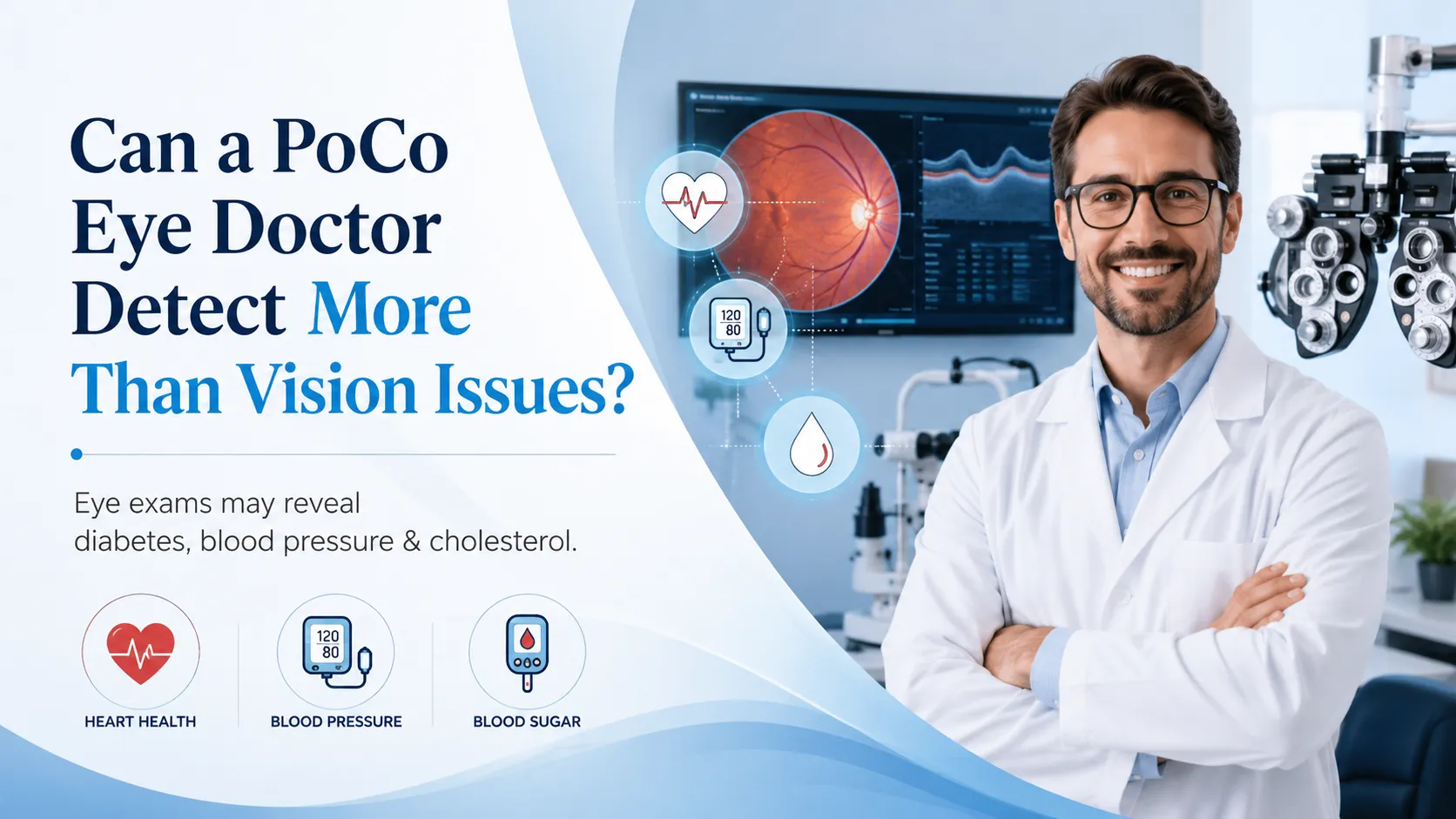

Most people book an eye exam when they notice they are squinting at street signs or struggling to read text on a screen. That is completely normal. But here is something many patients in Port Coquitlam do not realize — your eye exam is about a lot more than just updating your glasses prescription.
A visit to a PoCo eye doctor can actually reveal early warning signs of serious health conditions that have nothing to do with your eyesight. Conditions like diabetes, high blood pressure, and even high cholesterol can all leave visible clues inside your eyes long before you feel any symptoms. That is what makes regular visits to a PoCo eye clinic so valuable — and so important.
Your Eyes Are a Window Into Your Overall Health
Believe it or not, the retina, or the back of your eye, is the only location in the body where a physician can see blood vessels directly without doing any invasive procedures. For a full eye exam, your optometrist will have special equipment which lets them see those tiny blood vessels in the eye in greater detail.
The clues they can find there may indicate much about other areas of your body
Think of it this way. The blood vessels in your retina behave the same way as blood vessels throughout the rest of your body. If something is wrong — whether it is high blood pressure, diabetes, or cardiovascular disease — those changes often show up in the retina first.
This is exactly why your annual appointment at a PoCo eye clinic is not just a vision check. It is a health screening.
What Conditions Can a PoCo Eye Doctor Detect?
Here is a closer look at the health conditions that a thorough eye exam can uncover:
Diabetes
Diabetic retinopathy is a common condition that can be spotted during an eye exam. It is a complication from diabetes. High blood sugar can damage blood vessels in the retina, causing them to swell and leak. Unfortunately, many patients in Port Coquitlam have discovered they have diabetes after looking for an unrelated problem during a visit to the eye doctor.
High Blood Pressure
Constant high blood pressure causes structural changes to blood vessels, including those in the eye. Several changes in blood vessels in the eye, such as a narrowing, or a crossing with a cut, may indicate high blood pressure.
High Cholesterol
High cholesterol has many indicators, including a ring around the cornea or the deposits in the vascular system of the retina. There is a concern about cardiovascular health for those who have the ring, and if they are under 60, and if the deposits are in the system of the retinal vessels.
Thyroid Disease
There can be changes to the appearance of the eye as a result of some thyroid conditions, specifically an overactive thyroid, in which there can be an early diagnosis. Bulging eyes and dry irritated eyes can be caused by an overactive thyroid. These changes can be seen in an exam.
MS and Other Neurological Issues Early neuroinflammation or injury can be detected in the optic nerve, which connects the eye to the brain and can be affected by various disorders including multiple sclerosis. Inflammation of the optic nerve may also indicate an increase of intracranial pressure, and requires immediate attention.
Some Cancers An abnormal tissue growth or tumors can develop as a result of a dilated eye exam. While these events of discovery are rare, they can be incredibly important, as patients commonly have no other relevant clinical symptoms and can be saved by these important referrals
Why Regular Eye Exams Matter More Than You Think
It is easy to skip your eye exam, especially if your vision feels fine. But the conditions listed above are often completely silent in their early stages. You may feel perfectly healthy while changes are already developing inside your eyes.
Visiting a trusted PoCo eye doctor once a year gives you consistent monitoring over time. Your optometrist builds a baseline record of what your eyes look like when you are healthy. That makes it much easier to spot subtle changes from one year to the next.
Port Coquitlam patients with a family history of diabetes, heart disease, or high blood pressure benefit most from these kinds of services. Early detection facilitates early intervention and leads to improved health outcomes.
Who Should Be Visiting a PoCo Eye Clinic Regularly?
The honest answer is everyone. But certain groups have a higher priority for consistent annual exams:
- Children aged 0 to 18 — BC MSP covers one eye exam per year. Vision problems in children can affect learning and development significantly.
- Adults aged 19 to 64 — Even without MSP coverage, annual exams are worth the investment given everything they can detect.
- Seniors aged 65 and over — MSP covers one exam per year. Age-related conditions like glaucoma, cataracts, and macular degeneration become more common after 65.
- Patients with diabetes or high blood pressure — More frequent monitoring may be recommended to track changes in the retina.
- Anyone with a family history of eye disease — Glaucoma and macular degeneration often run in families.
If you live in Port Coquitlam and have not had an eye exam in the past year, now is a good time to book one at your local PoCo eye clinic.
What to Expect During a Comprehensive Eye Exam
A comprehensive exam at a PoCo eye doctor typically takes between 45 minutes and one hour. Here is what the appointment usually involves:
Your optometrist will start by reviewing your medical history and any current symptoms or concerns. They will then test your visual acuity — the standard letter chart test most people are familiar with. After that, they will examine the internal and external structures of your eye, check your eye pressure for signs of glaucoma, and assess how your eyes work together.
For a full assessment of the retina and optic nerve, your optometrist may dilate your pupils using eye drops. This temporarily blurs your vision for a couple of hours but allows a much more thorough view of the back of the eye.
At the end of the exam, your doctor will walk you through the findings and let you know if any follow-up is needed — either for your vision or for any other health concerns that came up during the examination.
FAQ
Q: Can a PoCo eye doctor really detect diabetes during a routine exam?
Yes. Diabetic retinopathy — a complication of diabetes — causes visible changes to the blood vessels at the back of the eye. Many patients in Port Coquitlam have been diagnosed with diabetes following an eye exam, often before they had any other symptoms.
Q: How often should I visit a PoCo eye clinic?
Once a year is the general recommendation for most adults. Children, seniors, and patients with conditions like diabetes may need more frequent visits. Your optometrist will advise you based on your individual health history.
Q: Is my eye exam covered by MSP in BC?
MSP in British Columbia covers one eye exam per year for children aged 0 to 18 and adults aged 65 and over. Adults between 19 and 64 without a qualifying medical condition are not covered under standard MSP and will need to pay out of pocket or use extended health benefits.
Q: What distinguishes an optometrist from an ophthalmologist at a PoCo eye clinic? At a PoCo eye clinic, an optometrist evaluates patients for eye health, prescribes glasses and contacts, and performs ocular and other health screenings. In contrast, an ophthalmologist goes the extra step of pursuing medical school to operate on eyes and treat more advanced eye issues. If your situation is non-advanced and is still considered general, routine eye care, the best and first option in Port Coquitlam is still the optometrist. .
Q: What do I need to do before my eye assessment at a PoCo eye clinic?
Plan to come wearing your current eyewear. You should also bring your BC Care Card and a list of your current medications. If your eyes will be dilated, make arrangements for a driver on your way home, or plan to bring your own sunglasses. Your eyes will be on that day bright for some time.
Book Your Exam at a Trusted PoCo Eye Clinic Today
Your eyes can tell your doctor more than you might expect. From blood pressure and diabetes to neurological conditions and cholesterol, a comprehensive eye exam at a PoCo eye doctor is one of the simplest and most effective ways to stay on top of your overall health.
Do not wait until something feels wrong. Book your annual eye exam at a trusted PoCo eye clinic in Port Coquitlam and give yourself the benefit of early detection, clear vision, and peace of mind.
























Sign in to leave a comment.