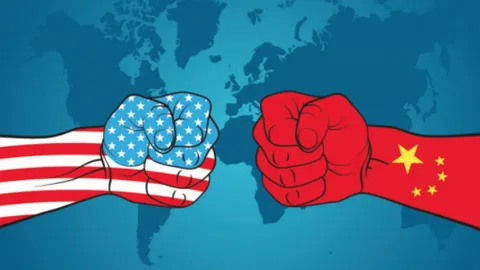

The global balance of power is shifting fast, and nowhere is this change more visible than in the Indo-Pacific region. As the U.S.-China rivalry deepens, two close neighbors Australia and New Zealand find themselves balancing between economic dependency on China and strategic alignment with the United States. Their long-standing friendship, often referred to as the Australia New Zealand relations, faces new tests as great-power tensions reshape the regional order.
A Delicate Balancing Act
Both countries have built their prosperity on open trade and stable regional ties. Yet, growing friction between Washington and Beijing has created new pressure points.
For Australia, the choice appears clearer. Through the AUKUS pact with the U.S. and the U.K., Canberra has strengthened defense cooperation to counter Beijing’s assertiveness in the South China Sea and beyond.
New Zealand, by contrast, adopts a softer tone. Wellington emphasizes diplomacy and dialogue while maintaining close economic links with China. This careful neutrality defines its foreign policy identity but also exposes it to criticism from Western partners who want a firmer stance.
U.S.-China Rivalry: The Defining Contest
The U.S.-China rivalry has become the defining struggle of the 21st century. What began as competition over trade and technology has expanded into a geopolitical contest across the Indo-Pacific. Washington champions a “free and open Indo-Pacific,” while Beijing advances its Belt and Road Initiative and increases its military presence in regional waters.
For smaller or “middle powers” like Australia and New Zealand, this rivalry poses a dilemma. Both depend on China for trade from minerals and food exports to tourism and education but rely on U.S. security partnerships for protection and intelligence sharing.
Indo-Pacific Security and the Role of Middle Powers
The Indo-Pacific security environment is more complex than ever. It includes flashpoints such as Taiwan, the South China Sea, and the Korean Peninsula. Maintaining peace in these waters is vital, as one-third of global trade passes through the region.
Australia and New Zealand share a vision of a “peaceful, stable, and rules-based Indo-Pacific.” At the 2025 leaders’ meeting, both nations reaffirmed their commitment to sovereignty, transparency, and freedom from coercion. Their joint actions from climate resilience programs to maritime cooperation show how middle powers can shape the region’s future despite limited military strength.
The Economic Connection Between Australia and New Zealand
Strong Australia New Zealand relations are central to both countries’ ability to adapt to global change. The Trans-Tasman alliance and Single Economic Market (SEM) frameworks allow them to coordinate standards, trade, and digital policy. These efforts not only deepen integration but also create economic resilience amid global uncertainty.
However, the U.S.-China tariff disputes continue to affect their economies. Both nations are under pressure to “choose sides” but doing so could damage vital trade ties or security guarantees.
Can Neutrality Survive the Great Power Divide?
The challenge for Canberra and Wellington is long-term. The U.S.-China rivalry is unlikely to ease soon, and as global tensions rise, neutrality may become harder to maintain. For now, both countries emphasize practicality: cooperate with allies where possible, but protect national interests above all else.
Their success will depend on smart diplomacy, sustained Indo-Pacific security engagement, and strengthening Australia New Zealand relations in ways that reinforce economic independence without alienating major powers.
As the world edges toward multipolarity, the choices made by these two middle powers will influence not only the Indo-Pacific balance but also the future of global stability. The real question is: Can Australia and New Zealand stay neutral when the superpowers refuse to stand still?






























Sign in to leave a comment.