
Skin Cancer is one of the most common cancers, and 1 in every 5 Americans falls victim to it after 70 years of age. Studies also show that in the USA, 1-2 people die of Skin cancer every hour. However, due to the evolution in gene therapy, skin cancer can now be healed to certain extent by the application of recombinant DNA technology.
Many chief pharma and biotech companies are working continuously to create gene therapies for treating dermatology diseases. These companies include - Castle Creek Biosciences, Krystal Biotech, Almirall, Abeona Therapeutics, Tyris Therapeutics, Fibrocell Science, Sterna Biologicals, Amryt Pharma, Temprian Therapeutics, Holostem Terapie, Avita Medical, Azitra, Novartis, and several others.
The development of Gene Therapies in Dermatology is an exciting and promising subject to look towards
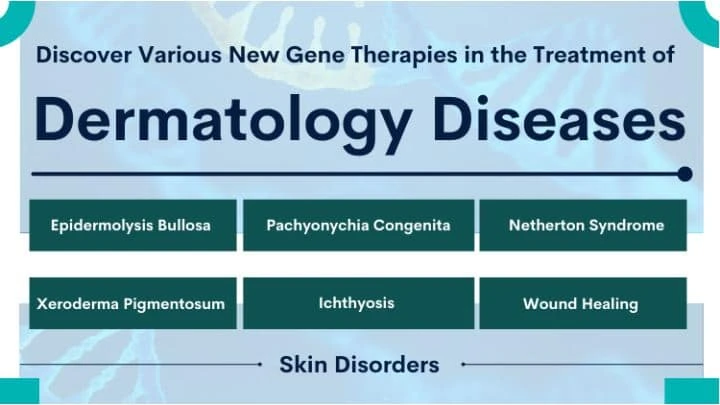
Gene therapy is considered highly important for treating hereditary dermatological disorders like Epidermolysis bullosa and its 3 subtypes - Dystrophic epidermolysis bullosa (DEB), Epidermolysis bullosa simplex (EBS), and Junctional epidermolysis bullosa (JEB). Other rare dermatological conditions include Netherton Syndrome, Sjogren-Larson syndrome, Pachyonychia congenita, Ichthyosis, Xeroderma pigmentosum, Porphyra, etc. These atypical genetic skin illnesses cause blisters, severe lesions, and rashes on the skin. With Gene correction techniques, these damaged genes are targeted to alter the already existing gene expression and replace them with the healthy alternative.
Genetic Engineering can also treat dermatological conditions that do not involve genetic mutation at all, such as burns and wounds. Gene therapy offers valuable healing options for conditions like diabetic ulcers, refractory burn wounds, vascular ulcers.
Upgrades in healthcare have changed many lives for the good, and one of the most remarkable changes has been brought by gene therapy. Usually, in Gene Therapy, an individual’s gene is modified to cure a disease that is often rare or a type of autoimmune disorder. A genetic impairment does not always lead to an autoimmune disorder; sometimes, it further affects the epidermis and the dermis. Prior to this, rare skin diseases were considered impossible to heal, but the new developments in genetic therapeutics have given rise to new possibilities. Since the skin is superficial, easily manipulatable, and a versatile organ, it is one of the easiest targets for gene therapy.





























Sign in to leave a comment.