

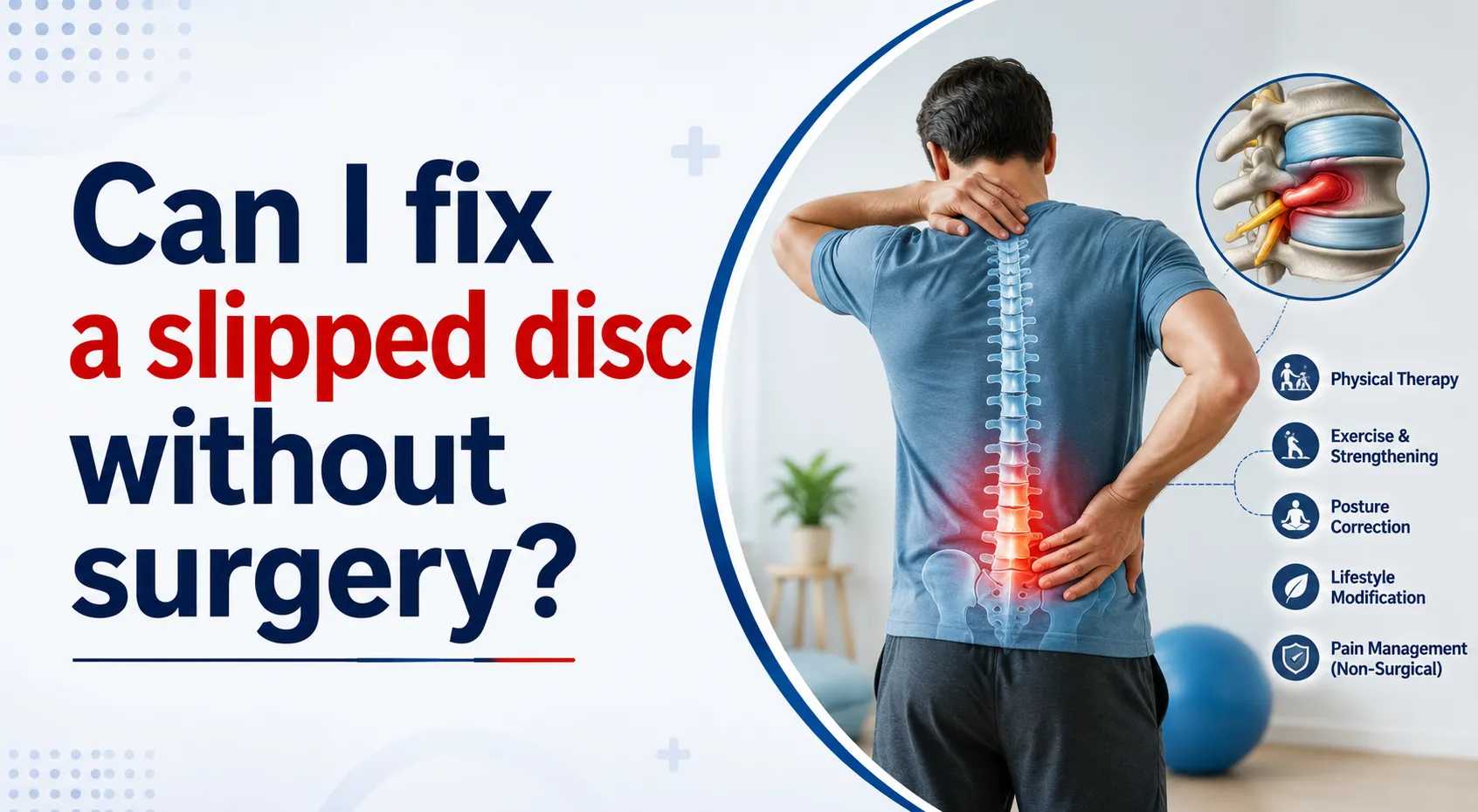
A slipped disc — also called a herniated or prolapsed disc — can cause anything from mild discomfort to sharp, radiating pain down the leg or arm. Naturally, most people's first question isn't about surgery — it's "Is there a slipped disc treatment without surgery?" The good news is that for the vast majority of patients, the answer is yes.
In this blog, we'll walk through the most effective non-surgical approaches, when they work best, and how to know if it's time to consider treatment for slipped disc beyond conservative care.
Can Most Slipped Discs Heal Without Surgery?
Yes — in most cases, a slipped disc improves on its own within a few weeks with the right conservative care. The body has a natural ability to reabsorb part of the herniated disc material over time, and combined with the right treatment approach, most people see their symptoms significantly ease without ever needing an operation. Surgery is generally considered only when non-surgical options fail to provide relief, or when there are signs of serious nerve compression.
Non-Surgical Slipped Disc Treatment: What Actually Works
There isn't a single fix — effective non-surgical slipped disc treatment usually combines a few different approaches, tailored to how severe the symptoms are.
1. Rest and Activity Modification
A short period of reduced activity, along with avoiding movements that worsen the pain (like heavy lifting or prolonged sitting), can allow the initial inflammation to settle. That said, complete bed rest for long periods isn't recommended, as gentle movement actually helps recovery.
2. Physical Therapy
Physical therapy is one of the most effective components of how to treat slipped disc pain. A physiotherapist can guide you through targeted exercises that:
- Strengthen the core and back muscles supporting the spine
- Improve posture and reduce pressure on the affected nerve
- Increase flexibility and range of motion over time
3. Medications
Pain and inflammation are typically managed with:
- Over-the-counter or prescription anti-inflammatory medications
- Muscle relaxants, if muscle spasms are contributing to the pain
- Short courses of oral steroids in some cases, to reduce nerve inflammation
4. Epidural Steroid Injections
For patients whose pain doesn't fully respond to medication and physical therapy alone, an epidural steroid injection can be a highly effective next step. This involves injecting anti-inflammatory medication directly near the affected nerve root, often providing noticeable relief within a few days that can last weeks to months — giving patients a window to progress further with physical therapy.
5. Complementary Approaches
Techniques like heat and ice therapy, gentle traction, and manual therapy (mobilization) are sometimes used alongside the above to support overall recovery, though their effectiveness can vary from person to person.
Slipped Disc Recovery Without Surgery: What's a Realistic Timeline?
Every case is different, but for many patients, meaningful slipped disc recovery without surgery happens within about six weeks. Some people notice improvement much sooner, especially with early physical therapy, while others with more significant disc herniation may take a few months to feel fully back to normal.
Consistency matters here — sticking with prescribed exercises and activity guidelines, even after the pain starts improving, helps prevent the problem from recurring.
For a proper evaluation of your specific case, including imaging to understand the exact location and severity of the disc herniation, it's worth consulting an experienced Neurosurgeon in Jaipur, who can guide you toward the most appropriate non-surgical plan — or advise if surgery genuinely is the better option for your situation.
When Is Surgery Actually Necessary?
While most slipped discs respond well to conservative treatment, surgery becomes necessary in certain situations:
- Severe leg or arm weakness that's progressively getting worse
- Loss of bladder or bowel control (a rare but serious emergency known as cauda equina syndrome)
- Pain that hasn't improved despite several weeks or months of consistent non-surgical treatment
- Significant nerve compression confirmed on imaging that's affecting daily function
If you notice any of the emergency symptoms above — particularly bladder or bowel changes along with leg weakness — this needs immediate medical attention, not a wait-and-see approach.
Making the Right Decision
Every slipped disc case is different, which is why self-diagnosing or relying solely on generic advice online isn't ideal. A proper clinical evaluation, often supported by an MRI, helps determine whether conservative care is likely to work for you or whether slip disc surgery in Jaipur should be considered — and if so, which surgical approach would be most effective and least invasive for your specific condition.
Conclusion
For the majority of people, a slipped disc can genuinely be treated without surgery — through a combination of rest, physical therapy, medication, and, if needed, epidural injections. Surgery remains an option for the smaller number of cases where conservative treatment doesn't bring relief or where nerve compression is severe. The key is getting an accurate diagnosis early and following a structured, consistent treatment plan under proper medical guidance.
(Disclaimer: This blog is for general informational purposes only and is not a substitute for professional medical advice. Please consult a qualified specialist for a diagnosis and treatment plan suited to your specific condition.)





















Sign in to leave a comment.