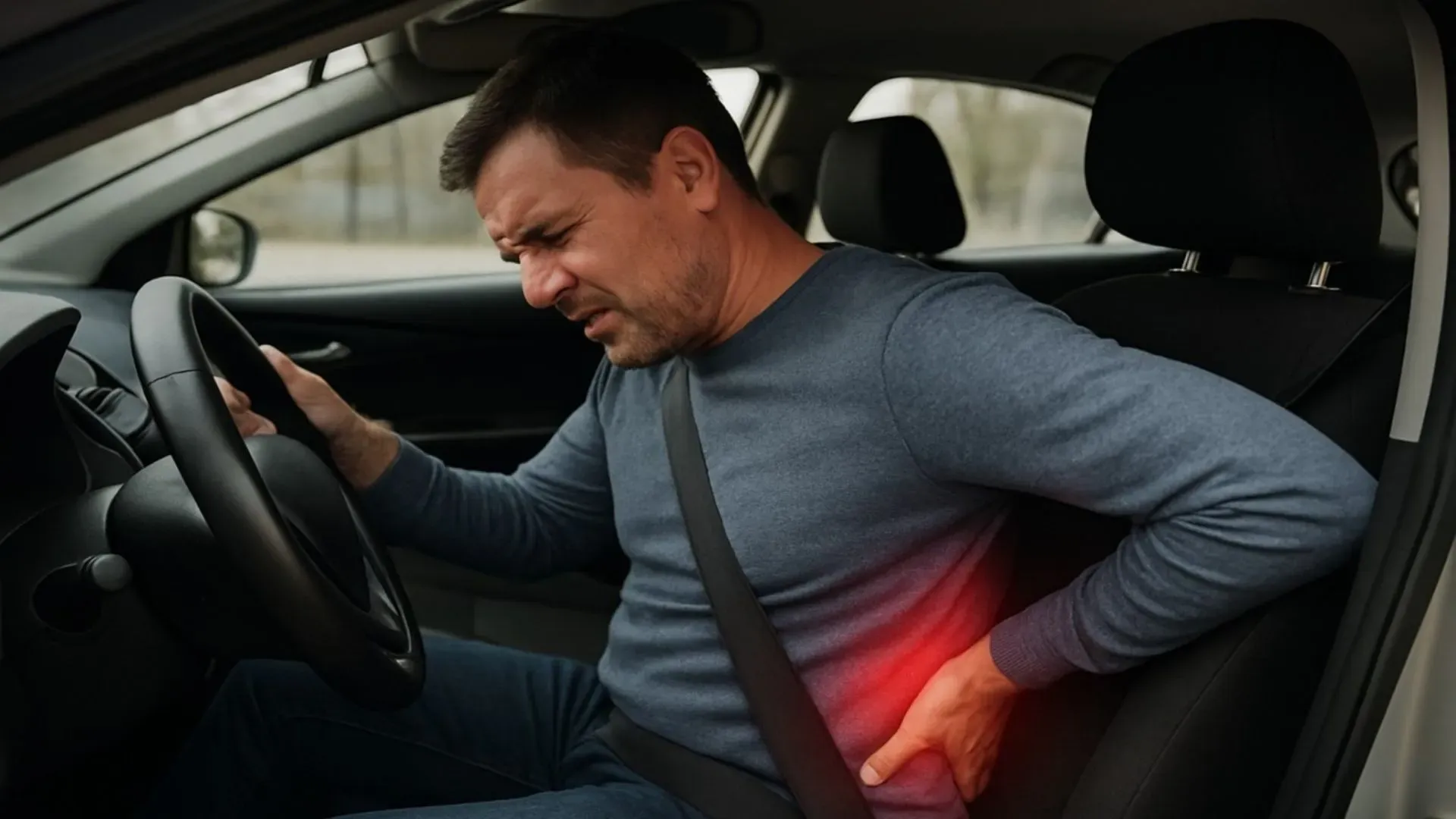

Car accident back pain is lower or upper back discomfort after a crash, often from muscle strain, ligament sprain, disc injury, or joint irritation. Most cases improve with early movement, gentle care, and professional evaluation. Seek urgent help for leg weakness, numbness, or bladder/bowel changes.
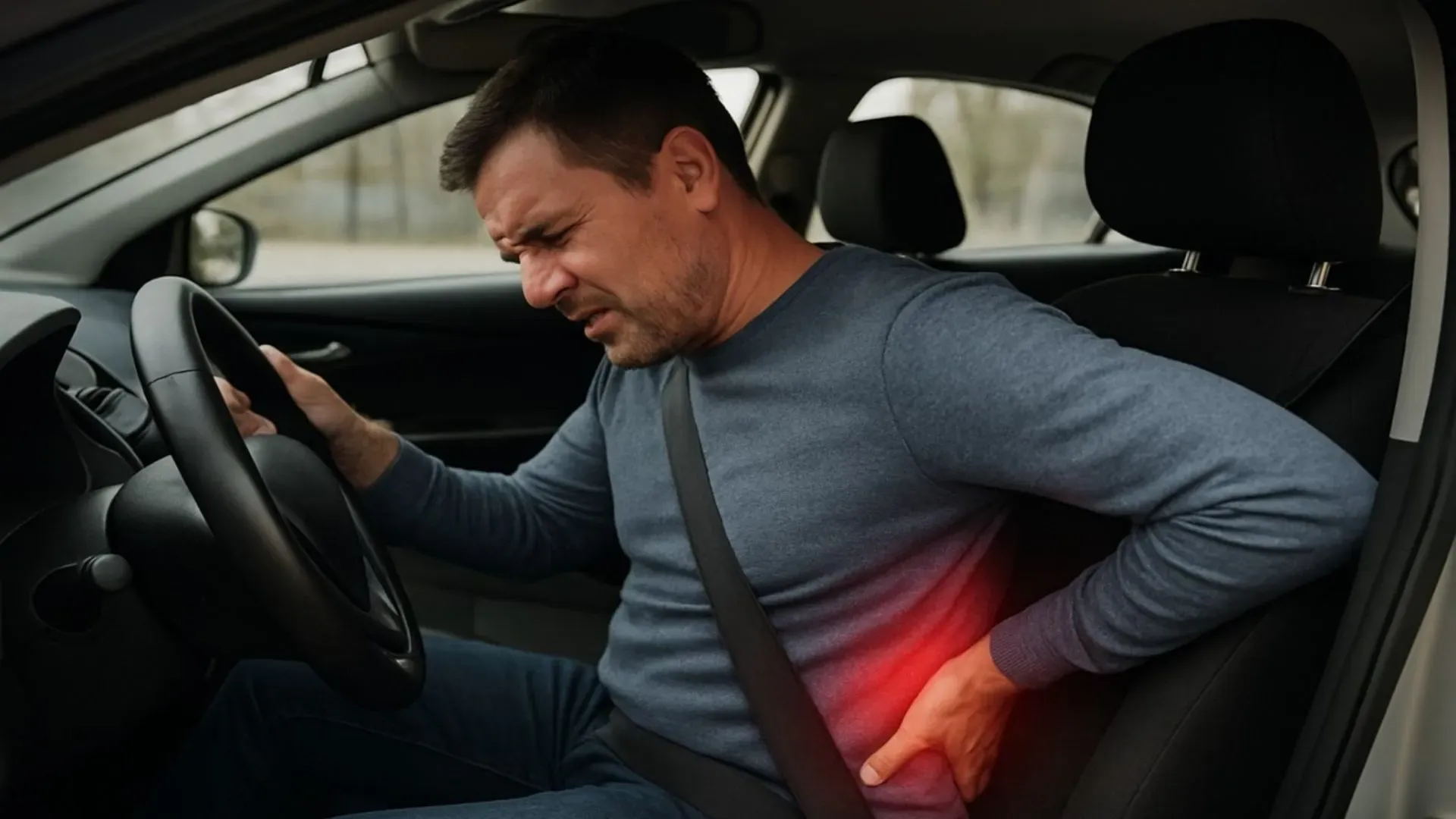
What is car accident back pain?
Car accident back pain describes any new or worsened back discomfort that starts after a motor vehicle collision. It can appear immediately or show up 24–72 hours later as inflammation builds. In our experience with Southfield auto injury patients, the most common sources are soft-tissue strains, ligament sprains, facet joint irritation, and disc-related issues.
The lumbar, or lower spine, takes significant force during sudden stops, rear-end impacts, or side collisions. Even minor fender-benders can overstretch muscles and ligaments, compress discs, or inflame small spinal joints. While many cases resolve within weeks, some may become persistent without appropriate care. For a more detailed overview, read this guide to car accident back pain.
Common Causes of Back Pain After an Auto Accident
Back pain after an auto accident can result from several different injury types. The force of a crash may strain muscles, affect ligaments, irritate spinal joints, or contribute to disc-related problems.
Lumbar strain or sprain: Overstretching or small tears in lower back muscles and ligaments can cause localized aching, stiffness, and muscle spasms. Pain commonly stays in the back without traveling down the leg.
Herniated or bulging disc: An impact may affect spinal discs and irritate nearby nerves. Symptoms may include sharp or shooting pain into the buttock or leg, numbness, tingling, or weakness.
Facet joint injury: Small joints in the back of the spine may become irritated after sudden movement during a crash. Pain may worsen when leaning backward or twisting.
Compression fracture: High-energy impacts may cause fractures in the vertebrae, particularly in people with osteoporosis or other risk factors. These injuries require medical evaluation.
SI joint dysfunction: The sacroiliac joint may become irritated after a collision, contributing to pain around one side of the lower back or buttock.
Understanding the likely source of pain helps healthcare professionals determine appropriate treatment and rehabilitation options.
Symptoms to Watch for After a Crash
Symptoms vary depending on the injury but commonly include pain, stiffness, and restricted movement.
Common symptoms include:
- Localized aching or tenderness
- Stiffness and reduced range of motion
- Muscle spasms
- Radiating pain into the buttock or leg
- Numbness or tingling
- Leg weakness
- Pain that worsens with sitting or bending
- Pain when leaning backward or twisting
Seek urgent medical attention for loss of bladder or bowel control, progressive leg weakness, numbness around the groin or saddle area, severe unrelenting pain, inability to walk, or other serious neurological symptoms.
When to See a Doctor for Car Crash Back Pain
Early evaluation after an accident can help identify injuries, rule out serious problems, and create an appropriate recovery plan.
Consider professional evaluation when:
- Pain interferes with sleep, work, or normal activities
- Stiffness limits bending, standing, or walking
- Numbness or tingling develops in the legs or feet
- Pain travels below the knee
- Symptoms become worse instead of improving
- You have a history of osteoporosis, cancer, or long-term steroid use
Go to an emergency department immediately after severe trauma or if you experience loss of bladder or bowel control, progressive neurological symptoms, or difficulty walking.
Diagnosis: What to Expect
An evaluation typically begins with a discussion about how the crash happened, when symptoms began, previous back problems, and how the pain affects daily activities.
A physical examination may include:
History: The healthcare professional may ask about the type of collision, symptom onset, previous injuries, and current medications.
Physical examination: This may include checking tenderness, range of motion, reflexes, muscle strength, sensation, and other neurological signs.
Imaging: X-rays or MRI scans may be considered depending on the severity of the accident, symptoms, and examination findings.
Not every case of back pain requires immediate imaging. The appropriate approach depends on the individual patient's symptoms and clinical findings.
Treatment Options
Treatment depends on the type and severity of the injury. Many patients begin with conservative approaches aimed at controlling discomfort and restoring normal movement.
Immediate Self-Care
Relative rest: Temporarily avoid heavy lifting, twisting, or high-impact activities while maintaining gentle movement when appropriate.
Ice and heat: Cold or heat may be recommended depending on the injury and stage of recovery.
Pain relief: Over-the-counter medications may help some patients when medically appropriate.
Gentle mobility: Walking and light movement may help prevent excessive stiffness.
Professional Care Pathways
Professional treatment varies depending on the diagnosis.
Chiropractic adjustments: Chiropractic care may be used for appropriate musculoskeletal conditions to address joint movement, stiffness, and related muscle tension.
Physical therapy: Rehabilitation may include core strengthening, mobility work, gradual loading, and exercises designed to restore function.
Medication management: A healthcare professional may recommend or prescribe medication when appropriate.
Injections: Certain persistent nerve or joint-related symptoms may require further medical evaluation and interventional treatment.
Surgery: Surgery is generally reserved for serious structural injuries or neurological problems when conservative approaches are not appropriate or have not been successful.
How Chiropractic Care May Help After Auto Injuries
Chiropractic care focuses on musculoskeletal function, joint movement, muscle tension, and movement patterns that may contribute to ongoing discomfort.
Treatment may involve:
- Spinal manipulation or mobilization
- Soft-tissue techniques
- Therapeutic exercises
- Mobility guidance
- Ergonomic recommendations
- Gradual return-to-activity planning
Patients seeking accident-focused evaluation can learn more about working with an Auto Accident Chiropractor in Southfield, MI at Core Chiropractic Center and Rehab.
Common Mistakes That May Delay Recovery
Certain habits can make recovery more difficult.
Prolonged inactivity: Staying inactive for too long may contribute to stiffness and deconditioning.
Ignoring neurological symptoms: Numbness, weakness, or radiating pain should be evaluated promptly.
Returning to heavy activity too soon: Lifting or strenuous activity before the body is ready may aggravate symptoms.
Skipping follow-up care: Follow-up evaluation can help determine whether recovery is progressing as expected.
Depending only on pain medication: Pain relief may help symptoms, but restoring movement and function may also require rehabilitation.
Recovery Timelines and What to Expect
Recovery time varies depending on the injury.
Muscle strains and ligament sprains may improve over several weeks, while disc-related or nerve symptoms can require a longer recovery period. More significant injuries may need structured rehabilitation or medical management.
It is also normal for symptoms to fluctuate during recovery. Some days may feel better than others. Gradually increasing activity, getting appropriate rest, and following professional recommendations can support recovery.
If pain continues to worsen, new neurological symptoms appear, or progress stops, additional evaluation may be appropriate.
Frequently Asked Questions About Car Accident Back Pain
How long does back pain last after a car accident?
Recovery time varies according to the type and severity of the injury. Muscle strains or ligament sprains may improve within several weeks, while disc-related or nerve symptoms may take longer.
Is it normal to have lower back pain from a car crash days later?
Back pain may not always appear immediately after an accident. Some people notice stiffness, soreness, or other symptoms hours or days after a collision.
When should I go to the ER for back pain after a crash?
Seek emergency care for loss of bladder or bowel control, progressive leg weakness, numbness around the groin or saddle area, inability to walk, severe trauma, or intense and worsening symptoms.
Can a minor fender-bender cause a back injury?
Even relatively low-speed collisions can place sudden force on muscles, ligaments, joints, and discs. Persistent symptoms should be evaluated regardless of the amount of visible vehicle damage.
What can help lower back pain after a car accident at home?
Depending on the injury, temporary activity modification, gentle movement, appropriate use of ice or heat, and medically safe pain-relief options may help. Persistent or worsening symptoms should be professionally evaluated.
Do I need an X-ray or MRI?
Not every patient needs immediate imaging. Healthcare professionals usually consider the accident mechanism, symptoms, neurological findings, and other risk factors before deciding whether X-rays or MRI scans are appropriate.
How soon should I seek chiropractic care after a car accident?
If you develop persistent back pain, stiffness, or difficulty moving after an accident, consider getting evaluated rather than waiting for symptoms to become more severe. The appropriate treatment plan depends on the type of injury.
Can back pain after a crash become chronic?
Some accident-related back problems can persist, particularly when there are disc, joint, nerve, or significant soft-tissue injuries. Proper evaluation and a structured recovery plan may help address ongoing symptoms.
Final Thoughts
Back pain after a car accident can range from temporary muscle soreness to more significant spinal or nerve-related injuries. Paying attention to symptoms and seeking appropriate evaluation when pain persists or warning signs develop can help determine the right next steps.
Core Chiropractic Center and Rehab in Southfield, Michigan provides chiropractic and rehabilitation care for patients dealing with musculoskeletal pain and injuries after auto accidents.
This article is provided for general educational purposes and should not replace individualized medical advice, diagnosis, or emergency care.

























Sign in to leave a comment.