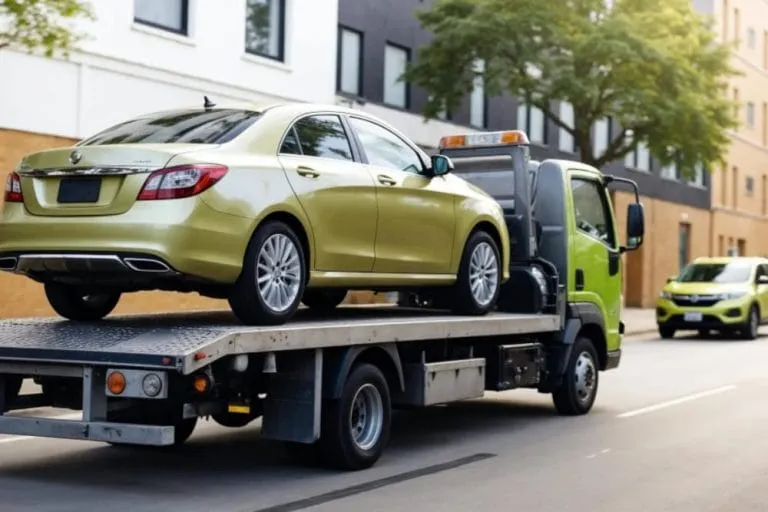

A breakdown rarely happens at a convenient time. Whether you're stuck on the M42 during rush hour, stranded on Stratford Road after the engine cuts out, or sitting in a Solihull retail park car park with a flat battery, the questions are always the same: who do you call, how long will they take, and what will it cost?
This guide walks through everything you need to know about breakdown recovery in Solihull — how the service actually works, what affects response times locally, how pricing is usually structured, and how to choose a recovery provider you can trust when you're not in a position to shop around carefully.
What Breakdown Recovery Actually Covers
Breakdown recovery isn't a single service. It's a set of related services that get triggered depending on what's gone wrong with your car:
- Roadside assistance – a mechanic attends and tries to fix the issue on the spot (jump-starting a battery, changing a wheel, sorting a minor fault).
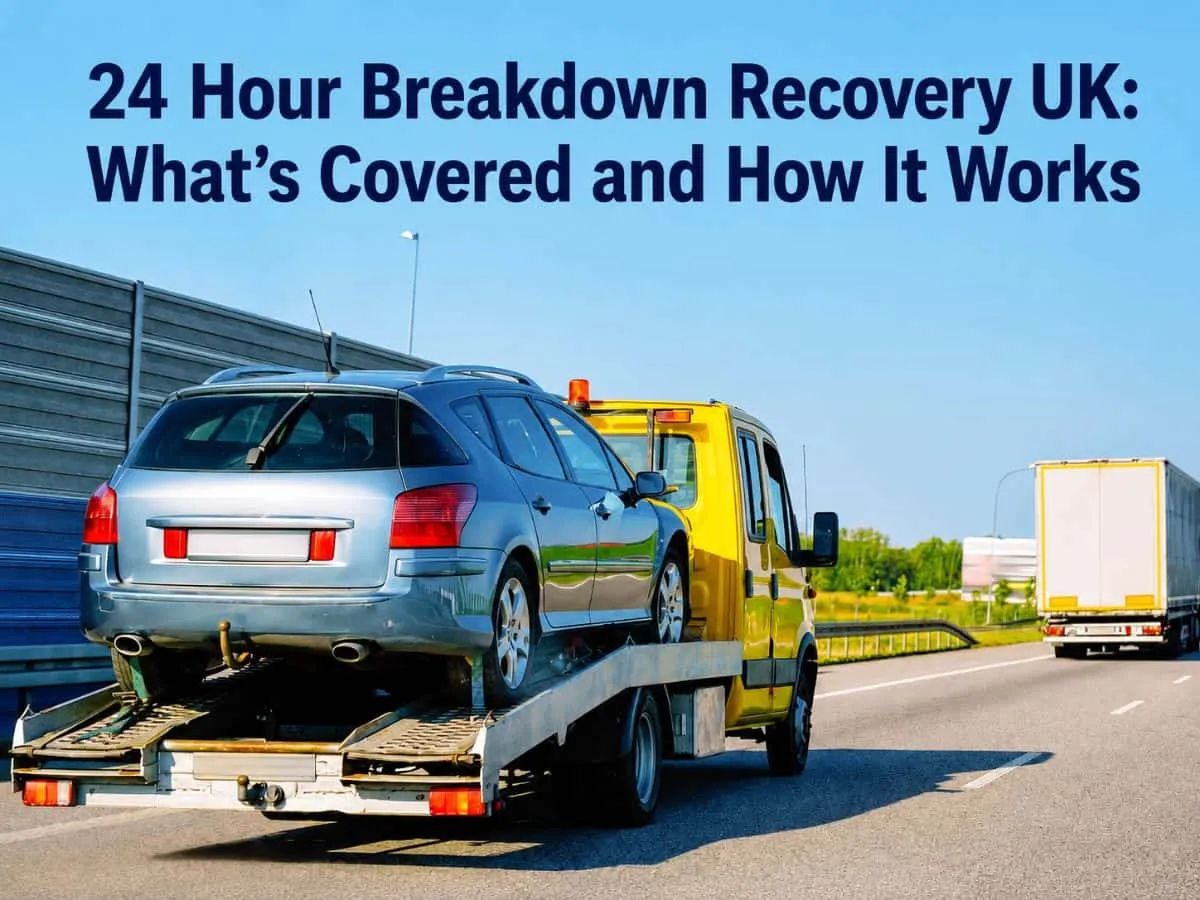
- Vehicle recovery – if the car can't be fixed roadside, it gets loaded onto a flatbed or towed to a garage, home address, or another location you choose.
- Home start – cover for breakdowns that happen at your own house or driveway, not just on the road.
- National recovery – transport for both you and the vehicle if the breakdown happens away from your local area, sometimes as far as anywhere in the UK.
Most Solihull-based recovery firms and national breakdown providers offer some combination of these, though the exact mix depends on your membership level or the type of call-out you book.
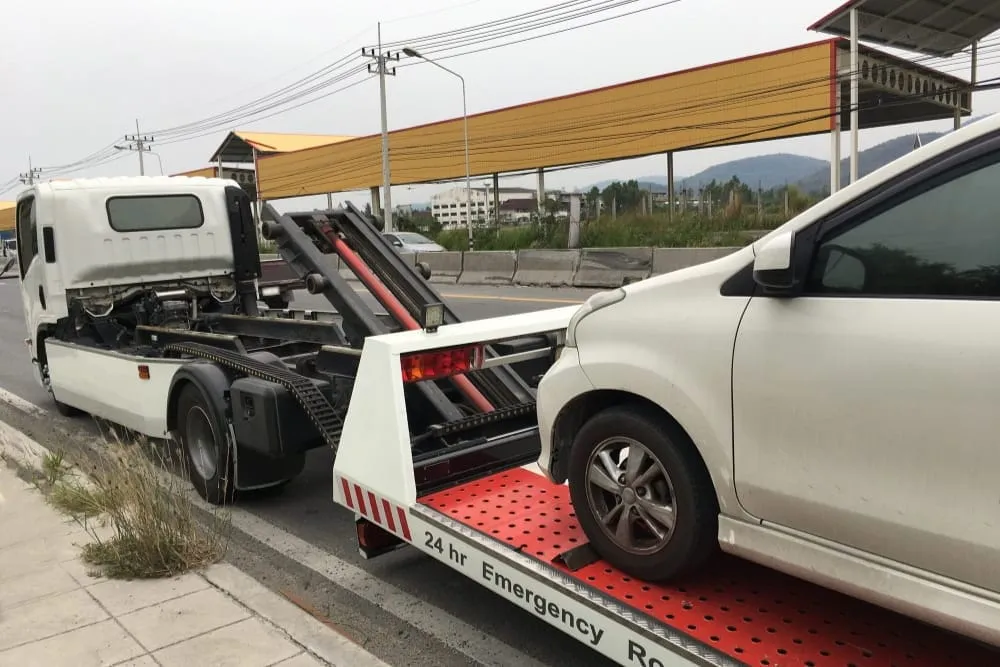
Common Breakdown Causes Around Solihull
Local recovery operators tend to see a consistent pattern of call-outs, and knowing the usual culprits can help you spot trouble before it strands you completely.
Flat or Failing Batteries
Cold mornings are the biggest trigger, particularly around the residential streets of Dorridge, Shirley, and Knowle, where short commutes and stop-start driving don't give batteries much chance to recharge properly.
Tyre Damage on the Motorway Network
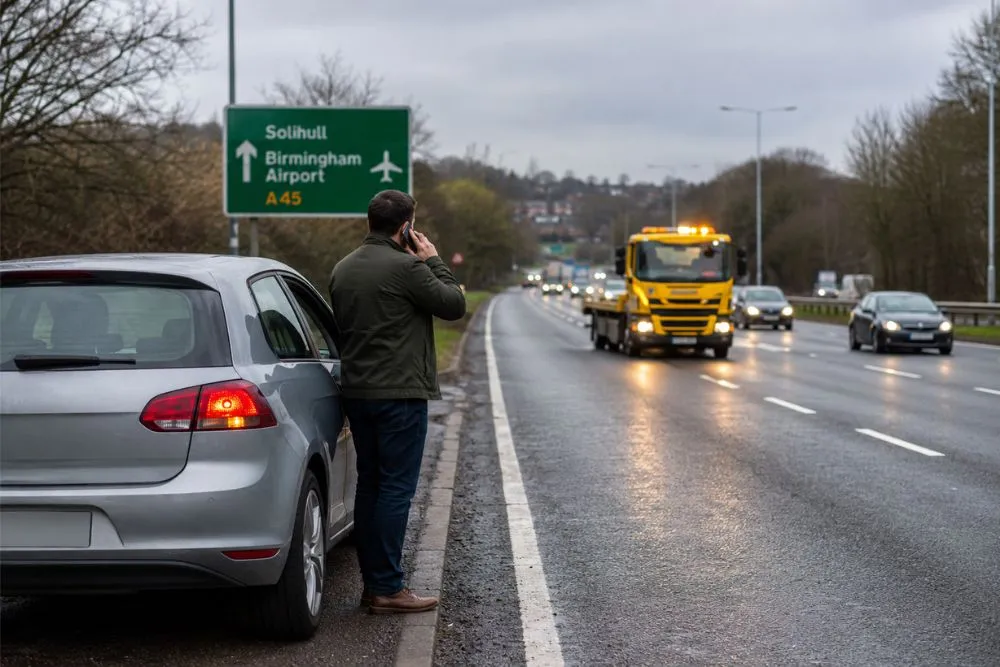
Solihull sits close to the M42 and M40, and drivers often pick up punctures or blowouts from debris at motorway speed. These call-outs need a rapid response because a vehicle stopped on a hard shoulder or live lane is a genuine safety risk.
Overheating in Traffic
The Stratford Road and Warwick Road corridors see heavy traffic at peak times, and cars with an ageing cooling system are more likely to overheat while queuing.
Fuel and Electrical Faults
Running low on fuel, a blocked fuel filter, or an electrical fault warning light are all regular reasons for a breakdown call, especially in older vehicles that haven't had a recent service.
Recognising these patterns matters because a bit of routine maintenance — checking tyre tread, testing the battery before winter, keeping coolant topped up — genuinely reduces your chances of needing recovery in the first place.
What Determines Response Time in Solihull
Not every breakdown gets the same priority, and response times vary for reasons worth understanding.
| Factor | Effect on Response Time |
|---|---|
| Location on a motorway hard shoulder | Fastest response, treated as high priority for safety reasons |
| Breakdown in a residential area | Standard response, usually within the stated window of your provider |
| Time of day | Rush hour and late evening call-outs can take longer due to traffic and reduced staffing |
| Weather conditions | Icy mornings and storms increase call volume, which can stretch waiting times |
| Vehicle accessibility | Cars in narrow streets, car parks with barriers, or private land may need extra time to reach |
If you're on a motorway, always pull as far onto the hard shoulder as possible, put your hazard lights on, and get out of the vehicle on the passenger side if it's safe to do so while you wait.
Choosing a Recovery Provider: What Actually Matters
There's no shortage of options when searching for recovery cover near Solihull, from independent local operators to the large national breakdown organisations. A few things genuinely make a difference to your experience:
- Response time guarantees: Ask what the stated average call-out time is, not just the headline promise. Independent recovery firms based in or near Solihull can sometimes reach you faster than a national dispatcher routing the nearest available driver.
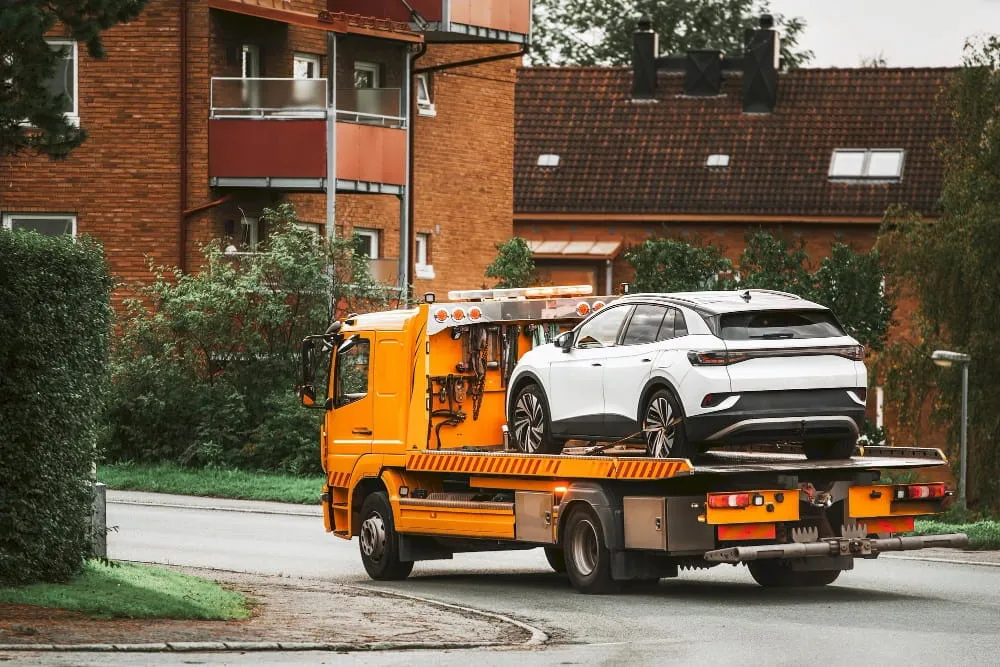
- Vehicle suitability: Not every recovery vehicle can handle every car. If you drive something larger, an EV, or a vehicle with low ground clearance, confirm the provider has the right equipment before you need it.
- Transparent pricing: A trustworthy provider tells you the call-out fee, the mileage rate for towing beyond a set distance, and any extra charges for night-time or weekend call-outs, before you agree to the job.
- Coverage type: Some policies only cover breakdowns more than a set distance from home (often a quarter mile), which catches people out when their car won't start on their own driveway.
- Reviews from local drivers: Genuine, specific feedback — mentioning actual wait times, the condition the car arrived in, or how the driver communicated — tells you more than a generic star rating.
Typical Costs for Breakdown Recovery
Costs vary depending on whether you're paying for a one-off call-out or you hold an annual membership. As a general guide:
- Pay-as-you-go call-outs for roadside assistance without a membership tend to cost more overall than an annual plan, especially if the car needs towing rather than a roadside fix.
- Annual breakdown cover through a national provider usually works out cheaper per incident if you expect to need help more than once a year, and often bundles in home start and onward travel.
- Local independent recovery can be a sensible option for a single, unplanned breakdown, particularly if you already know a trusted garage in the area and want the car taken straight there.
It's worth comparing the total cost of a year's membership against what you'd realistically pay for two or three individual call-outs, since that comparison usually makes the right choice fairly obvious.
What to Do While You Wait
A breakdown is stressful, but a calm, methodical approach keeps you safer and helps the recovery team do their job faster.
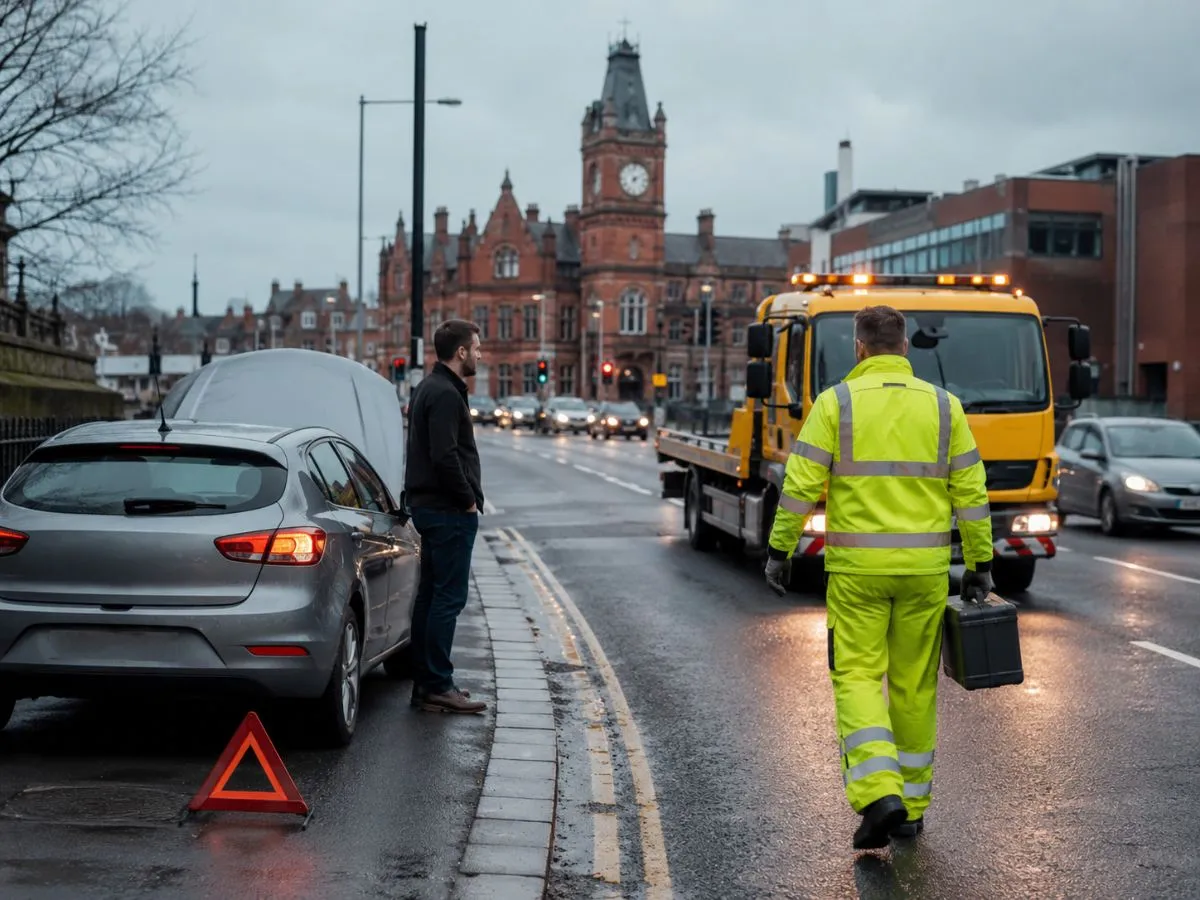
- Move the vehicle to a safe position if you can do so without risk.
- Switch on hazard lights so other drivers can see you clearly.
- If you're on a motorway, exit the vehicle from the passenger side and stand behind the barrier, away from traffic.
- Call your recovery provider and give an accurate location — a postcode, junction number, or nearby landmark helps enormously.
- Keep your phone charged if possible, and stay somewhere visible so the recovery driver can find you.
- Have your membership number or vehicle registration ready before you call, as this speeds up the booking process.
Key Takeaways
- Breakdown recovery covers roadside fixes, towing, home start, and onward travel, and not every policy includes all four.
- Flat batteries, tyre damage on the motorway network, overheating in traffic, and fuel or electrical faults are the most common causes of breakdowns reported around Solihull.
- Motorway breakdowns get priority response for safety reasons; residential breakdowns follow standard response windows.
- Compare the total annual cost of membership against likely pay-as-you-go call-out costs before deciding which suits you.
- Stay safe while waiting: hazard lights on, stand well away from moving traffic, and have your location and registration ready when you call.
Frequently Asked Questions
Q: How quickly can a recovery vehicle reach me in Solihull?
A: Response times depend on your location and the provider, but many local and national services aim for 30 to 60 minutes for standard call-outs, with faster priority response for motorway breakdowns.
Q: Does breakdown cover include towing to my home?
A: Most standard policies include towing to a garage of your choice or your home address within a set mileage. Beyond that distance, additional charges usually apply unless you hold a higher-tier membership.
Q: Can I get recovery without an annual membership?
A: Yes. Many local recovery firms and some national providers offer single-use, pay-on-the-day call-outs, though the cost per incident is generally higher than an annual plan.
Q: What happens if my car can't be fixed at the roadside?
A: The recovery driver loads it onto a flatbed or tows it to a garage, your home, or another agreed location, depending on what your cover allows.
Q: Is breakdown recovery different for electric vehicles?
A: EVs sometimes need specific recovery equipment, particularly for vehicles that can't be towed conventionally due to their drivetrain. Confirm with your provider that they can handle electric or hybrid vehicles before you need the service.
Q: Should I choose a local Solihull recovery firm or a national provider?
A: A local firm can sometimes respond faster within the immediate area and may have closer relationships with nearby garages. A national provider offers wider coverage if you regularly drive further afield. Many drivers use a national membership for everyday cover and keep a local recovery number saved as a backup.


























Sign in to leave a comment.