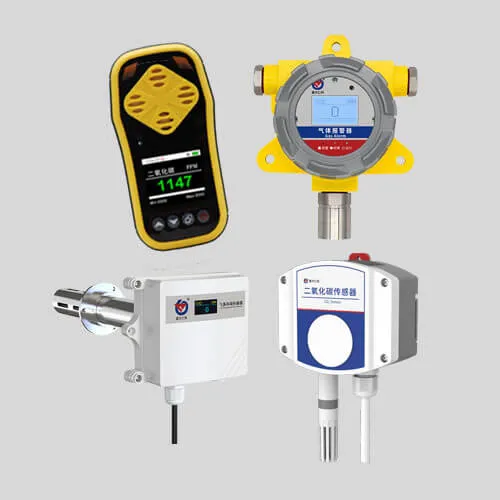

With the multiple demands of industrial safety, indoor living health, and increased agricultural production, carbon dioxide sensors (CO2 detectors/CO2 transmitters) have become core sensing devices for environmental monitoring. Excessive carbon dioxide can cause oxygen deficiency and suffocation, greenhouse gas emissions exceeding standards, reduced crop yields in greenhouses, and the risk of explosions in confined spaces. Traditional manual sampling and testing is slow and cannot be monitored 24/7. Carbon dioxide sensors, relying on NDIR infrared detection technology, achieve continuous, all-weather concentration monitoring and automatic alarms for exceeding standards, providing accurate data support for enterprise safety production, carbon emission accounting, building ventilation automation, and increased agricultural production.
Carbon Dioxide Sensor Detection Principles and Core Classifications
NDIR Infrared Detection Core Principles
Currently, mainstream high-precision carbon dioxide sensors all use non-dispersive infrared (NDIR) technology, calculating concentration based on the absorption characteristics of carbon dioxide gas to specific wavelengths of infrared light. The device incorporates an infrared light source, optical gas chamber, and photoelectric detector, making it unaffected by cross-contamination from water vapor, VOCs, and other impurities. Compared to electrochemical and semiconductor sensors, it boasts core advantages such as high accuracy, minimal zero-point drift, a lifespan of 5-15 years, and strong long-term stability, making it the preferred solution for industrial, agricultural, and environmental applications.
Two Product Types:
Portable Handheld Carbon Dioxide Detector:Battery powered, portable and compact, featuring a high-definition color screen, three-level alarm (audio, visual, and vibration), supporting on-site inspections and temporary monitoring in confined spaces. It can store tens of thousands of historical data points and is suitable for safety inspections, construction site confined spaces, and greenhouse surveys.
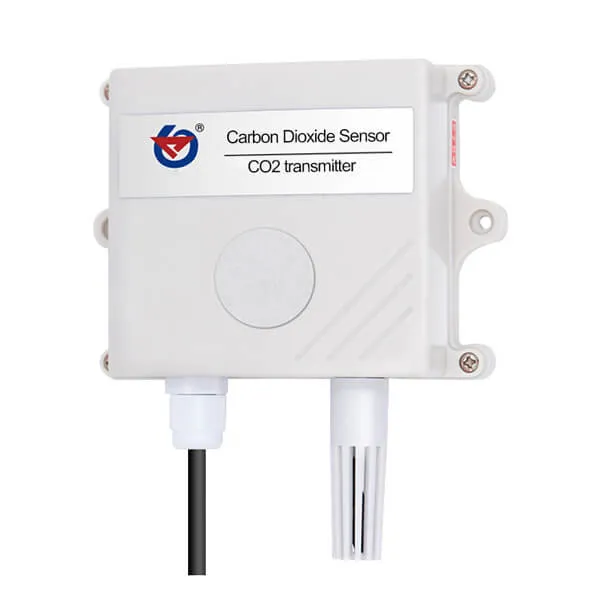
Fixed Carbon Dioxide Transmitter:Wall-mounted/pipeline installation, compatible with PLCs, fresh air control systems, and environmental monitoring platforms. Suitable for long-term online monitoring of factories, buildings, and exhaust outlets.
Four Core Values of Deploying Carbon Dioxide Sensors:
Preventing Safety Accidents:Real-time monitoring of CO2 concentration in confined spaces; immediate multi-level alarms when levels exceed limits, preventing personnel from suffocating due to oxygen deprivation and gas mixture explosions.
Facilitating Dual-Carbon Emission Management: Continuous data collection of industrial waste gas and automatic retention of emission records meet environmental regulatory and corporate carbon ledger accounting requirements.
Improving Agricultural Production Yields: Intelligent CO2 control in greenhouses replenishes raw materials for photosynthesis, significantly increasing fruit and vegetable yields; reduced carbon dioxide levels in livestock sheds reduce livestock and poultry diseases.
Improving Indoor Health: Building-linked fresh air systems automatically ventilate and exchange air, reducing indoor CO2 concentration and alleviating drowsiness and dizziness.
Q1: What are the advantages of NDIR infrared carbon dioxide sensors compared to electrochemical sensors?
A: NDIR sensors are not affected by cross-interference from other gases, have higher measurement accuracy, a lifespan of over 10 years, and minimal long-term zero-point drift; electrochemical sensors have a short lifespan, are susceptible to moisture interference, and are only suitable for short-term, simple detection.
Q2: Does a greenhouse carbon dioxide sensor need to be paired with a control system?
A: Fixed CO2 transmitters support RS485 output and can be directly connected to a greenhouse PLC. When the concentration is too low, the CO2 generator automatically starts and windows open for ventilation.
Q3: Can explosion-proof carbon dioxide sensors be used in underground coal mines?
A: Models with complete explosion-proof certifications (Ex ia IIC T4, etc.) can be used in chemical and gas mines; however, for coal mine gas scenarios, a mining-specific explosion-proof rating needs to be matched.

























Sign in to leave a comment.