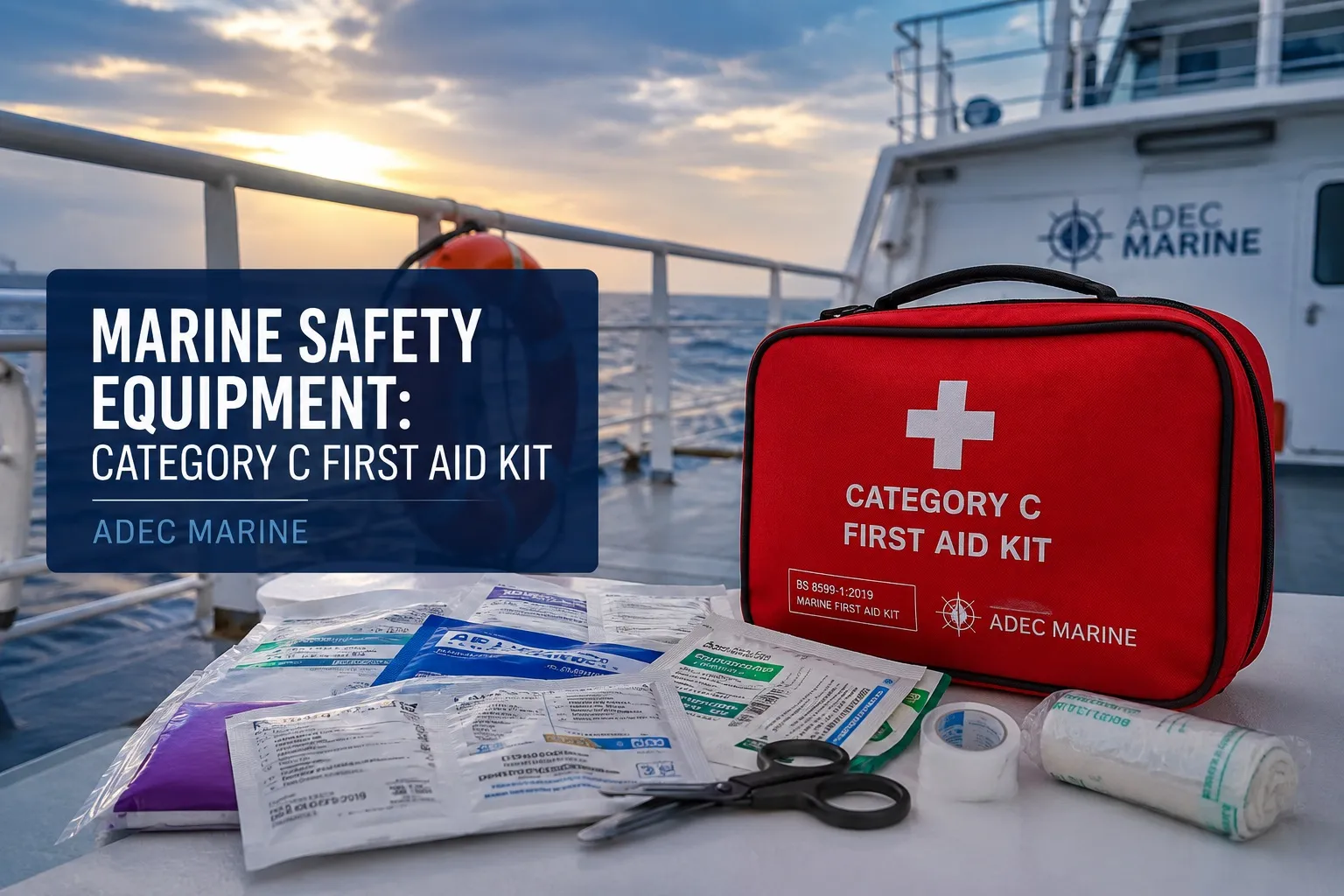

When you operate a commercial vessel, fishing boat, yacht or other craft in UK waters, emergency preparedness should never be an afterthought. The right marine safety equipment can make a significant difference when an injury or medical emergency occurs onboard, particularly when professional medical assistance is not immediately available.
Among the essential medical provisions for applicable vessels is a Category C First Aid Kit. It is designed to provide a practical range of medical supplies for dealing with injuries and common medical situations at sea.
For vessel owners and operators, choosing the correct equipment is not simply about having a first aid box onboard. The kit needs to be appropriate for the vessel, operating area and applicable UK requirements. The Maritime and Coastguard Agency (MCA) sets out medical-store requirements in MSN 1905 (M+F), while specific codes of practice provide additional requirements for different types of vessels.
This guide explains what a Category C kit is, what it may contain, how it fits into wider marine safety equipment, and what UK operators should consider when preparing their vessels.
What Is a Category C First Aid Kit?
A Category C First Aid Kit is a marine medical kit intended for vessels operating under requirements where Category C medical stores are applicable.
The exact medical requirements depend on factors such as the vessel type, operating area, number of people onboard and nature of the voyage. For example, UK guidance for small fishing vessels states that vessels operating up to 60 nautical miles from shore must carry a first aid kit meeting the Category C standard. Vessels operating between 60 and 175 nautical miles have different Category B requirements.
This distinction is important because there is no single first aid kit that is automatically suitable for every vessel.
A Category C kit is intended to give crew access to appropriate medical supplies when an injury happens onboard. Depending on the kit and applicable requirements, contents can include:
- Sterile dressings
- Bandages and plasters
- Gauze
- Burn treatment supplies
- Disposable gloves
- Scissors and safety pins
- Eye-care products
- Resuscitation equipment
- Certain medicines and medical supplies
The MCA's current MSN 1905 (M+F) Amendment 4 sets out minimum medical-store requirements for UK merchant ships and fishing vessels, including guidance on medical stores, first aid kits, medicines and additional equipment.
Why Is a Category C First Aid Kit Important?
Working at sea comes with risks that are very different from those encountered on land. A crew member may suffer a cut while handling equipment, a burn in the galley, an injury during fishing operations or illness during a voyage. The nearest doctor or hospital may also be some distance away.
This is where suitable marine safety equipment becomes particularly important. A well-prepared first aid kit gives crew members immediate access to supplies that can help manage an injury while further medical assistance is arranged.
Common situations may include:
- Cuts and minor wounds
- Burns and scalds
- Bruising and minor injuries
- Eye injuries
- Seasickness
- Headaches or pain
- Minor gastrointestinal problems
- Injuries caused by onboard machinery or equipment
A first aid kit does not replace professional medical treatment. Instead, it forms part of a broader emergency response plan.
For UK operators, medical stores must be appropriate to the vessel's operation. Current MCA guidance states that UK ships must carry medical stores appropriate to their area and type of operation and the number of seafarers onboard.
What Does a Category C First Aid Kit Contain?
The exact contents can vary according to the applicable specification and product, so operators should always check the current requirements and product details.
Dressings, Plasters and Bandages
Wounds are among the most common injuries that may need immediate attention onboard. A marine first aid kit can therefore contain different sizes and types of sterile dressings, adhesive dressings and bandages. These supplies can help provide initial protection for cuts, abrasions and other wounds.
Burn Treatment Supplies
Heat, cooking equipment, engines and machinery can all create burn risks onboard.
Burn treatment products can provide immediate first aid while arrangements are made for further medical assessment if required.
Gloves and Personal Protection
Disposable examination gloves are an important part of first aid equipment because they help protect the person providing assistance as well as the injured individual.
Resuscitation Equipment
Some marine first aid kits include resuscitation equipment such as a pocket mask. This can be useful during an emergency where resuscitation assistance is required.
Medicines and Other Supplies
Depending on the relevant category and kit specification, medical stores can include medicines for conditions such as seasickness, pain or gastrointestinal problems.
The MCA's medical-store guidance allows operators to consider additional or different quantities based on factors such as voyage characteristics, destination, crew numbers and the nature of work being carried out.
Category C First Aid Kit and UK Marine Safety Requirements
Understanding UK requirements is essential before purchasing or replacing marine medical equipment.
MSN 1905 (M+F) Amendment 4 is the current MCA notice covering minimum medical-store requirements for UK Merchant Shipping and Fishing Vessels. It identifies vessel categories and provides information on required medical stores, recommended first aid kits, medicines and other medical provisions. The notice was updated in August 2025.
For small fishing vessels, the UK Code of Practice specifically states that vessels must carry a first aid kit meeting Category C requirements when operating up to 60 nautical miles from shore.
However, operators should not assume that Category C is suitable simply because another vessel has the same type of kit.
Before purchasing, consider:
- Vessel type
- Operating area
- Distance from shore
- Number of people onboard
- Voyage duration
- Type of work being carried out
- Applicable UK code or regulations
When there is uncertainty, operators should obtain advice from an appropriate maritime safety professional or relevant authority.
Who Needs a Category C First Aid Kit?
A Category C First Aid Kit may be relevant to several types of vessels and marine operations, depending on their operating category and applicable requirements.
These can include:
- Small fishing vessels
- Commercial boats
- Certain workboats
- Lifeboats and liferafts
- Other vessels operating under applicable Category C requirements
The key consideration is not simply whether a vessel is commercial or recreational. Its operating area, certification, vessel category and applicable regulations all need to be considered.
For example, the UK Code of Practice for small fishing vessels directly identifies Category C medical requirements for vessels operating up to 60 nautical miles from shore.
How Does a Category C Kit Fit Into Marine Safety Equipment?
First aid is only one part of a complete onboard emergency strategy.
A vessel's marine safety equipment may also include:
- Lifejackets
- Liferafts
- Lifebuoys
- Emergency lighting
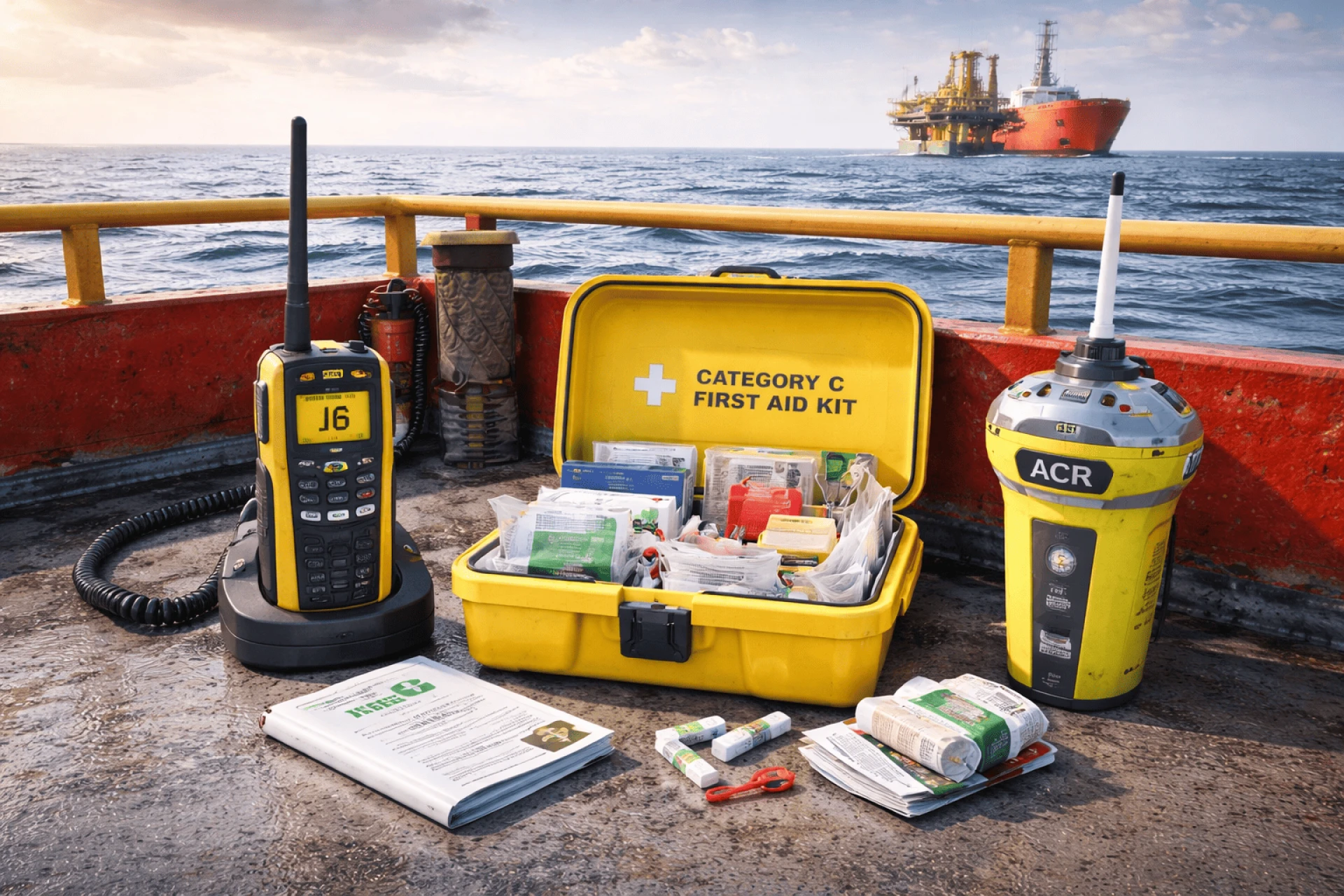
- EPIRBs and PLBs
- VHF and other communication equipment
- Distress signalling equipment
- Fire extinguishers
- Fire blankets
- Radar reflectors
- Thermal protective aids
- Other lifesaving appliances
The exact equipment required depends on the vessel and operating conditions.
ADEC Marine supplies a broad range of marine safety products, including liferafts, lifejackets, lifebuoys, emergency equipment, fire-fighting equipment and marine electronics. The objective is to create a coordinated safety system rather than relying on one piece of equipment.
How to Choose the Right Category C First Aid Kit
Choosing a kit requires more consideration than simply finding the cheapest option.
1. Check the Applicable Requirements
Start by identifying the requirements that apply to your vessel. The MCA guidance should be checked alongside the relevant code of practice or vessel certification requirements.
2. Check the Contents
Review the contents of the kit and compare them with the applicable medical-store requirements. A kit should contain the supplies required for its intended use and should be appropriate for the operating environment.
3. Consider Storage
Marine environments can expose equipment to water, salt, movement and temperature changes. A suitable kit should therefore be stored securely and protected from conditions that could damage its contents.
4. Check Expiry Dates
Medicines and certain medical products have expiry dates.
Create a regular inspection routine to check:
- Expired medicines
- Damaged packaging
- Used supplies
- Missing items
- Water or moisture damage
- General condition of the container
5. Consider Accessibility
A first aid kit is only useful if crew members can access it quickly.
It should be stored in a clearly identified location that is accessible during an emergency, while also being protected from unnecessary exposure to water or damage.
How to Maintain Marine First Aid Equipment Onboard
Purchasing a kit is only the first step. Regular maintenance is essential.
A practical inspection routine can include:
- Checking the kit before and after voyages
- Replacing used supplies promptly
- Checking medicine expiry dates
- Inspecting packaging for damage
- Checking the container for water ingress
- Keeping an inventory of contents
- Ensuring crew know where the kit is stored
- Reviewing requirements whenever the vessel's operating conditions change
The person responsible for medical stores should also have appropriate first aid training. The small fishing vessel code specifically states that the person responsible for medical stores should hold relevant first aid training.
ADEC Marine Category C First Aid Kit
For UK vessel operators looking for suitable marine safety equipment, ADEC Marine provides Category C medical equipment alongside a wider range of marine safety products.
ADEC Marine's product range includes a Category C First Aid Kit designed for applicable Category C vessels, including use with lifeboats and liferafts. Its wider range covers equipment such as liferafts, lifejackets, fire-fighting equipment and emergency marine products.
When selecting a kit from ADEC Marine or another supplier, operators should still confirm that the specific product matches their vessel's requirements.
The company's marine safety range is supported by staff with experience in marine safety equipment, and ADEC Marine also operates an MCA-approved liferaft and lifejacket service station.
Marine Safety Equipment Checklist for UK Vessel Operators
Before heading to sea, operators should review their onboard safety provisions.
- Appropriate Category C medical kit, where required
- Lifejackets and personal flotation equipment
- Liferaft and lifesaving appliances
- Lifebuoys
- Appropriate distress signalling equipment
- EPIRB or PLB where required
- VHF or suitable communication equipment
- Fire extinguishers
- Emergency lighting
- Thermal protective equipment where applicable
- Medical stores and first aid supplies
- Expiry-date and inspection records
This checklist should supplement, not replace, the specific safety equipment requirements applicable to the vessel.
Be Prepared With the Right Marine Safety Equipment
A first aid kit should be treated as an essential part of a vessel's wider emergency preparedness strategy. Having appropriate medical supplies readily available can help crew respond quickly when an injury or illness occurs at sea.
For UK operators, choosing the correct Category C First Aid Kit means considering the vessel, operating area and applicable medical-store requirements rather than relying on a generic first aid kit.
Regular inspections are equally important. Equipment should remain accessible, complete, protected from the marine environment and within its usable dates.
Whether you operate a fishing vessel, commercial boat, yacht or other marine craft, reviewing your marine safety equipment regularly is a practical way to strengthen onboard preparedness.
ADEC Marine provides Category C medical kits and a wider range of marine safety equipment for UK marine operators. By selecting appropriate equipment and maintaining it properly, vessel owners and crews can be better prepared to respond when an emergency happens at sea.


























Sign in to leave a comment.