
When operating offshore or along coastal waters, preparedness is not optional — it is critical. Reliable communication systems and emergency medical support equipment form the backbone of any vessel’s safety strategy.
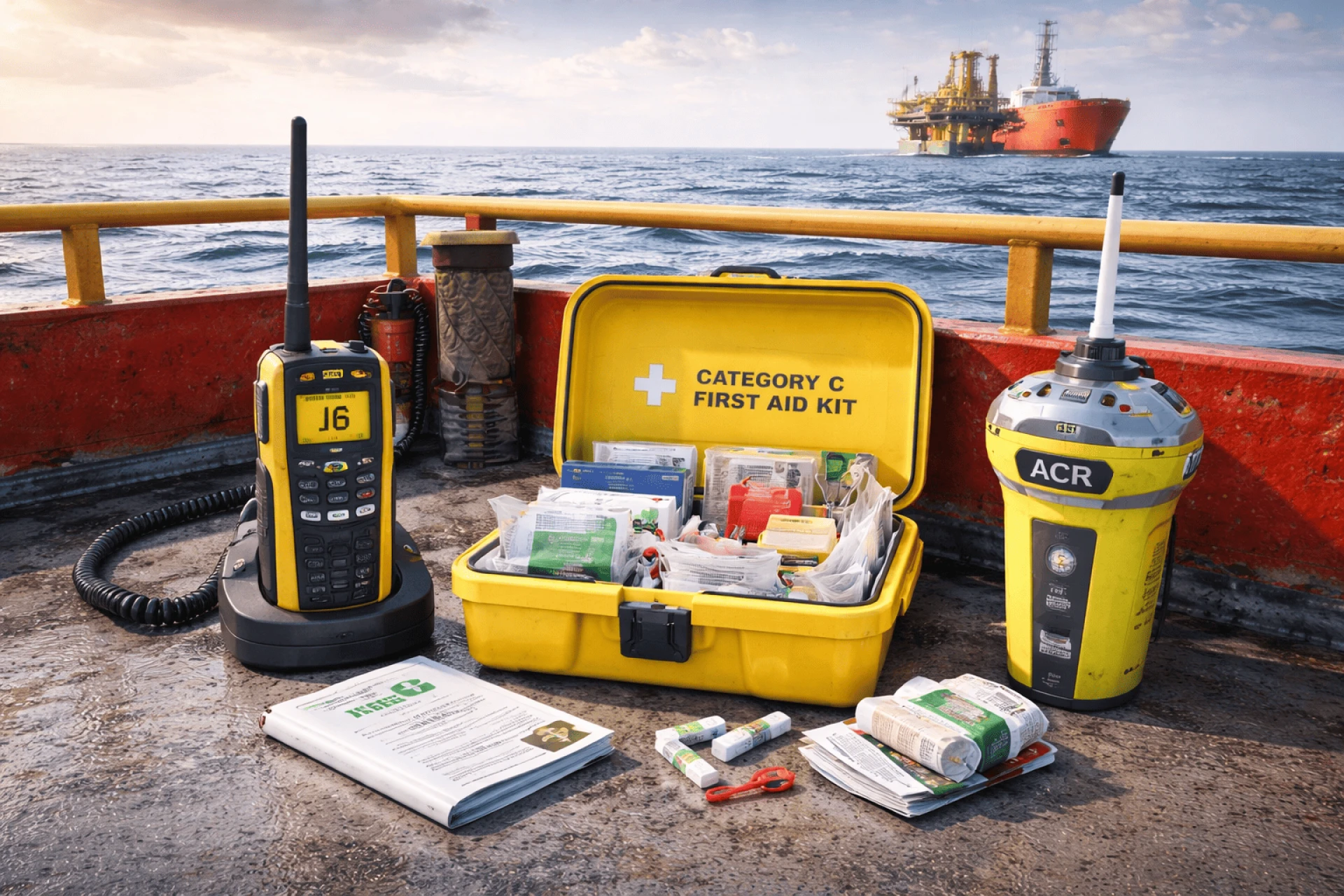
Three key components every boat owner and commercial operator should prioritize are a VHF Marine Radio, an ACR EPIRB, and a properly stocked Category C First Aid Kit.
Together, these devices provide communication, distress signaling, and medical readiness — the three pillars of maritime emergency response.
VHF Marine Radio: Your Primary Communication Lifeline
A VHF Marine Radio (Very High Frequency radio) is the most important onboard communication tool. Unlike mobile phones, VHF radios are specifically designed for marine environments and provide direct ship-to-ship and ship-to-shore communication.
Why It Matters
- Instant access to emergency Channel 16
- Real-time weather updates
- Direct communication with coastguards and nearby vessels
- Reliable operation even in poor mobile network areas
Most modern VHF marine radios include Digital Selective Calling (DSC), allowing distress alerts to be sent instantly with your vessel’s GPS position.
In an emergency, a VHF radio is often the fastest way to request assistance before activating secondary distress systems.
ACR EPIRB: Global Distress Alert Technology
While a VHF radio enables short-range communication, an ACR EPIRB (Emergency Position Indicating Radio Beacon) provides global emergency alert capability.
Manufactured by ACR Electronics, ACR EPIRBs are internationally recognized for reliability and compliance with maritime safety regulations.
How an EPIRB Works
When activated — manually or automatically upon water immersion — the EPIRB transmits a distress signal via satellite to the international Cospas-Sarsat search and rescue system. This signal includes:
- Unique vessel identification
- GPS coordinates
- Distress confirmation
Rescue coordination centers are immediately notified, dramatically reducing response time.
Why Choose an ACR EPIRB?
- SOLAS-compliant models available
- Long battery life (typically 48+ hours)
- Global satellite coverage
- Automatic deployment options
For offshore passages and commercial vessels, an EPIRB is not just recommended — it is often mandatory.
Category C First Aid Kit: Medical Preparedness at Sea
Emergencies are not always dramatic collisions or sinking events. Many maritime incidents involve injuries, burns, cuts, or medical conditions that require immediate attention.
A Category C First Aid Kit is specifically designed for vessels operating up to 60 miles offshore, depending on national regulations.
What Does a Category C First Aid Kit Include?
Typically, it contains:
- Sterile dressings and bandages
- Burn treatment supplies
- Antiseptic solutions
- CPR mask
- Trauma shears
- Emergency blankets
- Basic medications (as permitted)
These kits are structured to address common onboard injuries until professional medical help becomes available.
For commercial operations, maintaining an up-to-date and compliant first aid kit is a legal obligation.
Building a Complete Marine Safety System
While each piece of equipment serves a unique function, together they create a layered safety approach:
| Equipment | Purpose | Coverage |
|---|---|---|
| VHF Marine Radio | Immediate communication | Local / Coastal |
| ACR EPIRB | Satellite distress alert | Global |
| Category C First Aid Kit | Onboard medical response | Immediate care |
This combination ensures:
- Rapid distress communication
- Accurate global rescue coordination
- Immediate injury management
Preparedness significantly increases survival rates and reduces emergency escalation.
Compliance and Best Practices
Maritime safety regulations are guided internationally by the International Maritime Organization, which outlines standards under the SOLAS convention.
To remain compliant:
- Regularly service your EPIRB
- Test VHF radios periodically
- Check battery expiry dates
- Inspect and restock first aid kits
- Ensure crew training in equipment use
Safety equipment is only effective when properly maintained and understood by those onboard.
Conclusion: Preparedness Saves Lives
Maritime environments are unpredictable. Investing in essential marine Safetty equipment such as a VHF Marine Radio, a reliable ACR EPIRB, and a compliant Category C First Aid Kit ensures your vessel is equipped for communication, distress signaling, and medical emergencies.
Whether operating commercially or recreationally, safety is not an upgrade — it is a necessity.
Equip smart. Stay compliant. Sail prepared.



















Sign in to leave a comment.