

Water is one of the biggest threats to any building. Once moisture finds its way into concrete, it can cause dampness, peeling paint, efflorescence, corrosion of reinforcement and, over time, structural distress. Good waterproofing is not a finishing touch. It is part of the building's protection from day one.
Two of the most widely used waterproofing methods in India are cementitious and liquid waterproofing. The debate of cementitious vs liquid waterproofing comes up on almost every project, whether it is a bathroom in an apartment or a terrace on a commercial block. Each system works differently, suits different surfaces and has its own limits. Picking the wrong one can lead to repeat leakages and avoidable repair costs.
This guide explains how both systems work, where each performs best and how to make a sound choice for your site.
What Is Cementitious Waterproofing?
Cementitious waterproofing, also called cement-based waterproofing, is a coating made from cement, fine aggregates and chemical additives. It is mixed with water (or, in two-component systems, with a liquid polymer) and applied to the surface with a brush, roller or trowel.
Once cured, it forms a hard, dense layer that bonds to the concrete or masonry underneath and reduces water penetration.
How the Components Work
- Cement: Provides the rigid body of the coating and a strong bond with cement-based substrates.
- Fine fillers and aggregates: Improve density and help control shrinkage.
- Polymers: In a polymer-modified cementitious coating, polymers improve adhesion and add a degree of flexibility.
- Additives: Help with workability, setting behaviour and resistance to water ingress.
Common Applications
Cementitious waterproofing is commonly used for bathrooms, kitchens, underground and overhead water tanks, basements, retaining walls and other concrete surfaces. It suits areas that are rigid, stable and not exposed to much movement or direct sunlight.
What Is Liquid Waterproofing?
Liquid waterproofing refers to liquid-applied waterproofing coatings that cure on the surface to form a continuous, seamless layer. Depending on the chemistry, these can be acrylic, polyurethane, bituminous or other polymer-based systems. The product is applied by brush, roller or spray, usually in two or more coats.
A liquid waterproofing membrane has no joints or overlaps, so it can follow corners, pipe penetrations and uneven shapes without the lap joints found in sheet systems. Because it stays elastic after curing, it can accommodate minor movement in the substrate. The degree of flexibility, UV resistance and water exposure it can handle depends on the specific product.
Common Applications
Liquid-applied membranes are widely used on terraces, roofs, balconies, sloped roofs and other exposed surfaces, as long as the product is designed for that exposure. They are also useful where a flexible waterproofing membrane is needed over surfaces with complex detailing.
Cementitious vs. Liquid Waterproofing: Key Differences
The table below summarises how cementitious waterproofing vs liquid waterproofing compares. Actual performance varies with formulation, grade and the manufacturer's technical data sheet, so always check product specifications.
| Parameter | Cementitious Waterproofing | Liquid Waterproofing |
|---|---|---|
| Composition | Cement, fillers and additives, often polymer-modified | Polymer-based liquid (acrylic, polyurethane, bituminous, etc.) |
| Application method | Brush, roller or trowel after mixing | Brush, roller or spray in multiple coats |
| Flexibility | Rigid to semi-flexible, depending on polymer content | Flexible and elastic, varies by product |
| Crack-bridging ability | Limited; suited to fine, stable cracks | Better for minor movement and hairline cracks, depending on product |
| Surface compatibility | Concrete, plaster and masonry | Concrete, screed and many other substrates, subject to primer and product guidance |
| Water resistance | Good for positive-side and, in some grades, negative-side applications | Good as a continuous barrier when applied to the specified thickness |
| Durability | Depends on grade, surface preparation and exposure | Depends on chemistry, UV exposure, thickness and workmanship |
| Maintenance | Inspection of coating and joints; protective screed in some uses | Periodic inspection; some exposed systems may need a protective topcoat |
| Suitable applications | Bathrooms, tanks, basements, internal wet areas, concrete walls | Terraces, roofs, balconies, exposed and sloped surfaces |
| Cost considerations | Material cost varies by grade and system | Material cost varies by chemistry and coats required |
Advantages of Cementitious Waterproofing
The main cementitious waterproofing advantages come from its compatibility with concrete:
- Strong bonding: It adheres well to concrete and masonry, becoming almost part of the surface.
- Easy application: Mixing and applying it needs no specialised equipment.
- Suitable for wet areas: It works well in bathrooms, kitchens and water tanks where the surface stays stable.
- Protection against water penetration: A properly applied coating helps block water leakage through porous surfaces.
- Compatibility with cement-based substrates: Tiles, plaster and screed can usually be applied over it, depending on product guidance.
Advantages of Liquid Waterproofing
The main liquid waterproofing advantages relate to flexibility and coverage:
- Seamless membrane: No joints means fewer weak points for water to enter.
- Flexible protective coating: The cured film can stretch slightly with the surface.
- Accommodates minor movement: Thermal expansion and small hairline cracks are handled better, depending on the product.
- Good for irregular surfaces: It flows around pipes, drains, parapets and corners.
- Useful for exposed areas: Where the product is designed for UV and weather exposure, it suits terraces and roofs.
Limitations of Cementitious and Liquid Waterproofing
Neither system is perfect, and it helps to know the trade-offs.
Cementitious waterproofing
- Limited flexibility, so it may crack if the substrate moves significantly.
- Needs a clean, sound and properly dampened surface.
- Proper curing is essential, especially in hot weather.
- Not ideal for exposed surfaces with large temperature swings unless a flexible grade is chosen.
Liquid waterproofing
- Needs a dry, clean and primed substrate in most cases.
- Application depends on weather. Rain or high humidity during curing can affect results.
- Some products degrade under prolonged UV exposure without a protective topcoat.
- Thickness must be built up correctly through multiple coats; thin application weakens the membrane.
For both systems, workmanship matters as much as the material. Poor surface preparation is a common cause of failure.
Where Should You Use Cementitious Waterproofing?
Cementitious waterproofing is a practical choice for rigid, cement-based surfaces and wet areas:
- Bathrooms and kitchens: Floors and wall zones that stay wet but see little movement.
- Underground water tanks: Many grades are suitable for potable and non-potable tanks; check product certification.
- Basements: Both for walls and, in suitable grades, for base slabs.
- Concrete walls: Retaining walls and internal surfaces needing concrete surface protection.
- Internal wet areas: Utility rooms, pump rooms and similar spaces.
Where Should You Use Liquid Waterproofing?
A liquid waterproofing membrane is a good fit where flexibility and seamless coverage are important:
- Roofs and terraces: Particularly where temperature changes cause expansion and contraction.
- Balconies: Areas with drains, edges and tile finishes.
- Exposed concrete surfaces: When the product is rated for outdoor exposure.
- Sloped roofs: Where lap joints would be difficult to manage.
- Complex details: Pipe penetrations, parapet junctions and other irregular areas.
In regions with heavy monsoons and strong sun, roof and terrace protection needs careful attention. Building owners looking for the Best Waterproofing Solutions & Services in Vapi should check that the chosen membrane suits the roof's exposure, slope and substrate. Always follow the correct product grade and the manufacturer's technical specifications.
Cementitious vs. Liquid Waterproofing: Which Is Better?
Neither is universally better. The right answer depends on where the waterproofing will be used and what the surface will face over time.
- Choose cementitious waterproofing for rigid, cement-based and wet-area applications such as bathrooms, tanks and basements, where movement is minimal.
- Choose liquid waterproofing where a seamless, flexible membrane is needed and the selected product is rated for the exposure, such as terraces, roofs and balconies.
Site conditions, water exposure, structural movement and substrate preparation will influence the decision more than the product category alone. A well-chosen and properly applied system of either type can outperform a poorly chosen or badly applied one.
Factors to Consider Before Choosing a Waterproofing System
Before finalising waterproofing system selection, review these points:
- Type of surface: Concrete, plaster, screed or masonry each has different needs.
- Location of application: Internal wet area, below ground or exposed to the sky.
- Water exposure: Occasional splashing, standing water or hydrostatic pressure.
- Structural movement: Expected expansion, contraction or vibration.
- Crack conditions: Existing cracks, their width and whether they are static or active.
- Weather conditions: Temperature, humidity and rainfall during application and in service.
- Application requirements: Number of coats, curing time and need for a protective layer.
- Product specifications: Technical data sheet, approved uses and limitations.
- Installation quality and maintenance: Skilled applicators and periodic inspection.
The requirements differ between cities and building types. For residential and commercial buildings, exploring Waterproofing Solutions in Pune can help owners and contractors understand how local conditions, such as heavy rainfall and varied construction styles, affect the choice of waterproofing system.
Why Choose the Right Waterproofing Products?
Even the best method will underperform if the material itself is inconsistent. Quality construction chemicals and waterproofing materials from a reliable manufacturer offer batch consistency, clear technical data and application support, which helps contractors apply them correctly.
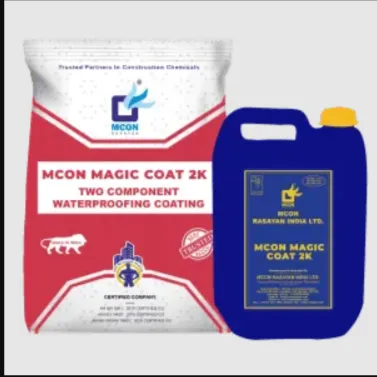
MCON Rasayan India Ltd. is a construction chemicals manufacturer, supplier and distributor in India, offering waterproofing solutions and related construction chemical products for residential, commercial and industrial projects. Its technical expertise helps builders, applicators and homeowners match products to site requirements.
Conclusion
Cementitious waterproofing is a rigid, cement-based system that bonds well with concrete and performs well in bathrooms, tanks and basements. Liquid waterproofing forms a seamless, flexible membrane that suits terraces, roofs and exposed surfaces when the product is designed for them.
The best waterproofing solution is the one that fits the application, surface condition and project requirements. Check product specifications, prepare the surface properly, use trained applicators and consult professionals when the situation is complex.
Frequently Asked Questions
1. What is the difference between cementitious and liquid waterproofing?
Cementitious waterproofing is a cement-based coating that cures into a rigid or semi-flexible layer and bonds with concrete. Liquid waterproofing is a polymer-based coating that cures into a seamless, flexible membrane. The first suits stable wet areas and tanks, while the second is typically chosen for surfaces that experience movement or exposure.
2. Which is better for terrace waterproofing: cementitious or liquid waterproofing?
Terraces face sun, rain and temperature changes, so a flexible liquid waterproofing membrane designed for exposed use is commonly preferred. Some flexible polymer-modified cementitious systems are also used on terraces, so check the product's technical data sheet for approved applications.
3. Is cementitious waterproofing suitable for bathrooms?
Yes. Cementitious waterproofing is widely used for bathroom floors and wall zones because it bonds well with concrete and screed and can be tiled over, depending on product guidance. Correct surface preparation and treatment of corners and pipe openings are important.
4. How long does liquid waterproofing last?
There is no fixed figure. Performance depends on the product chemistry, applied thickness, surface preparation, weather exposure and maintenance. The manufacturer's technical data and warranty terms are the most reliable guide for a specific product.
5. Can cementitious and liquid waterproofing be used together?
In some cases, yes. For example, a cementitious layer may be used on a concrete surface and a flexible liquid membrane over it, but only when the products are compatible. Always confirm compatibility with the manufacturer before combining systems.



















Sign in to leave a comment.