
One of the most important fields in the current world is data analytics, which has grown rapidly. The demand for qualified data analysts is rising rapidly as a result of the huge amount of data that businesses and organizations generate on a daily basis. However, what qualifications are necessary to work in this field? How might prospective professionals increase their chances of success? Getting a Certified Data Analytics certification is one way to find the answer. In particular, professionals wishing to start or grow their careers in data analytics are finding that credentials such as the IABAC Data Analytics Certification are a great advantage.
We'll look at the value of data analytics certifications, their advantages, and how they can help people advance in their careers. This guide will explain why certification is crucial, regardless of whether you are already employed in the area or are thinking about pursuing a career in data analytics.
What is Data Analytics?
The act of gathering, organizing, and evaluating data in order to derive significant findings that can guide decision-making is known as data analytics. This topic has become extremely important in a number of industries, including technology, e-commerce, marketing, healthcare, and finance.
To sort through huge amounts of data, a data analyst use statistical tools, algorithms, and computer languages like R, Python, and SQL. After that, they analyze the information, spot patterns, and predict results that help companies in streamlining processes, enhancing client satisfaction, and increasing sales.
But, as the need for data-driven decisions grows, companies are searching for experts who possess the skills and know-how to carry out these responsibilities effectively. Certifications in data analytics are useful in this situation.
Why is Certification Important in Data Analytics?
Data analytics specialists need to be more than just a math whiz in today's cutthroat job environment. Candidates with a broad skill set, demonstrated experience, and the capacity to make data-driven judgments are sought after by employers. A certification can help with that. This is the reason:
1. Validates Your Skills
Your knowledge and skills in the field of data analytics are validated by a certification. It gives prospective employers a recognized benchmark that demonstrates your proficiency in managing intricate data-related duties. Instead of just asserting competency, you can offer evidence through certification that you’ve gained the fundamental abilities needed to execute the job.
2. Improves Job Prospects
The ability to analyze data is in great demand after. According to the US Bureau of Labor Statistics, the median compensation for data analysts is far above the national average, and the job outlook for this role is predicted to expand by 25% over the next decade. You improve your chances of being noticed by employers by earning a certification. It demonstrates your dedication to your work and your readiness to keep learning and developing.
3. Demonstrates Dedication and Competence
Getting certified takes commitment, time, and work. Employers will see that you take your profession seriously and are dedicated to maintaining your skills current. It's critical to remain ahead of emerging trends and technology in a subject that is developing quickly, like data analytics. Being certified guarantees that you are knowledgeable about the most recent instruments, methods, and approaches employed in the field.
4. Increases Earning Potential
Higher earning potential is frequently associated with certifications. Professionals with data analytics certificates typically make more money than their non-certified counterparts, per a number of industry studies. Getting certified is a good investment for your career because employers are willing to pay more for someone with confirmed skills and experience.
Types of Data Analytics Certifications
A variety of data analytics certificates are available, each tailored to meet varying skill levels and professional objectives. Some of the most well-liked certificates are as follows:
1. IABAC Data Analytics Certification
The IABAC Data Analytics Certification is one of the most respected certificates available today. It is intended for people who want to learn everything there is to know about data analytics. Important subjects, including data wrangling, statistical analysis, predictive analytics, and data visualization are included in the certification. Both novices and experts who wish to expand their knowledge of analytics will find it to be an excellent option.
2. Certified Analytics Professional (CAP)
The INFORMS organization offers this certification, which is intended for professionals who wish to show that they are proficient in analytics. The CAP certification is intended for those with industry expertise and is accepted throughout the world. It requires passing a test covering data analysis methods, business issues, and analytics methodology.
3. Google Data Analytics Professional Certificate
One of the most well-known certificates is Google's Data Analytics Professional Certificate. This entry-level curriculum offers thorough instruction on data analysis methods, SQL, and data visualization tools like Tableau and Excel. It is accessible on platforms such as Coursera. It's ideal for people who are new to the industry or want to change careers.
4. Microsoft Certified: Data Analyst Associate
Microsoft offers this certification, which is ideal for people who use Power BI, Excel, and other Microsoft products. Data preparation, modeling, visualization, and analysis are among the subjects it covers. Obtaining this certification is a fantastic method to demonstrate your proficiency with Microsoft's data tools, which are widely utilized in many businesses.
Benefits of Data Analytics Certification
There are many advantages to obtaining a data analytics certification. Among the most prominent ones are:
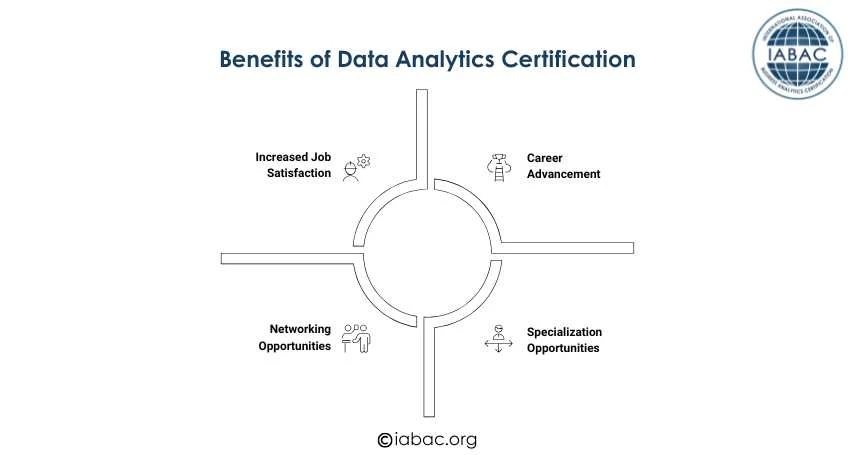
1. Career Advancement
Gaining certification can result in substantial career development. Gaining understanding and skills makes you more employable in higher-level roles. A certification can help you advance in your career, regardless of your goals—from becoming a senior data analyst to thinking about switching to data science.
2. Specialization Opportunities
There are numerous subfields within the broad topic of data analytics, including marketing, business, and healthcare analytics. You can differentiate yourself from other applicants in a competitive job market by specializing in a certain area of analytics with the aid of a certification.
3. Increased Job Satisfaction
You might be more satisfied with your employment if you have more qualifications and can manage more difficult duties. More responsibility and the chance to work on well-known projects are frequently granted to trained data analysts, which can result in a more rewarding career.
4. Networking Opportunities
Networking opportunities are provided by numerous certification programs via forums, groups, and events. This enables you to network with professionals who share your interests and gain knowledge from pros in the field. Additionally, networking can help you find new employment prospects and work with others on exciting initiatives.
How to Choose the Right Data Analytics Certification
Choosing the correct certification depends on a number of criteria, including your present skill level, career ambitions, and areas of interest. When choosing a certification, keep the following points in mind:
1. Skill Level
Consider pursuing entry-level certifications like the Google Data Analytics Professional Certificate if you're just getting started in the field of data analytics. Consider earning certifications like CAP or IABAC if you wish to progress in your profession and have experience.
2. Industry Demand
When it comes to data analytics, different sectors have varied requirements. If you have a certain industry in mind, like healthcare or finance, search for certificates that are accepted in that field.
3. Cost and Time Investment
Think about how much the certification program will cost and how much time you are willing to devote to it. While some certificates are shorter and less expensive, others involve more training and tests. Select the one that best suits your timetable and budget.
4. Reputation
Make sure the industry respects and acknowledges the certification you select. Popular certifications such as IABAC, CAP, and Microsoft are highly valued by employers.
In conclusion, one effective strategy to unlock new employment options is to earn a Certified Data Analytics certification. There is a greater need than ever for qualified personnel due to the industry's rapid data expansion. By becoming certified in data analytics, you confirm your abilities, improve your earning potential, and position yourself for professional success.
Certifications like the IABAC Data Analytics Certification give you the expertise and credibility you need to stand out, whether you're just starting out in the industry or hoping to progress in your career. You can succeed in data analytics and advance your career if you have the necessary abilities, credentials, and willpower.































Sign in to leave a comment.