
Secure networks are crucial for safeguarding data in households, businesses, governments, and educational institutions, such as schools. As cyberattacks increase, there is an increasing demand for qualified network security specialists.
However, how do you develop your existing skills or enter this field?
Obtaining a network security certification is among the finest options. But how do you pick the appropriate certification for your objectives when there are so many available?
This will explain network security certifications, their significance, and the way to select the best one for you.
What Is a Network Security Certification?
A professional certification in network security attests to your ability to defend systems and networks against online threats.
Employers can see that you understand security ideas, technologies, and best practices by obtaining these certificates, which are given by reputable organizations.
While some certificates are for seasoned experts, others are for beginners. Every certification focuses on a particular topic, such as ethical hacking, intrusion detection, firewalls, and more.
Why Get a Network Security Certification?
Let's first discuss the benefits of becoming certified before moving on to how to pick the best certification.
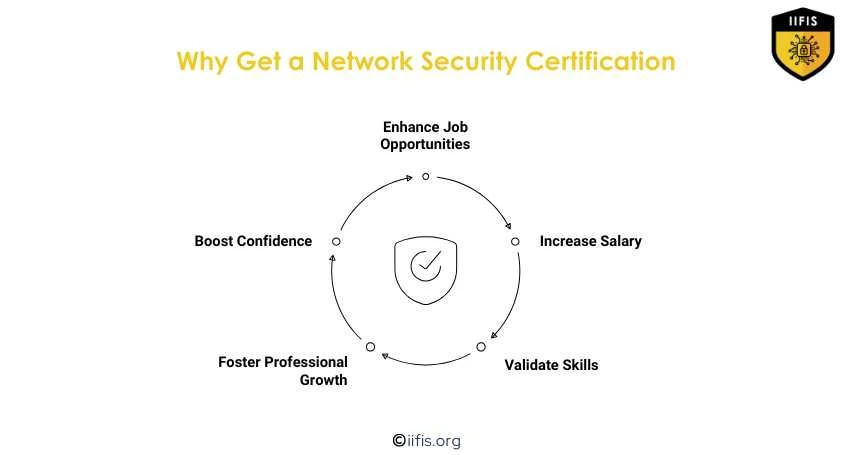
Here are a few strong explanations:
1. Better Job Opportunities
When hiring for cybersecurity positions, many companies need certificates. Possessing one can lead to positions as a cybersecurity engineer, penetration tester, network security analyst, and more.
2. Higher Salary
Professionals with certificates frequently make more money than those without. It's a means to demonstrate your worth and support a higher salary.
3. Skill Validation
Certifications show your thorough understanding of the subject. They demonstrate that you have passed tests and are capable of using what you have learned in the real world.
4. Professional Growth
Cybersecurity is a constantly evolving field. Having a certification keeps you up to date on new technologies, approaches, and threats.
5. Confidence Boost
You have greater confidence in your skills after earning your certification. You'll operate more efficiently and be able to communicate in the language of cybersecurity.
Factors to Consider When Choosing a Network Security Certification
How do you choose the best option when there are so many available? The following are the most important things to take into account:
1. Your Experience Level
Do you have experience in cybersecurity or IT, or are you just starting out?
If you're new, search for certificates that are appropriate for beginners, such as:
- IIFIS Certified Network Security Professional
- Certified Cybersecurity Entry-Level Technician (CCET)
- Cisco Certified CyberOps Associate
Consider obtaining intermediate or advanced certificates if you have experience, such as:
- Certified Ethical Hacker (CEH)
- Certified Information Systems Security Professional (CISSP)
- Cisco Certified Network Professional Security (CCNP Security)
Select a certification that fits with your goals and current level of knowledge.
2. Career Goals
What do you want to do in cybersecurity?
- Consider certifications such as Cisco CCNA Security or CompTIA Security+ if network protection is of interest to you.
- Choose OSCP (Offensive Security Certified Professional), CEH, or IIFIS if you wish to test systems for vulnerabilities.
- IIFIS, CISM (Certified Information Security Manager), or CISSP are good choices for management positions.
Think about your long-term goals, and pick a certification that helps you get there.
3. Industry Demand
Verify the certificates that are most in demand in your target sector or location. Check job advertisements to find out what requirements employers have.
The following are a few of the most widely accepted certifications:
- IIFIS
- CompTIA Security+
- CISSP
- CISM
- Cisco CCNA/CCNP Security
Visit IIFIS Network Security Certification for detailed insights and updates on the most relevant certifications in today’s market.
4. Accreditation and Reputation
Verify that the certification is reputable and well-known. Select courses provided by respectable institutions such as:
- IIFIS
- CompTIA
- (ISC)²
- EC-Council
- Cisco
Companies all throughout the world trust certifications from these organizations.
5. Cost and Value
The cost of a certification might vary from several hundred to several thousand dollars. Think about what you're getting in addition to the cost.
A few certificates include:
- Study materials
- Practice exams
- Online training
- Exam vouchers
Consider whether the possible pay or employment opportunities justify the investment.
6. Learning Style and Study Resources
Consider your preferred method of learning. Which would you prefer?
- Online courses?
- In-person bootcamps?
- Self-study with books?
Select a certification that provides materials that match with your preferences. For network security training, certain systems include interactive labs that are particularly beneficial.
7. Renewal and Maintenance
For some certifications to remain valid, continuing education is necessary. For example:
- Credits for ongoing education are necessary for CISSP.
- Every three years, CompTIA certifications must be renewed.
Before selecting a certification, make sure you are aware of the long-term commitment.
How to Prepare for Your Certification
The next step after selecting the certification that best suits your objectives is to become ready.
Here are some tips:
1. Make a Study Plan
Establish a schedule, split the material into weekly segments, and follow it. A roadmap helps you stay on track.
2. Use Multiple Resources
Make use of internet discussions, practice tests, video courses, and books. Don't depend on a single source.
3. Join Study Groups
Learning with others can help you stay motivated and make sense of difficult subjects.
4. Practice Hands-On
Make use of online laboratories or platforms such as Cyber Range, Hack The Box, or TryHackMe. Actual practice has a significant impact.
5. Take Practice Tests
They help you in predicting outcomes and identifying areas for improvement.
You can also look into this link for additional advice on selecting the best certification path:
IIFIS Network Security Certification
It can first seem intimidating to choose the best network security certification, but it doesn't have to be.
Assess your present skill level, choose a certification that fits your professional path, and start by determining your goals. Keep in mind that certificates are evidence of your commitment, proficiency, and enthusiasm for protecting the digital world; they are more than simply badges.






























Sign in to leave a comment.