
Data science is one of the most in-demand and fastest-growing fields in the world today. Companies across various industries, including healthcare, finance, and entertainment, are leveraging data to make informed decisions, enhance customer experiences, and increase profits. If you’re looking to break into this exciting field, a data science certification program can be a smart first step.
But with so many certification programs out there, how do you choose the right one?
It will help you understand what to look for when selecting a data science certification, what makes a program valuable, and how you can align your choice with your career goals. Whether you’re a complete beginner or a working professional looking to upskill, this is for you.
Why Choose a Data Science Certification?
Some people have the resources or time necessary to enroll in a full-time data science program. Getting certified is a more efficient and targeted approach to demonstrate your expertise to potential employers, acquire real-world skills, and make a strong impression on the job market.
Here are some key benefits of getting certified:
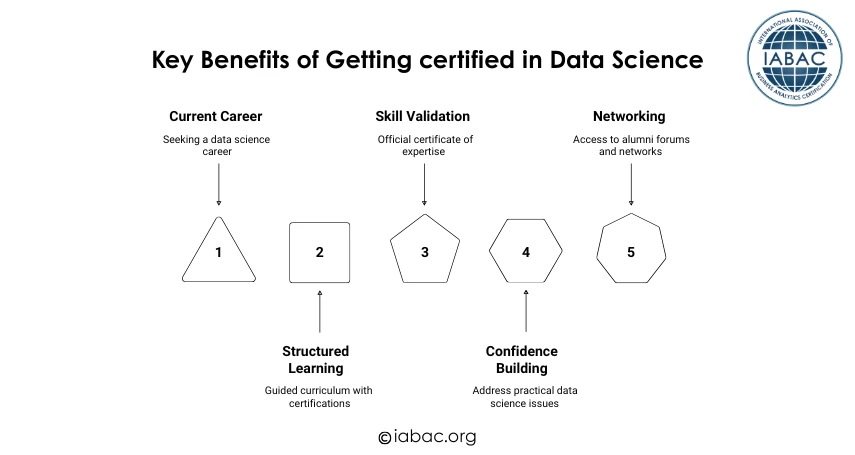
- Structured Learning: You are guided through a predetermined curriculum by certifications.
- Validation of Skills: An official certificate allows you to show your expertise.
- Career Change: An excellent option for professionals to transition into data science careers.
- Improve Your Confidence: Provides you with the means to address practical issues.
- Networking: Many programs provide access to alumni forums and networks.
Things to Consider Before Choosing a Program
Selecting the most well-known name isn't the only consideration when choosing a certification. To choose which one best suits your goals and preferred method of learning, you must do more research.
Here are some key factors to consider:
1. Your Career Goals
Before choosing a certification, ask yourself:
- Do I want to work as a machine learning engineer, data scientist, or data analyst?
- Do I wish to improve my skills in my current position, or am I searching for a new career?
- Which would I prefer: technical algorithms or business insights?
A general data science program might be what you're looking for if you're just getting started. Choose more specialized or advanced certificates (such as NLP, deep learning, etc.) if you have some prior expertise.
2. The Program’s Curriculum
A variety of fundamental subjects are covered in the top data science programs. Look out for programs that consist of:
- Python or R Programming
- Statistics & Probability
- Data Wrangling and Cleaning
- Data Visualization
- Machine Learning Algorithms
- SQL & Databases
- Real-world Projects
- Cloud tools (like AWS, Azure, or GCP) – optional but valuable
Verify that the course syllabus aligns with your learning requirements. Unless you are looking for specialization, don't accept programs that skip the basics or are very restrictive.
3. Level of Experience Required
Certain qualifications are intended for beginners. Others assume that you are already proficient in math or coding.
Carefully review the requirements for the program. You may find it difficult to keep up if it requires calculus or previous programming knowledge, which you do not possess.
Tip: Seek out labels that say "beginner-friendly" or "no prior experience required" if you're beginning from scratch.
4. Accreditation and Industry Recognition
Employers must accept a certificate for it to be considered valuable.
Look for programs offered or accredited by:
- Renowned academic institutions (e.g., Stanford, Harvard, MIT)
- Reputable trade associations (such as IEEE, INFORMS, and IABAC)
- Big tech companies (like Microsoft, Google, and IBM)
- Online resources with good reviews (such as IABAC, Coursera, edX, and Udemy); nonetheless, make an informed choice.
The globally recognized IABAC Data Science Certifications provide a hands-on, industry-relevant curriculum that equips you for work in the real world.
5. Learning Format (Online vs In-Person)
Data science certifications are available in a variety of formats:
- Self-paced online: You can study at your own pace and convenience. Excellent for professionals who work.
- Online instructor-led: Set class hours with real-time communication.
- In-person Bootcamps: These are fast, immersive, and engaging, making them ideal for those who enjoy hands-on learning and discussion with others.
Select according to your location, learning style, and schedule.
6. Duration and Flexibility
Programs can last as little as four weeks. Others may endure for a whole year. The pace and depth determine this.
Ask yourself:
- Can I dedicate five to ten hours a week?
- Would I prefer a longer part-time course or a quicker bootcamp?
- Do I need to have lifetime access to materials?
Select a course that fits your schedule without being too demanding.
7. Project Work and Capstone
Theory is insufficient on its own. Employers are looking for evidence that you can put your knowledge to use.
Look for programs that offer:
- Mini projects follow each module.
- An actual dataset is used in a capstone project.
- Opportunities to establish a portfolio (such as Kaggle submissions and GitHub repositories)
Projects provide you with practical experience, which is more valuable than viewing or reading information.
8. Mentorship and Support
Excellent programs provide more than just information. They help you along the journey.
Look for:
- Mentorship sessions
- Discussion forums
- Live Q&A sessions
- Graded assignments and feedback
This advice can be quite beneficial, particularly when you run into difficulties.
9. Certification Value and Cost
From free MOOCs to bootcamps costing $5,000 or more, prices might vary greatly.
Expensive does not necessarily equate to better. Rather, inquire:
- What is the return on investment? Will I be hired or promoted as a result of this?
- Are installment payments or financial aid options available?
- Is there a money-back guarantee or a trial period?
Additionally, be cautious of services that are overly inexpensive and don't provide any genuine assistance or value.
10. Job Placement Support
Some certification programs also help you with:
- Resume reviews
- Mock interviews
- Job referrals or placement partnerships
- Access to exclusive job boards
If you’re taking the course to switch careers, job support is a huge plus.
Top Mistakes to Avoid
When selecting a data science certification, avoid these common mistakes.
- Using just the brand name: Verify that it teaches you what you need to know.
- Ignoring your own goals: What suits one individual might not suit you.
- Focusing just on price: While free courses are a terrific place to start, they may lack depth.
- Reading reviews: Verify course reviews on independent websites such as LinkedIn, Quora, or Reddit at all times.
- Ignoring practical experience: To truly learn, you need to develop, visualize, and analyze data.
Recommended Path Based on Your Profile
Depending on where you are in your journey, here is a brief guide:
If you’re a beginner:
- Look out for programs for beginners that don't require any prior knowledge.
- Examples include the Google Data Analytics Certificate, IBM Data Science (Coursera), and the IABAC Foundation in Data Science.
If you’re a coder or engineer:
- Select courses that focus on big data tools, deep learning, and machine learning algorithms.
- Example: Deep Learning and Advanced IABAC Certifications. Andrew Ng's AI.
If you’re a business analyst or non-tech professional:
- Look for courses that emphasize dashboards, analytics, and narrative.
- Example: the IABAC Business Analytics Certification and Data Science for Business Leaders.
If you want to become a data scientist:
- Consider a full-stack program that includes Python, machine learning, statistics, and projects.
- Example: DataCamp Career Tracks, IABAC Certified Data Scientist, and Springboard.
Choosing the right data science certification can give you a strong start. But remember, certification alone won’t make you a data scientist.
You need to keep practicing, keep learning, and build real-world experience.
With consistent effort and curiosity, you can become job-ready and thrive in this dynamic field.
IABAC Data Science Certifications are globally recognized and offer practical, industry-relevant content for all levels of data science learners.



















Sign in to leave a comment.